How to Store and Transport Painted Miniatures
Paint survives handling. It does not survive two hundred models rubbing against each other in a shoebox.

The short answer
Store painted miniatures so nothing touches anything else: pluck foam for mixed and fragile models, magnetic trays for uniform infantry on steel-ready bases. A matte topcoat protects against rubbing and handling, not against impact — the case does that job.
The quick version
| # | Product | Best for | Score | Price |
|---|---|---|---|---|
| 1 | 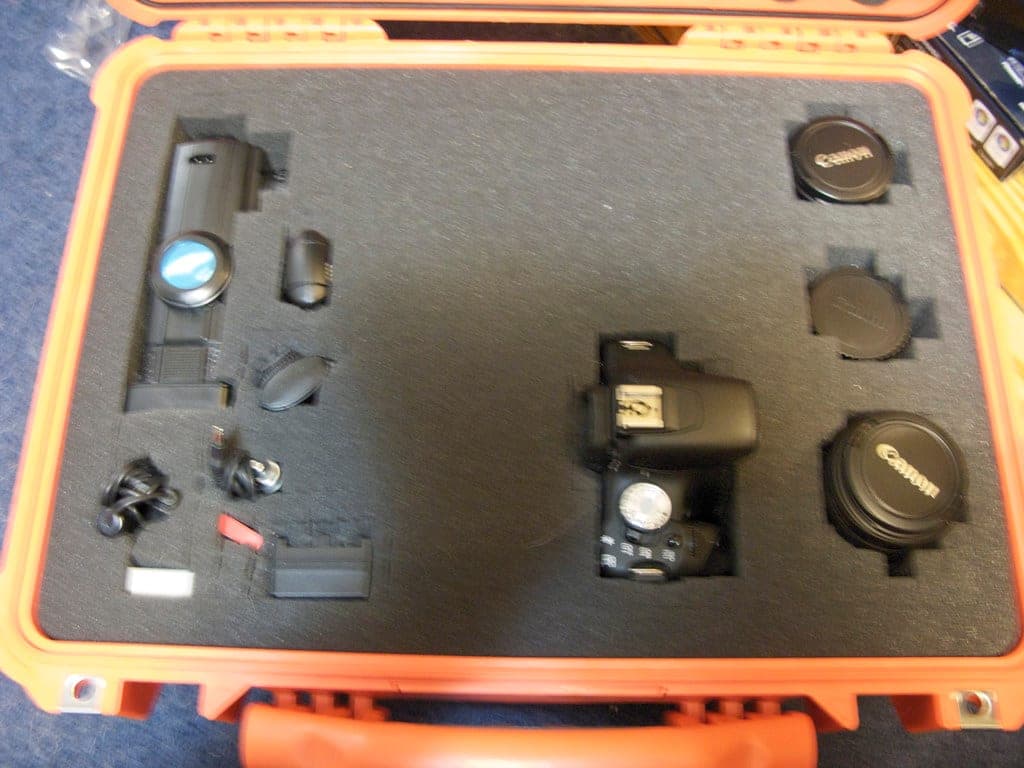 Pluck-foam miniature transport caseLayers of pluck foam in a hard shell, so you tear out pockets to fit your own models. The generic, cheap answer that works for any army. | Getting an army to the table intact | 8.3 | Check price on Amazon |
| 2 |  Brush-on acrylic matte varnishWater-based varnish you brush or airbrush on. Slower and less even than a rattle can, and it works in a flat in winter, which the rattle can does not. | Sealing without an aerosol | 8.2 | Check price on Amazon |
| 3 | Mr. Hobby Mr. Super Clear MattThe lacquer topcoat the hobby standardized on. Dead flat, tough, and the thing that turns shiny bare plastic into something that looks painted. | The best spray topcoat | 9.1 | Check price on Amazon |
Scores are our own editorial read against the criteria stated below — not a lab measurement and not a user rating. Tap a row for the full write-up.
What actually breaks, and why
Three distinct failure modes, and they want different solutions.
Abrasion. Models rubbing against each other or against a bag lining. This is what wears highlights off raised edges and rubs the paint back to primer on sword tips. A topcoat is the fix.
Impact. A dropped case, or a model striking the lid. Nothing you brush or spray on prevents this; only the case geometry does.
Shear on thin parts. Spears, antennae, banner poles and gun barrels snap where they are thinnest when a model is pushed sideways into foam. The fix is how you cut the foam, not what you buy.
What a topcoat does and does not do
A matte varnish forms a thin, tough film over your paint. It genuinely resists the rubbing and handling that comes with gaming, and it is the difference between an army that looks painted after a season of play and one that looks scuffed.
It will not stop a chip from an impact, and it will not reattach a snapped spear. Treat it as the abrasion answer only. Which product and how to apply it is covered in do you need to seal miniatures and the topcoat picks.
Foam versus magnets
Pluck foam is a slab of foam scored into small cubes you pull out to make a model-shaped hole. Its advantages are that it fits anything — infantry, cavalry, a tank — and that it supports fragile models from all sides. Its disadvantages are volume and setup time: foam cases are bulky, and every new model needs plucking.
Magnetic trays hold models by a steel washer or magnet on the base, in a steel-lined tray. Loading and unloading is instant, the trays are thin, and you can see the whole force at a glance. The catch: every base needs preparing, tall or top-heavy models tip under lateral force, and nothing protects a spear from the lid.
The common answer for a mixed collection is both — magnets for ranks of uniform infantry, foam for characters, monsters and anything with a thin protrusion.
Packing an army for a game
- Pluck to the footprint. Pull out only the cubes the model needs. Over- plucking leaves it loose; under-plucking means pressing it into foam that pushes on a banner.
- Nothing touches anything. If two models share a hole, they will rub for the whole journey.
- Fill the gaps. Empty slots let neighbors slide. Offcuts of the foam you plucked are free packing.
- Heaviest tray at the bottom, and keep the case upright. Tipping is how an entire tray lands on its own detail.
- Carry fragile models separately if a model has a part you know will break. A single character in a small box beats re-gluing a banner in a car park.
Long-term display and storage
Dust is mildly abrasive, so wiping a dusty shelf model is a slow way to erode highlights — a soft brush, not a cloth, and ideally a glass cabinet so the problem does not arise. Sunlight fades pigment over years, especially reds and yellows, so keep a display shelf out of direct sun.
For anything stored rather than displayed, a closed case on a shelf solves dust, light and knocks at once — which is why the same case you carry to a game is usually also the right place to keep the army between them. Supplies are a separate problem; see paint storage and racks.
The picks in full
Pluck-foam miniature transport case
Layers of pluck foam in a hard shell, so you tear out pockets to fit your own models. The generic, cheap answer that works for any army.
What it gets right
- Fits models no pre-cut tray will take — plucking is the whole point
- Layers can be reconfigured when the army changes
- Much cheaper than magnetic trays for the same protection
Who it is wrong for
- Foam abrades paint on thin spears, banners and antennae over many trips
- Plucked pockets are permanent; get the layout wrong and that layer is spent
- Heavier and bulkier than a magnetic tray system for the same model count
Scored against this page’s criteria
We do not publish prices. Amazon shows the current one, which is the only one that is ever right. #ad · how this is funded
Brush-on acrylic matte varnish
Water-based varnish you brush or airbrush on. Slower and less even than a rattle can, and it works in a flat in winter, which the rattle can does not.
What it gets right
- Cannot frost, because frosting is a lacquer-and-humidity problem it does not share
- Usable indoors with no fumes and no spray booth
- Lets you gloss-coat one small area before an enamel wash without masking anything
Who it is wrong for
- Brush marks and micro-bubbles show if you work it too long
- Matt brush-on varnishes can go cloudy over dark colors if applied thickly
- Much slower than spraying across a whole army
Scored against this page’s criteria
We do not publish prices. Amazon shows the current one, which is the only one that is ever right. #ad · how this is funded
Mr. Hobby Mr. Super Clear Matt
The lacquer topcoat the hobby standardized on. Dead flat, tough, and the thing that turns shiny bare plastic into something that looks painted.
What it gets right
- A genuinely flat finish that kills the toy-like shine of bare injection plastic
- Locks decals and panel lining under a hard layer that survives handling
- The matte coat also hides the sheen difference between painted and bare areas
Who it is wrong for
- Frosts white in humidity — the single most common way builders ruin a finished kit
- Lacquer, so it can attack an unsealed acrylic paint job if laid on too wet
- Needs ventilation and a respirator; this one is not a window-open job
Scored against this page’s criteria
We do not publish prices. Amazon shows the current one, which is the only one that is ever right. #ad · how this is funded
FAQ
Questions people actually ask
Does varnish stop miniatures chipping?
Are magnetic cases better than foam?
How do I stop spears and banners snapping in transit?
Can I store painted miniatures in their original boxes?
Will sunlight fade painted miniatures?
More in Workspace, Lighting and Storage, or start from the beginning with what to buy first.
Sources
- Games Workshop / Citadel Colour — tools and accessorieschecked October 2026
- Redgrass Games — Everlasting wet palette rangechecked October 2026