How to Revive Dried Out Miniature Paint
Thickened paint can be brought back. Cured paint cannot. Knowing which one is in the pot takes about ten seconds and saves you from painting with something that will flake.
The short answer
If the paint is thick but still smooth and wet underneath, add a few drops of airbrush thinner or flow improver, stir with a cocktail stick until the lumps are gone, and it will paint normally again. If it has cured into rubbery solids or separated into clear liquid over hard sediment, it is finished — the polymer has crosslinked and nothing redissolves it.
The quick version
| # | Product | Best for | Score | Price |
|---|---|---|---|---|
| 1 | 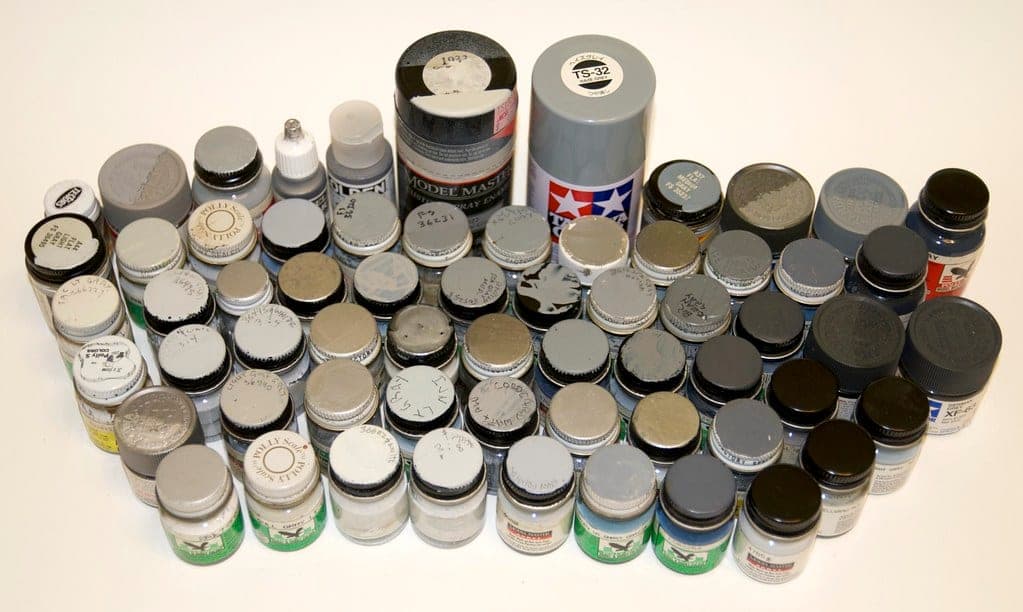 Vallejo Airbrush Thinner (71.261)A purpose-made thinner that holds flow and adhesion where water just dilutes the binder. The difference between tip-dry every pass and a clean session. | Best for rehydrating thickened acrylics | 9.0 | Check price on Amazon |
| 2 | Liquitex Flow AidAn artist-grade flow improver that goes into distilled water, not straight into paint. A few dollars buys a lot of sessions. | Best for restoring flow cheaply | 8.8 | Check price on Amazon |
| 3 | 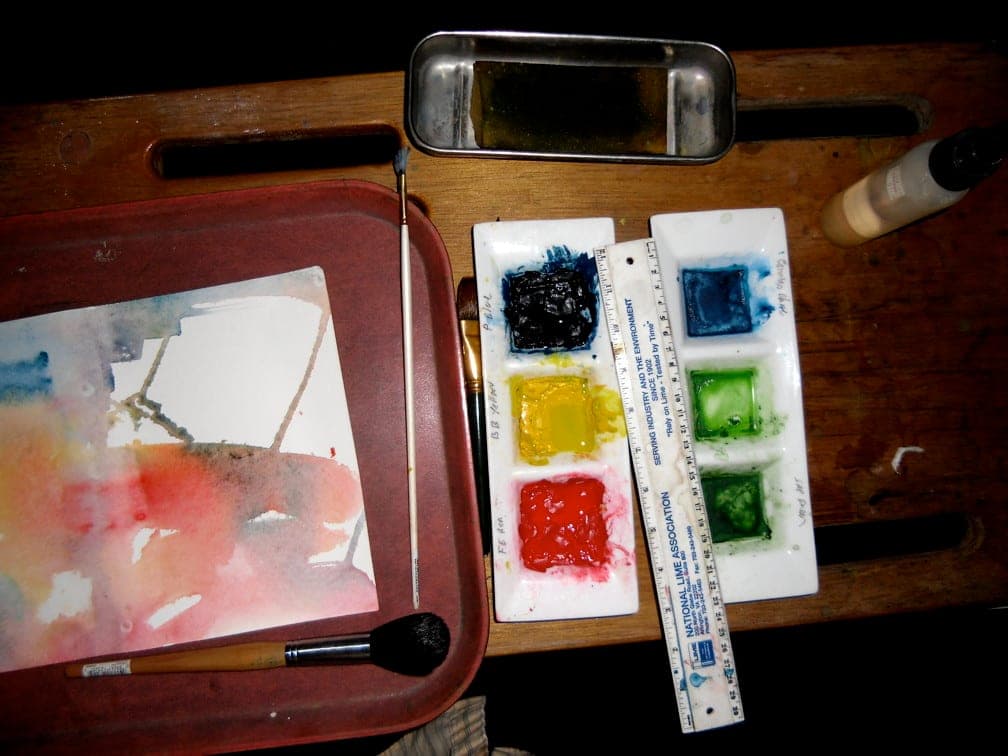 Redgrass Games Everlasting Wet Palette Painter LiteA sealed, mold-resistant wet palette small enough to live on a crowded desk. It keeps thinned paint usable for days instead of minutes. | Best way to stop it happening mid-session | 9.3 | Check price on Amazon |
Scores are our own editorial read against the criteria stated below — not a lab measurement and not a user rating. Tap a row for the full write-up.
First, work out which problem you have
Acrylic paint dries in two stages. First the water evaporates and the paint thickens — reversible. Then the acrylic polymer particles fuse into a continuous film, which is curing, and that is a chemical change. Water will not undo it. Anything that claims to is really just making a slurry of cured chips in liquid.
Stir the pot with a cocktail stick and read what you find.
Thick, smooth, glossy, still wet underneath. Recoverable. Go to the next section.
Thick with a skin on top but liquid beneath. Recoverable. Lift the skin out whole and bin it — do not stir it back in, because it will break into flakes that show up as grit on the model.
Clear liquid sitting over hard sediment that will not break up. That is separation plus cured pigment. Occasionally recoverable with vigorous shaking if the sediment breaks down to a smooth cream; if it stays gritty, it is gone.
Rubbery plug, or a pot that smells sour. Finished. A sour smell is bacterial spoilage in the medium; it will not improve and it affects adhesion.
Reviving thickened paint
Add thinner, not tap water, and add it a drop at a time. Airbrush thinner or acrylic thinning medium carries binder as well as liquid, so the paint keeps its ability to stick. Plain water only dilutes the binder, and a pot rescued entirely with water paints chalky and rubs off. A few drops of water is harmless; a quarter of a pot is not.
Stir, do not shake, until it is mixed. Use a cocktail stick or an old brush handle and work it against the sides of the pot until the lumps disappear. Shaking a part-mixed pot whips air into it and you will be popping bubbles on the model later.
Add an agitator. A stainless ball bearing or a glass bead dropped into the pot makes every future shake do the work properly. Many dropper ranges include one; Citadel-style pots do not.
Flow improver for paint that mixes but drags. If consistency is right but the paint grabs the brush, a drop of flow aid diluted per its own instructions breaks the surface tension and restores the feel without thinning further.
Decant if the pot itself is the problem. A flip-top pot with a crusted rim never seals again. Move what is left into a clean dropper bottle with a bead in it and you have effectively a new pot.
What does not work
Isopropyl alcohol. It is a solvent for cleaning cured acrylic off brushes, not for rehydrating it in the pot. In paint, it breaks the emulsion and you end up with curdled sludge.
Heat. Warming a pot accelerates curing. It does not soften a cured film.
Topping up with water, repeatedly. Each round dilutes the binder further. Paint that needs water every session is paint whose binder is already too weak; replace it.
Mixing cured chips back in. They never redissolve. They sit in the paint and appear as grit under a brush at exactly the wrong moment.
Preventing it, which is the real answer
Close the pot between colours, not at the end of the session. The single biggest cause of dead Citadel-style pots is leaving the lid open for two hours.
Clean the rim. Paint on the rim stops the lid sealing and the pot dries from the edge inwards. A wipe with a damp cotton bud before closing costs five seconds.
Store them upright, somewhere cool and stable. Heat cycles in a loft or a garage shorten paint life dramatically. A rack on the desk keeps them upright and visible — see paint storage and racks.
Work off a wet palette. Most pots are killed by repeatedly re-opening them to grab more paint. Decant once onto a palette that keeps the paint workable and the pot stays closed. That is the case made in wet palette vs dry palette.
Shake before every session, not just when it looks wrong. Pigment settles continuously. A pot that is shaken regularly separates far less.
When to accept it is gone
If the paint goes on grainy after being mixed smooth, if it dries with a visibly different sheen to the rest of the model, or if it rubs off a primed surface with a fingernail, bin it. Paint is the cheapest part of the hobby and a failed basecoat costs you an evening of stripping, which is a worse trade than a replacement pot. If you do need to start again, how to strip paint from miniatures covers the recovery.
By paint type, because they fail differently
Standard acrylics. The straightforward case described above. Thinner, stir, agitator, done.
Washes and shades. These are mostly medium with a little pigment and a flow agent, so thickening hits them harder — a thickened wash stops flowing into recesses and starts behaving like a weak paint. Thin with water plus a drop of flow improver rather than thinner alone, because it is the surface tension you need back, not just the volume.
Contrast and speed paints. They depend on a carefully balanced medium. Adding water alone wrecks the effect and leaves a patchy stain; most manufacturers sell a matched medium for exactly this, and it is the only sensible thing to add.
Metallics. Usually separation rather than drying. Shake hard with an agitator in the pot, for longer than feels necessary, before deciding anything is wrong.
Primers. Acrylic polyurethane primer that has thickened in the bottle can be thinned slightly, but be conservative — over-thinned primer stops keying to the surface, which is the one job it has.
The picks in full
Vallejo Airbrush Thinner (71.261)
A purpose-made thinner that holds flow and adhesion where water just dilutes the binder. The difference between tip-dry every pass and a clean session.
What it gets right
- Keeps the binder working, so thinned paint still grips instead of pulling away
- Noticeably less tip-dry than water, which is the main thing that ruins a session
- The 500 ml bottle makes it cheap per use
Who it is wrong for
- Not a retarder — if your problem is paint drying in the nozzle, you also want flow improver
- Over-thin with it and you get the same transparency problem as with water
- Wrong product for lacquer or enamel paints; those need their own thinners
Scored against this page’s criteria
Specs from the manufacturer: Vallejo product page
We do not publish prices. Amazon shows the current one, which is the only one that is ever right. #ad · how this is funded
Liquitex Flow Aid
An artist-grade flow improver that goes into distilled water, not straight into paint. A few dollars buys a lot of sessions.
What it gets right
- Dramatically reduces tip-dry for a fraction of the cost of branded hobby additives
- An artist-shop staple, so it is easy to find and cheap in volume
- Works with any water-based acrylic, not just one brand's range
Who it is wrong for
- Must be diluted before use — neat Flow Aid in paint breaks the binder and the paint will not adhere
- Too much and paint beads and runs off the model
- Does not thin paint; it changes how paint behaves. You still need water or thinner
Scored against this page’s criteria
We do not publish prices. Amazon shows the current one, which is the only one that is ever right. #ad · how this is funded
Redgrass Games Everlasting Wet Palette Painter Lite
A sealed, mold-resistant wet palette small enough to live on a crowded desk. It keeps thinned paint usable for days instead of minutes.
What it gets right
- Paint stays workable for days with the lid on, which is the entire point of a wet palette
- Small footprint — it fits beside a model rather than replacing your desk
- Membranes and foam are sold as refills, so the palette itself is a one-time buy
Who it is wrong for
- Too small for batch-painting a whole regiment's worth of colors at once
- Refill membranes are a recurring cost you should price in
- Still molds if you leave paint and water in it for two weeks — nothing fixes neglect
Scored against this page’s criteria
Specs from the manufacturer: Redgrass Games product page
We do not publish prices. Amazon shows the current one, which is the only one that is ever right. #ad · how this is funded
FAQ
Questions people actually ask
Can you fix dried out acrylic paint?
Should I add water to dried out model paint?
Can I use isopropyl alcohol to revive paint?
Why did my paint pot dry out so fast?
How do I stop paint drying out on the palette?
More in Miniature Paints and Paint Sets, or start from the beginning with what to buy first.
Sources
- Acrylicos Vallejo — Surface Primer and Airbrush Thinner technical datachecked October 2026
- Liquitex — Flow Aid additive usage informationchecked October 2026