How to Strip Paint From Miniatures
A bad paint job is recoverable. A model dissolved by the wrong stripper is not. The method below works on plastic, resin and metal, and the thing that matters most is which liquid you pick.
The short answer
Soak the model in isopropyl alcohol or a citrus-free degreaser in a sealed container for several hours to overnight, then scrub with an old toothbrush under running water. Repeat rather than soaking longer. Never use acetone, brake fluid or paint stripper on plastic or resin — they soften or dissolve the model itself.
The quick version
| # | Product | Best for | Score | Price |
|---|---|---|---|---|
| 1 |  Really Useful Box 4 literA clear, stackable, clip-lid plastic box. Not a transport case and not pretending to be one, but it is the cheapest honest answer to where an army lives between games. | Best sealed container for a soak | 7.6 | Check price on Amazon |
| 2 |  Compact ultrasonic cleanerDrop the disassembled body in with cleaner and water and let cavitation reach the passages a brush cannot. The thing that saves an airbrush you thought was finished. | Best for stubborn paint in recesses | 8.0 | Check price on Amazon |
| 3 | 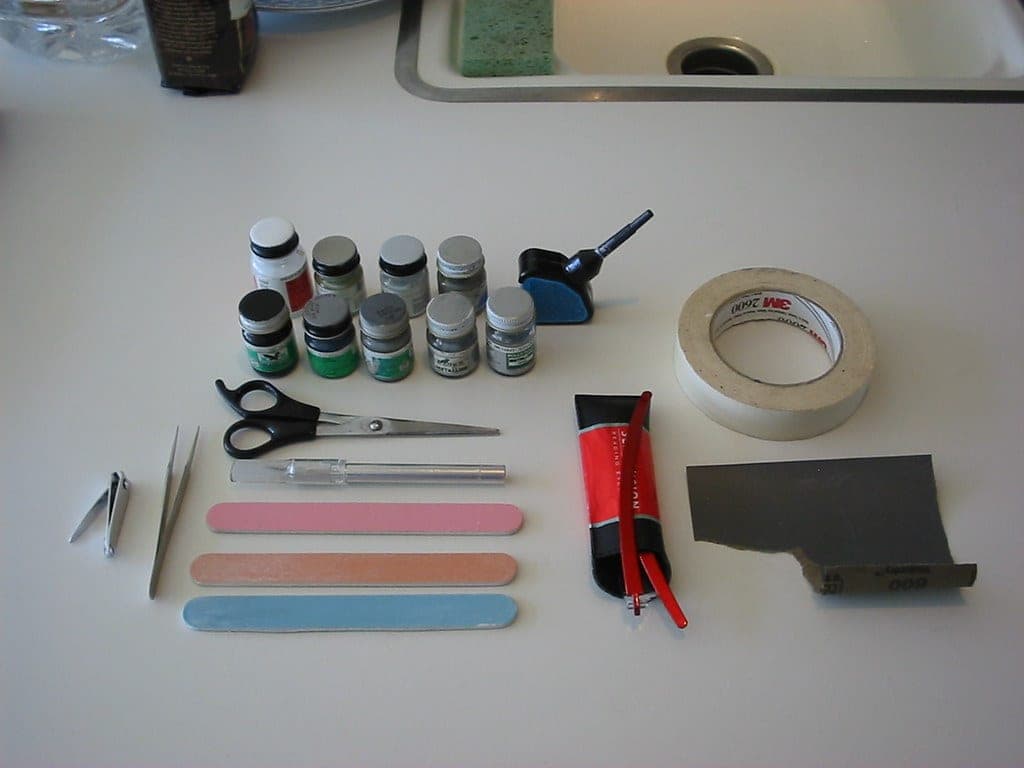 Curved-tip stainless tweezersA curved tip reaches into a model without your hand blocking the view. The single most useful tweezer shape for kit work. | Handling parts out of the bath | 8.6 | Check price on Amazon |
Scores are our own editorial read against the criteria stated below — not a lab measurement and not a user rating. Tap a row for the full write-up.
What is safe, and what destroys models
Isopropyl alcohol, 90% or above. The default. It breaks down cured acrylic paint and primer without attacking polystyrene or metal. Lower concentrations contain more water and work far more slowly. Isopropyl is flammable and a strong eye and respiratory irritant — use it in a ventilated room, away from anything hot, with the lid on when you are not actively working.
Non-caustic household degreasers. Widely used, slower than isopropyl and gentler, which makes them a good first choice on resin and on models you care about.
Never acetone. It dissolves polystyrene outright. A model left in acetone turns into a soft white blob within minutes.
Never brake fluid, oven cleaner or hardware-store paint stripper. All three are used on metal models by people who have done it a hundred times and know the risks. On plastic or resin they craze, soften and destroy detail, and all three are serious skin and respiratory hazards. There is no reason to take that risk on a model that isopropyl will clean overnight.
Never a wire brush, steel wool or an abrasive pad. They remove paint and every raised detail under it in the same stroke.
By material
Hard plastic (most modern kits). Isopropyl, overnight, scrub, repeat if needed. The most forgiving material there is.
Metal. Even more forgiving chemically, and it tolerates longer soaks and firmer scrubbing. Dry it thoroughly afterwards — bare metal left damp will spot.
Resin, including 3D prints. The careful case. Resin absorbs liquid and can become brittle, and some printed resins soften in alcohol. Use the shortest soak that works, check every hour or two the first time, and let the model dry fully for at least a day afterwards. The surface issues that follow are the same ones in painting 3D printed miniatures.
Models with glued joints. Super glue survives most strippers; plastic cement welds are part of the plastic and survive everything. Expect some accessories to fall off anyway, and keep the tray underneath so you do not lose them.
When to reach for an ultrasonic cleaner
An ultrasonic bath drives cavitation bubbles into every recess, which shifts softened paint a toothbrush cannot reach — inside grilles, under cloaks, in deep chainmail. After a soak, five to ten minutes in warm water with a little detergent will often finish the job completely.
Two cautions. Run it with water and detergent, never with neat solvent in the tank. And keep cycles short on resin and on anything with fragile thin parts; sustained cavitation can work a weak joint loose.
The same machine earns its place cleaning airbrush parts, which is how most painters end up owning one — see the airbrush cleaning kit.
What to expect
Acrylic paint comes off readily. Primer takes longer, and a spray primer baked on over years can take three cycles. Enamels and lacquers resist isopropyl considerably more than acrylics do.
Some staining is normal and usually invisible once reprimed — a faint tint in the plastic is cosmetic, not structural. What you cannot recover is detail that was already buried under a thick paint job; stripping removes the paint, it does not restore an edge that was drowned.
Afterwards
Wash thoroughly in warm soapy water. Any stripper residue left on the surface will stop primer keying, and a model that was stripped and then badly primed is worse off than before.
Dry completely. Resin in particular needs a day; trapped moisture under primer causes exactly the grainy finish described in why is my primer grainy.
Then prime as normal and start again, ideally with the mix and coat thickness in how to thin miniature paint — thick paint is the usual reason a model needed stripping in the first place.
Safety, briefly but seriously
Isopropyl alcohol is flammable and its vapour is heavier than air. Work away from any flame or hot surface, keep the container closed when you are not actively using it, and ventilate the room. Wear gloves — prolonged skin contact defats the skin badly — and eye protection while scrubbing, because the bristles flick solvent.
Dispose of used stripper as household chemical waste rather than pouring it down a drain, and never pour it into a sink while anything else is in there. Paint sludge in a soak is waste, not wastewater.
Keep the container labelled and out of reach. A clear tub of liquid with models in it looks exactly like something it is not.
Paint, primer and the stubborn cases
Acrylic topcoats lift first, usually within a few hours. Primer is a different polymer designed to key to the surface, so it takes longer and often a second cycle. An aerosol primer that has been on the model for years may never come off completely — and that is usually fine, because a thin even layer of old primer is a perfectly good surface to repaint over.
Enamel and lacquer finishes resist isopropyl much more than acrylics. A dedicated enamel thinner will shift them but is harsher on plastic, so test on an underside first and keep contact brief.
Washes and inks sometimes stain the plastic itself rather than sitting on it. The stain is cosmetic; prime over it and it is gone.
Know when to stop. Three cycles that have not cleared a model is a signal that the remaining layer is bonded hard. At that point the pragmatic move is to prime over what is left rather than keep soaking a part that is getting more brittle with every bath.
The picks in full
Really Useful Box 4 liter
A clear, stackable, clip-lid plastic box. Not a transport case and not pretending to be one, but it is the cheapest honest answer to where an army lives between games.
What it gets right
- Clear sides mean you can find the right unit without opening five boxes
- Stacks on a shelf in a way no bag or hard case does
- Cheap enough to buy six, which is what an army collection actually needs
Who it is wrong for
- Zero impact protection out of the box — models rattle unless you line it
- Not a travel solution; one corner knock in a car and the shelf of models topples
- You will end up buying foam or magnetic sheet anyway, which erodes the price advantage
Scored against this page’s criteria
Specs from the manufacturer: Really Useful Products product page
We do not publish prices. Amazon shows the current one, which is the only one that is ever right. #ad · how this is funded
Compact ultrasonic cleaner
Drop the disassembled body in with cleaner and water and let cavitation reach the passages a brush cannot. The thing that saves an airbrush you thought was finished.
What it gets right
- Reaches the internal air passage and the nozzle throat, which no brush or wire does
- Turns a seized nozzle from a replacement purchase into a ten-minute job
- Also cleans paint off brush ferrules, nippers and tweezers
Who it is wrong for
- Wildly overkill if you clean properly after each session, which is the real fix
- Cavitation can dull a chrome or anodized finish over many cycles
- Never run flammable solvent in one — it needs water-based cleaner, which limits what it strips
Scored against this page’s criteria
We do not publish prices. Amazon shows the current one, which is the only one that is ever right. #ad · how this is funded
Curved-tip stainless tweezers
A curved tip reaches into a model without your hand blocking the view. The single most useful tweezer shape for kit work.
What it gets right
- The curve keeps your fingers out of the sightline, which straight tips do not
- Smooth jaws grip a wet decal without tearing it
- Fine enough for photo-etched parts that fingers simply cannot handle
Who it is wrong for
- Fine tips bend permanently if you use them as a lever or a clamp
- Springy cheap steel launches small parts across the room
- A reverse-action (self-closing) pair is better for holding, and this is not that
Scored against this page’s criteria
We do not publish prices. Amazon shows the current one, which is the only one that is ever right. #ad · how this is funded
FAQ
Questions people actually ask
What is the best thing to strip paint from miniatures?
How long should I soak miniatures to strip them?
Will isopropyl alcohol damage plastic miniatures?
Can I use acetone to strip miniatures?
Do I need to reprime after stripping?
More in Painting and Building Guides, or start from the beginning with what to buy first.
Sources
- CDC NIOSH — isopropyl alcohol chemical safety informationchecked October 2026