Why Is My Primer Grainy?
Humidity, nine times out of ten. Here is the mechanism, the window, and whether the model can be saved.
The short answer
Grainy primer is almost always humidity or cold. Aerosol primer must still be wet when it lands so the droplets merge into a film; in damp or cold air the solvent flashes off early and the pigment arrives dry, sitting on the surface as a rough powder. A grainy coat cannot be painted smooth — sand it back or strip it.
The quick version
| # | Product | Best for | Score | Price |
|---|---|---|---|---|
| 1 |  Vallejo Surface PrimerA water-based acrylic primer that brushes or airbrushes on with almost no smell. The answer for anyone who cannot spray outdoors. | The fix that removes the risk entirely | 9.1 | Check price on Amazon |
| 2 | 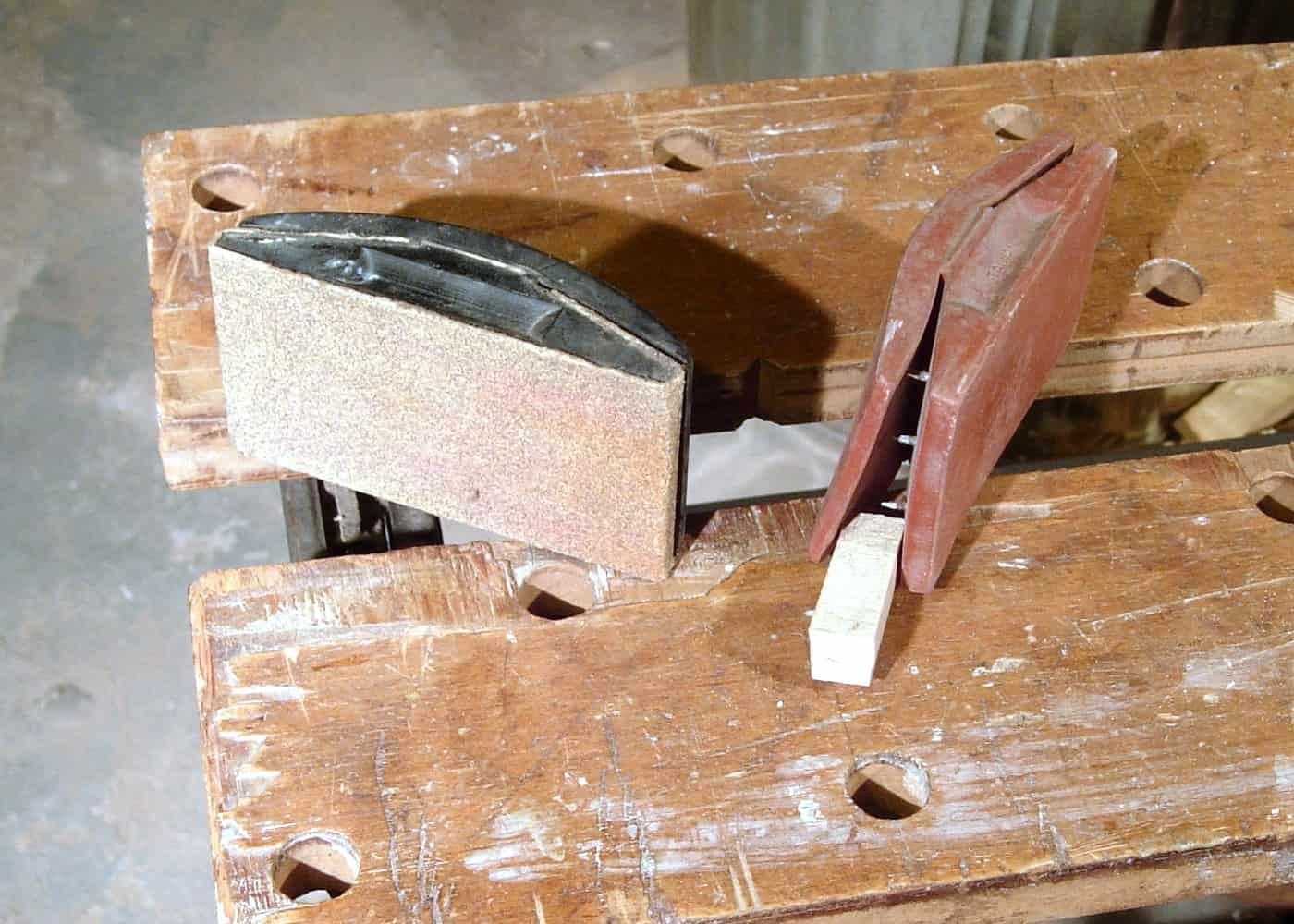 Hobby sanding sticks (assorted grits)Foam-backed abrasive on a stick, in a grit range from coarse to polishing. The thing that turns a visible nub into no nub at all. | Rescuing a localized patch | 8.7 | Check price on Amazon |
| 3 | Vallejo Surface Primer Black (200 ml)The big bottle of the same water-based primer. Through an airbrush it lays down thinner and smoother than any aerosol, with no weather window at all. | Priming in any weather | 9.0 | Check price on Amazon |
Scores are our own editorial read against the criteria stated below — not a lab measurement and not a user rating. Tap a row for the full write-up.
The mechanism
Worth understanding properly, because once you know it the rules are obvious rather than superstitious.
Aerosol primer leaves the can as a fine mist of pigment suspended in solvent. For a smooth coat, those droplets have to still be wet when they hit the model so they can flow together and merge into one continuous film. That merging is called leveling, and it is what makes the coat smooth.
Two things stop it:
Humidity. In damp air, the solvent evaporating from each droplet saturates the air immediately around it, and water from the air condenses into the droplet. The droplet cools, the solvent flashes off faster, and the pigment arrives dry or nearly dry. Dry pigment cannot level. It sits where it lands as discrete particles — which under your fingertip feels like fine sandpaper.
Cold. Cold propellant atomizes badly, producing larger droplets, and cold slows leveling once they land. The same gritty result by a slightly different route.
A third, less-discussed cause: spraying from too far away. Over a long enough flight the droplets dry in the air regardless of conditions. This produces exactly the same texture and gets blamed on the weather.
The window to respect
- Dry air. Avoid damp days. High humidity is the single biggest cause, and it is worth checking a forecast rather than guessing, because a mild damp day feels fine and is not.
- Moderate temperature. Not cold, not baking. Direct hot sun causes a different failure — the solvent flashes off on the surface before leveling finishes, which gives a dusty, chalky finish.
- About 20 cm distance. Closer floods; further gives you dry arrival.
- Shake for a full minute. Under-mixed primer sprays with uneven pigment load and produces patchy, gritty coverage that gets blamed on the weather.
- Warm a cool can in warm (not hot) water for a few minutes. Cold propellant is a real factor.
And the rule that saves models: test on card first. Spray a square of scrap card, feel it, and only then spray the model. Ten seconds, and it catches a bad day before it costs you an army.
Can a grainy coat be saved?
Painting over it: no. This is the thing worth being firm about. Paint is a thin film that follows the surface it is on. A rough primer coat stays rough under paint, and every subsequent step — washes catching in the texture, highlights breaking up — looks worse than the step before.
Sanding: yes, if it is localized. A fine sanding stick worked gently over flat areas knocks the texture back. On a smooth shoulder pad or a vehicle panel this works well. In fine detail it does not, because you cannot get a sanding stick into a chainmail texture without destroying it.
Stripping: yes, and it is often the right answer. A dedicated plastic-safe paint stripper, or a long soak in a suitable cleaner, takes the primer off and lets you start again. Test any stripper on a spare part first, especially on resin.
Living with it: sometimes reasonable. If the model is rank-and-file infantry destined for the table and the graininess is mild, the honest answer is that at arm’s length nobody will see it. Save the stripping for models you care about.
The permanent fix
Stop using an aerosol. This is not a dodge — it is the actual solution, and it is why water-based primers exist.
A brush-on or airbrush primer cannot go grainy from humidity, because there is no airborne flight phase and no solvent flashing off mid-air. It works in any room on any day of the year. If you live somewhere humid, or you have no outdoor space, or you simply do not want to think about the weather before priming, that is the answer:
- Priming indoors by brush — no equipment needed.
- Airbrush primer — the best finish available, if you own a compressor.
A lot of painters keep both: an aerosol for batch-priming on a good summer day, and a bottle for everything else.
Other bad primer finishes, and what they mean
| Symptom | Likely cause | Fix |
|---|---|---|
| Gritty, like fine sandpaper | Humidity, cold, or sprayed too far away | Sand or strip. Change conditions or method. |
| Chalky and powdery | Too hot, or direct sun | Strip. Spray in shade at moderate temperature. |
| Detail filled and soft | Too close, or one heavy wet pass | Strip. Light passes from 20 cm. |
| Runs and pooling | Far too much in one pass | Strip while wet if possible. |
| Tacky after hours | Too thick, or uncured resin underneath | Wait longer; if resin, it was not fully cured before priming. |
| Primer peeling off in sheets | Unwashed resin or metal — release agent or oil | Strip, wash properly, re-prime. See resin and metal. |
The picks in full
Vallejo Surface Primer
A water-based acrylic primer that brushes or airbrushes on with almost no smell. The answer for anyone who cannot spray outdoors.
What it gets right
- No aerosol, no fumes, no weather window — prime at the kitchen table in February
- Sprays through an airbrush straight from the bottle, needing little or no thinning
- Sold in large bottles, so priming a whole army is cheap
Who it is wrong for
- Brushing it on fills fine detail if you are heavy-handed — it wants thin coats
- Needs a full day to cure hard; handled too early it can peel at contact points
- An airbrush or a lot of patience is really required to get a spray-can-smooth finish
Scored against this page’s criteria
Specs from the manufacturer: Vallejo product page
We do not publish prices. Amazon shows the current one, which is the only one that is ever right. #ad · how this is funded
Hobby sanding sticks (assorted grits)
Foam-backed abrasive on a stick, in a grit range from coarse to polishing. The thing that turns a visible nub into no nub at all.
What it gets right
- Foam backing follows a curved surface instead of flattening it
- A progression of grits removes the nub AND the sanding marks it leaves
- Usable wet, which stops the clogging and the plastic dust
Who it is wrong for
- Coarse grits leave scratches that will show through paint unless you work up through the finer ones
- Sticks wear out and clog; they are consumables
- Sanding a painted or pre-colored part means repainting it, which beginners discover the hard way
Scored against this page’s criteria
We do not publish prices. Amazon shows the current one, which is the only one that is ever right. #ad · how this is funded
Vallejo Surface Primer Black (200 ml)
The big bottle of the same water-based primer. Through an airbrush it lays down thinner and smoother than any aerosol, with no weather window at all.
What it gets right
- Thinner coats than a spray can, so fine detail stays crisp
- 200 ml primes a very large number of models for the price of two aerosols
- Cleans out of an airbrush with water while wet — no solvent needed
Who it is wrong for
- Only makes sense if you already own an airbrush and a compressor
- Dries hard inside the nozzle if you leave it sitting; flush it immediately
- Needs a spray booth or a window for overspray, even though the fumes are mild
Scored against this page’s criteria
Specs from the manufacturer: Vallejo product page
We do not publish prices. Amazon shows the current one, which is the only one that is ever right. #ad · how this is funded
FAQ
Questions people actually ask
Why is my primer grainy?
Can I paint over grainy primer?
What humidity is too high for spray primer?
Can I prime in cold weather?
How do I avoid this permanently?
More in Primers and Surface Prep, or start from the beginning with what to buy first.
Sources
- Acrylicos Vallejo — Surface Primer rangechecked October 2026
- Games Workshop / Citadel Colour — spray rangechecked October 2026
- The Army Painter — Colour Primer rangechecked October 2026