Priming Resin, Metal and 3D Prints
Plastic you prime from the box. These three need washing first, and skipping it is why primer peels.

The short answer
Resin carries mold release agent and metal carries machining oil, and primer will not key to either — it peels off in sheets. Wash both in warm soapy water with a soft brush, rinse thoroughly and dry completely before priming. 3D resin prints must also be fully cured, or they stay tacky under the paint.
The quick version
| # | Product | Best for | Score | Price |
|---|---|---|---|---|
| 1 |  Vallejo Surface PrimerA water-based acrylic primer that brushes or airbrushes on with almost no smell. The answer for anyone who cannot spray outdoors. | Priming resin and metal | 9.1 | Check price on Amazon |
| 2 |  Citadel Colour Painting HandleThe original spring-clip handle, sized for the 25 mm and 32 mm bases that make up most of an army. The one most painters actually need. | Not touching what you just primed | 8.9 | Check price on Amazon |
| 3 | 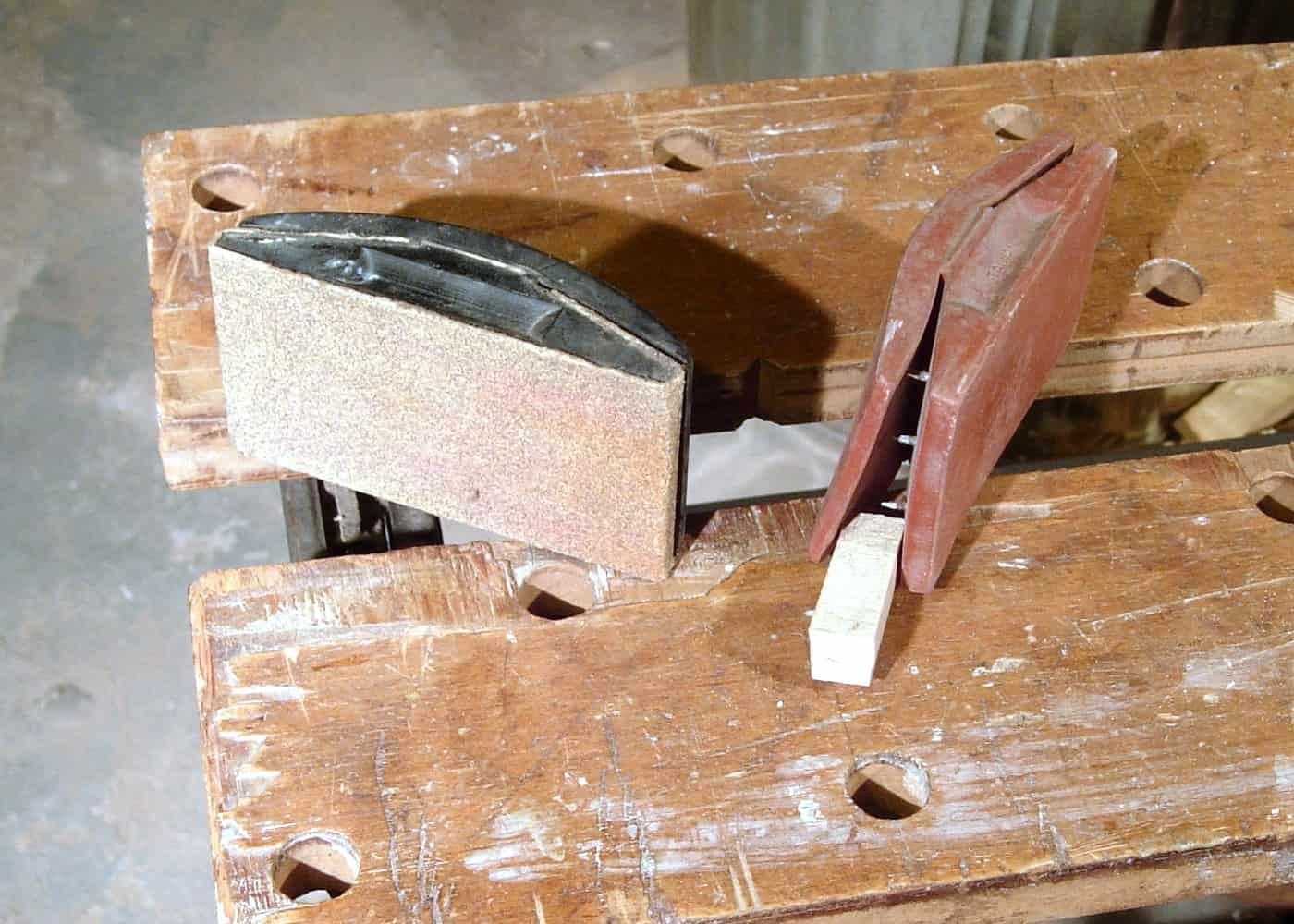 Hobby sanding sticks (assorted grits)Foam-backed abrasive on a stick, in a grit range from coarse to polishing. The thing that turns a visible nub into no nub at all. | Cleaning up resin print lines first | 8.7 | Check price on Amazon |
Scores are our own editorial read against the criteria stated below — not a lab measurement and not a user rating. Tap a row for the full write-up.
Why washing is not optional
Primer keys to a surface. If there is a layer of something slippery between the primer and the model, the primer keys to the slippery layer, and the slippery layer is not attached to anything.
Resin. Resin casts are made in silicone molds, and the mold is treated with a release agent so the part comes out. That agent transfers to the surface of every casting. It is invisible, it is designed to stop things sticking, and it is why primer on unwashed resin peels off in sheets — sometimes weeks later, sometimes taking a finished paint job with it.
Metal. White metal and pewter castings carry machining and handling oils. Metal is also an inherently harder surface for primer to key to than plastic, so starting from a contaminated surface compounds a problem that already exists.
3D resin prints. Two issues. Residual uncured resin on the surface from printing, which needs washing off, and under-curing through the body of the part, which cannot be washed off and must be cured out under UV. An under-cured print stays slightly tacky indefinitely and will never hold paint properly.
How to wash, specifically
- Warm water and ordinary dish soap. This is the one job dish soap is right for. A degreaser is exactly what you want here.
- A soft old toothbrush. Work into every recess, under every overhang, inside every joint. Release agent collects where it is hardest to see.
- Rinse until there is no slipperiness. Soap residue is itself a barrier.
- Dry completely. Several hours at minimum, and longer for a model with deep recesses that trap water. A fan helps. Water under primer causes lifting later.
- Do not touch the clean surface. Skin oils are a contaminant too. Handle by the base, the sprue, or a handle.
For 3D prints, isopropyl alcohol is the standard wash for uncured surface resin, followed by a full UV cure, followed by the soap wash. Skipping the cure is the mistake that cannot be fixed later.
Preparation beyond washing
Three things that are easier before primer than after:
- Remove flash and mold lines. Resin casts often have thin flash around edges and a casting seam. A hobby knife and a sanding stick deal with both. Primer makes them less visible, not less present.
- Sand print lines on 3D prints. Layer lines are far more visible under paint than under primer. Deal with them first.
- Fill gaps. Resin and metal parts fit less precisely than injection plastic. Fill with putty or super glue gel before priming, because a gap that appears after priming means re-priming the area.
Which primer for which material
| Material | Wash first? | Primer notes |
|---|---|---|
| Polystyrene kit plastic | No | Anything works. Prime from the box. |
| Resin cast | Yes, always | Any primer, applied thin. The washing is what matters, not the brand. |
| White metal / pewter | Yes, always | An acrylic polyurethane primer keys better to metal than plain acrylic. Thin coats. |
| 3D resin print | Yes, and cure fully first | Under-cured resin never holds paint. Cure, wash, then prime. |
| 3D filament print (PLA/PETG) | A quick wash | Layer lines are the issue, not adhesion. Sand or use a filler primer. |
| Clear plastic | Light wash | Mask anything you want to stay clear. Primer is opaque by design. |
If primer has already peeled
You will know because it comes away in a sheet or flake with a clean edge, rather than wearing thin. That clean edge is the signature of an adhesion failure rather than wear.
The only real fix is to strip and start again, properly. Painting over a peeling area gives you a thicker stack of paint that is still not attached to the model. Strip it, wash it, dry it completely, and prime in thin coats.
Which is annoying, and it is the reason the washing step gets the emphasis it does on this page. Twenty minutes of washing at the start is a far better deal than stripping a painted model later. The wider priming guidance is in do you need to prime miniatures and the primer picks.
The picks in full
Vallejo Surface Primer
A water-based acrylic primer that brushes or airbrushes on with almost no smell. The answer for anyone who cannot spray outdoors.
What it gets right
- No aerosol, no fumes, no weather window — prime at the kitchen table in February
- Sprays through an airbrush straight from the bottle, needing little or no thinning
- Sold in large bottles, so priming a whole army is cheap
Who it is wrong for
- Brushing it on fills fine detail if you are heavy-handed — it wants thin coats
- Needs a full day to cure hard; handled too early it can peel at contact points
- An airbrush or a lot of patience is really required to get a spray-can-smooth finish
Scored against this page’s criteria
Specs from the manufacturer: Vallejo product page
We do not publish prices. Amazon shows the current one, which is the only one that is ever right. #ad · how this is funded
Citadel Colour Painting Handle
The original spring-clip handle, sized for the 25 mm and 32 mm bases that make up most of an army. The one most painters actually need.
What it gets right
- Fits the bases you will actually be painting ninety percent of the time
- One-handed to load and unload once you have the knack
- Heavy enough to stand up on the desk without tipping
Who it is wrong for
- Will not take a 50 mm base, let alone a monster
- The clip can mar a painted rim if you reload a finished model
- Several times the cost of a wine cork that does the same job less comfortably
Scored against this page’s criteria
Specs from the manufacturer: Citadel product page
We do not publish prices. Amazon shows the current one, which is the only one that is ever right. #ad · how this is funded
Hobby sanding sticks (assorted grits)
Foam-backed abrasive on a stick, in a grit range from coarse to polishing. The thing that turns a visible nub into no nub at all.
What it gets right
- Foam backing follows a curved surface instead of flattening it
- A progression of grits removes the nub AND the sanding marks it leaves
- Usable wet, which stops the clogging and the plastic dust
Who it is wrong for
- Coarse grits leave scratches that will show through paint unless you work up through the finer ones
- Sticks wear out and clog; they are consumables
- Sanding a painted or pre-colored part means repainting it, which beginners discover the hard way
Scored against this page’s criteria
We do not publish prices. Amazon shows the current one, which is the only one that is ever right. #ad · how this is funded
FAQ
Questions people actually ask
Do you need to prime resin miniatures?
How do I wash a resin miniature before priming?
Why is my primer peeling off?
Do 3D resin prints need anything extra?
Does metal need a different primer than plastic?
More in Primers and Surface Prep, or start from the beginning with what to buy first.
Sources
- Acrylicos Vallejo — Surface Primer rangechecked October 2026
- Games Workshop / Citadel Colour — spray rangechecked October 2026