Airbrush Compressor With a Tank or Without
A tank does not make the air better. It makes the air steadier, the motor quieter over a session, and the water more likely to end up somewhere other than your model.
The short answer
Buy a tanked compressor if you can. The tank holds a reservoir of air so pressure stays flat when you pull the trigger, the motor runs in short bursts instead of continuously, and water condenses in the tank rather than in your paint. Tankless is fine for short detail sessions and is quieter at idle, because it simply stops.
The quick version
| # | Product | Best for | Score | Price |
|---|---|---|---|---|
| 1 | 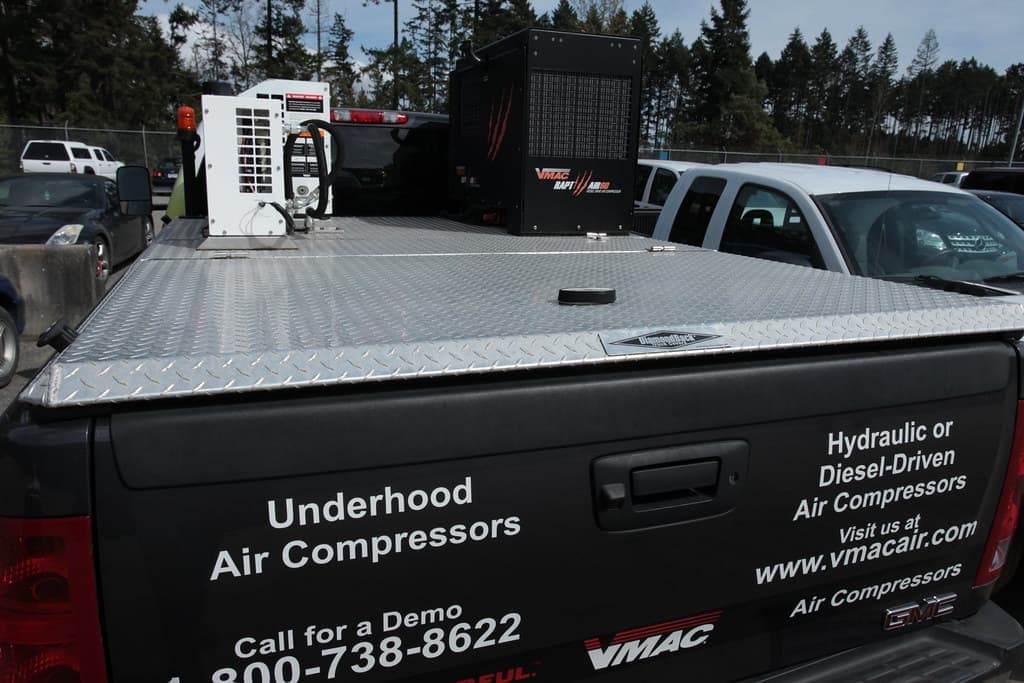 Tanked hobby compressor with moisture trapA small air tank, a regulator and a moisture trap. The tank is the upgrade: pressure stops pulsing and the motor runs a fraction as often. | Best overall: tank, regulator and moisture trap | 8.8 | Check price on Amazon |
| 2 | Iwata Smart Jet compressorCompact, quiet, and preset to 20-25 PSI with auto shut-off so the motor is not running while you are not spraying. The simple, reliable choice. | Best tankless for detail work | 8.7 | Check price on Amazon |
| 3 | 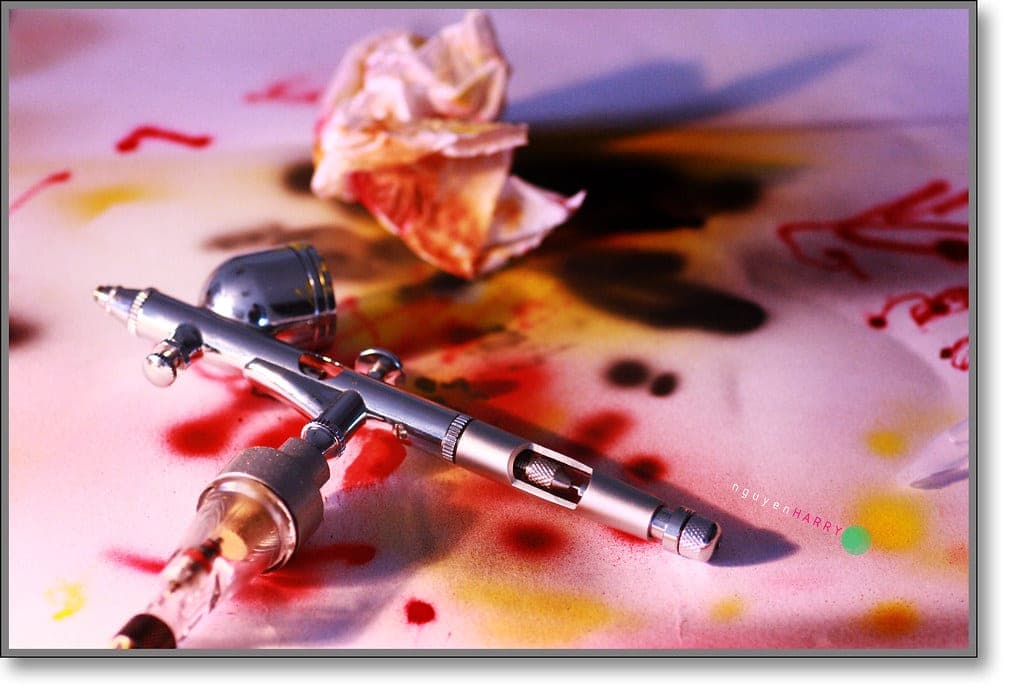 Master Airbrush Cool Runner II kit with G233 Pro SetCompressor, hose, holder and a dual-action gravity-feed airbrush with three nozzle sets in one box. Nothing here is best in class; everything here works on day one. | Best complete starter kit | 8.5 | Check price on Amazon |
Scores are our own editorial read against the criteria stated below — not a lab measurement and not a user rating. Tap a row for the full write-up.
What a tank actually does
A compressor motor makes air in pulses — a piston going up and down. Without a tank, those pulses go straight down the hose to the airbrush. With a tank, the motor fills a pressurised reservoir, a pressure switch shuts the motor off when the tank is full, and the airbrush draws from the reservoir through a regulator.
Four consequences follow, and all of them are about consistency rather than raw performance.
Pulsing. A tankless compressor can transmit a faint rhythmic ripple into the spray. On a car panel nobody notices; on a 32 mm model at low pressure, a ripple becomes a visible banding in a smooth zenithal fade. Better tankless units damp this with an internal chamber, but a real tank removes it.
Pressure drop. Pull the trigger fully open on a tankless unit and the pressure sags for a moment while the motor catches up. On a tank, the first seconds come out of stored air at full regulated pressure, which matters when the whole technique is laying consistent thin passes — see PSI settings for miniatures.
Duty cycle and heat. Tankless means the motor runs the entire time you are spraying. Most hobby compressors are rated for intermittent duty, so an hour of continuous running gets the housing hot and some units thermally cut out. A tanked unit runs maybe a fifth of the time, which is easier on the motor and on your ears.
Moisture. Compressing air concentrates the water vapour already in it. In a tank, that water cools and collects at the bottom where a drain valve lets you dump it. Without a tank there is nowhere for it to go except down the hose, which is why tankless setups depend more heavily on an inline trap.
Side by side
| With tank | Tankless | |
|---|---|---|
| Pressure stability | Flat, regulated from stored air | Can sag and pulse |
| Motor run time | Short bursts, refills on demand | Continuous while spraying |
| Noise during a session | Loud in bursts, silent between | Constant hum, often quieter peak |
| Heat build-up | Low | Significant on long sessions |
| Water management | Collects in the tank, drained by valve | Needs an inline trap |
| Size and weight | Bigger, heavier, lives on the floor | Small enough for a shelf |
| Typical cost | Higher | Lower |
The noise question is not what people expect
Tankless compressors are often sold as the quiet option, and at peak they usually are — a small piston running at low pressure is a hum rather than a bark. But it hums the entire time you spray.
A tanked unit is louder when the motor kicks in and then genuinely silent until the tank drops below the cut-in pressure. Over a two-hour session painting miniatures, where the trigger is actually open for only a few minutes in total, the tanked unit is quieter overall and the silence falls in the gaps where you are mixing paint. In a flat with thin walls or a shared room, that pattern is usually the easier one to live with.
When tankless is the better buy
Short, detail-only sessions. If you are spraying a zenithal and a couple of glazes, the motor never gets hot and the stored-air advantage never comes into play.
No floor space. A tank is bulky and heavy. A compact tankless unit lives under a shelf next to the cleaning kit and comes out when needed.
You want a preset and no dials. Something like a factory-preset 20–25 PSI tankless unit removes a decision. That is squarely in the miniature painting range, so you can plug in and spray.
Budget. Tankless is cheaper, and a tankless compressor plus a decent airbrush beats a tanked compressor plus a poor one every time. The airbrush is the part that does the painting — the airbrush picks matter more than the tank.
What to check before buying either
Auto shut-off. Non-negotiable on a tanked unit and desirable on a tankless one. It is what stops the motor running when you are not spraying.
Regulator with a gauge. A compressor you cannot dial down to 15 PSI is not a miniature compressor, whatever the box says.
Moisture trap. Included on most tanked units, often absent on cheap tankless ones. Worth adding either way — see do you need a moisture trap.
Tank size. Three litres is the common hobby size and is plenty for miniature work. Larger tanks are for spray guns, not airbrushes.
Max pressure. Anything that reaches 40 PSI covers every miniature job, including the siphon-feed case described in gravity feed vs siphon feed.
The verdict
If the budget stretches and you have floor space, buy the tank. Flat pressure, a motor that is not running continuously, and a drain valve that collects the water are three real advantages for a modest price difference, and all three get more valuable the longer your sessions get.
If it does not, a quality tankless compressor with auto shut-off and a regulator paints miniatures perfectly well, and plenty of excellent painters have never owned a tank. Put the saved money into the airbrush. Complete kit options that bundle both are covered in the beginner airbrush kits, and the full compressor ranking is in the best airbrush compressor for miniatures.
What about a shop compressor you already own?
A garage compressor built for air tools will run an airbrush, and some painters use one happily. It has a large tank, so pressure is rock steady, and it costs nothing extra if it is already in the garage.
Three things need fixing first. It needs a regulator that can hold a low pressure accurately — a gauge whose first useful marking is 40 PSI will not set 15 PSI reliably. It needs a moisture trap, because a large tank in a cold garage produces a lot of condensate. And it needs an adapter to get from a quarter-inch industrial fitting down to the airbrush hose thread.
The real obstacle is usually noise and location. A shop compressor is loud enough that you will not run it in a flat, and it lives where it lives, which may not be where you paint. A long hose solves the second problem and makes the first one worse.
The picks in full
Tanked hobby compressor with moisture trap
A small air tank, a regulator and a moisture trap. The tank is the upgrade: pressure stops pulsing and the motor runs a fraction as often.
What it gets right
- Stored air means genuinely constant pressure — no pulse at the start of a pass
- Motor only runs to refill the tank, so it is quieter overall and lasts longer
- The moisture trap stops water spitting into your paint on a humid day
Who it is wrong for
- Much heavier and bulkier than a tankless unit; it lives under the desk, not on it
- Tanks need draining or they rust from the inside out
- Generic brands vary enormously; the regulator and trap are where the corners get cut
Scored against this page’s criteria
We do not publish prices. Amazon shows the current one, which is the only one that is ever right. #ad · how this is funded
Iwata Smart Jet compressor
Compact, quiet, and preset to 20-25 PSI with auto shut-off so the motor is not running while you are not spraying. The simple, reliable choice.
What it gets right
- 20-25 PSI is exactly the band miniature work lives in, so the preset is a feature not a limit
- Auto shut-off means it is silent between passes and the motor lasts longer
- Quiet enough to use in a flat in the evening
Who it is wrong for
- No tank, so the motor cycles on every trigger pull rather than drawing from stored air
- Preset pressure means limited headroom if you later want to spray something thick
- Costs more than a generic tanked compressor that does more on paper
Scored against this page’s criteria
Specs from the manufacturer: Iwata-Medea product page
We do not publish prices. Amazon shows the current one, which is the only one that is ever right. #ad · how this is funded
Master Airbrush Cool Runner II kit with G233 Pro Set
Compressor, hose, holder and a dual-action gravity-feed airbrush with three nozzle sets in one box. Nothing here is best in class; everything here works on day one.
What it gets right
- One purchase, one afternoon — no working out which hose fitting matches which compressor
- Three nozzle sets let you find where 0.3 mm stops being enough without buying another airbrush
- Parts are cheap and everywhere, which matters on the airbrush you learn to strip
Who it is wrong for
- Machining tolerances are visibly behind an Iwata or a Harder & Steenbeck; the needle seats less consistently
- No air tank, so you get pulse at low pressure unless the kit includes a moisture trap and regulator
- The bundled paints in some versions are filler, not hobby-grade miniature paint
Scored against this page’s criteria
Specs from the manufacturer: Master Airbrush product page
We do not publish prices. Amazon shows the current one, which is the only one that is ever right. #ad · how this is funded
FAQ
Questions people actually ask
Do I need a tank on an airbrush compressor for miniatures?
Is a tanked compressor quieter?
What size tank do I need for airbrushing miniatures?
Does a tank stop water getting into the paint?
Can a tankless compressor run continuously?
More in Airbrushing Miniatures and Models, or start from the beginning with what to buy first.
Sources
- Iwata-Medea — Smart Jet and Power Jet compressor specificationschecked October 2026
- Master Airbrush — Cool Runner II compressor specificationschecked October 2026