The Best Beginner Airbrush Kit
A bundle gets you spraying this weekend for less money. Buying separately gets you a tool you keep. Both answers are right, for different people.
The short answer
The Master Airbrush Cool Runner II kit with the G233 Pro Set is the best beginner airbrush kit: compressor, hose, holder and three nozzle sets in one box, working on day one. If you already know you will still be airbrushing in two years, an Iwata Eclipse HP-CS paired with a Smart Jet costs more and is the last airbrush you buy.
The quick version
| # | Product | Best for | Score | Price |
|---|---|---|---|---|
| 1 | 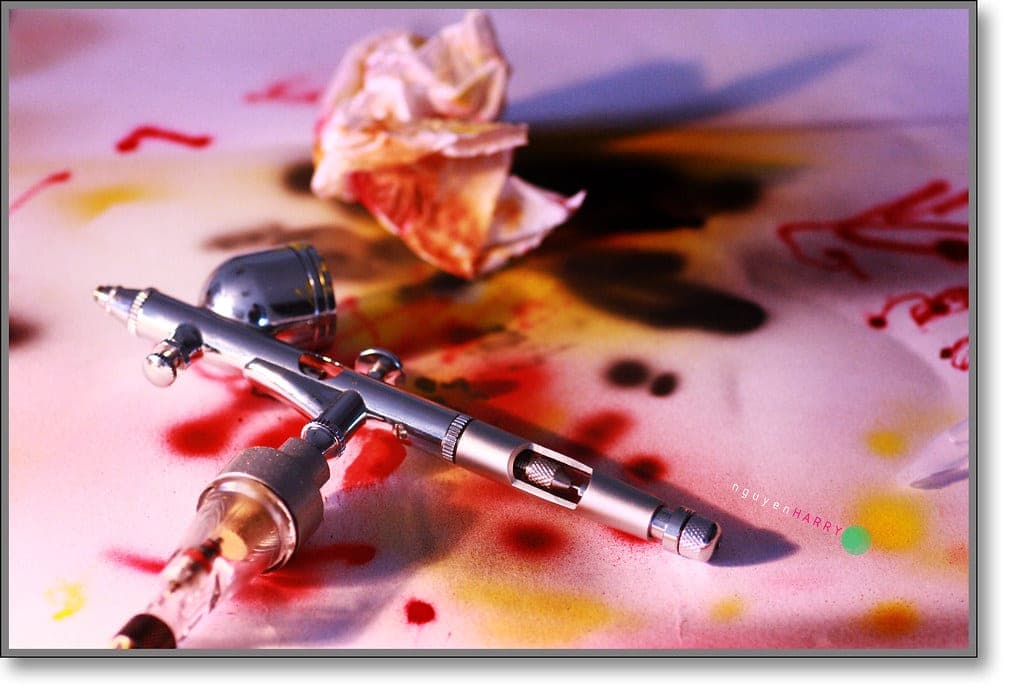 Master Airbrush Cool Runner II kit with G233 Pro SetCompressor, hose, holder and a dual-action gravity-feed airbrush with three nozzle sets in one box. Nothing here is best in class; everything here works on day one. | Best complete kit | 8.5 | Check price on Amazon |
| 2 | Iwata Eclipse HP-CSA 0.35 mm gravity-feed dual-action brush that sprays primer and fine highlights without a nozzle change. The default recommendation for a decade, deservedly. | Buy separately: the airbrush | 9.4 | Check price on Amazon |
| 3 |  Iwata Smart Jet compressorCompact, quiet, and preset to 20-25 PSI with auto shut-off so the motor is not running while you are not spraying. The simple, reliable choice. | Buy separately: the compressor | 8.7 | Check price on Amazon |
| 4 | Badger Patriot 105A US-made 0.5 mm workhorse at roughly half the Iwata's price. It will prime and basecoat all day and is forgiving about paint consistency. | The middle ground | 8.5 | Check price on Amazon |
| 5 | Tanked hobby compressor with moisture trapA small air tank, a regulator and a moisture trap. The tank is the upgrade: pressure stops pulsing and the motor runs a fraction as often. | Steadiest pressure for the money | 8.8 | Check price on Amazon |
Scores are our own editorial read against the criteria stated below — not a lab measurement and not a user rating. Tap a row for the full write-up.
Kit or separate: the real trade-off
A kit solves a problem that is genuinely off-putting: airbrush fittings are not universal, compressor outputs vary, and a beginner researching hose threads instead of painting is a beginner who does not start. A bundle removes all of that. Everything in the box fits everything else in the box.
What a bundle costs you is the airbrush. Machining tolerances on a budget airbrush are visibly behind an Iwata or a Harder & Steenbeck — the needle seats less consistently, the trigger has more slop, and the nozzle is more easily damaged during cleaning. You will spray with it, and you will replace it.
The compressor, by contrast, does not care. A compressor is a motor that makes air. A cheap one with a moisture trap and a regulator makes the same air as an expensive one, slightly louder. So the asymmetry is: buy the cheap compressor, spend on the airbrush. That is the argument for building the pair yourself.
Four things the kit must include
- A pressure regulator with a gauge. Not optional. Miniature work happens between 15 and 25 PSI, and a compressor with no regulator runs at whatever it runs at — usually 40 PSI or more, which blasts paint off the model.
- A moisture trap. Compressing air condenses water out of it. Without a trap, that water arrives in the paint cup as a spit halfway through a smooth coat.
- Auto shut-off. The compressor stops when you release the trigger instead of running continuously. Saves motor hours and most of the noise.
- A gravity-feed cup, ideally 1/3 oz or smaller. Gravity feed atomizes at lower pressure than siphon feed, and low pressure is what miniature work needs.
A bundle missing the regulator or the trap is not cheaper, it is incomplete. Those are the two parts you end up buying separately anyway.
What nozzle size to start with
0.3 mm, and if the kit includes 0.2 and 0.5 mm as well, keep the 0.3 mm installed and ignore the others for the first month. A 0.3 mm nozzle primes a model, base coats it, and does soft shading — which is 95% of what an airbrush is for in this hobby.
0.2 mm clogs constantly with anything thicker than ink and is for freehand detail you cannot do yet. 0.5 mm is for priming batches and spraying varnish. The full reasoning is in nozzle sizes explained.
The cost nobody puts on the box
A kit is not the whole purchase. Budget for airbrush-ready paint or a bottle of thinner, airbrush cleaner, and ventilation. The first two are small; the third is the one people skip.
Spraying acrylic indoors puts atomized paint into the air of the room you are sitting in. A window and a fan is the minimum, a spray booth is the proper answer, and NIOSH’s guidance on engineering controls explains why extraction beats a mask. Add that to the total before deciding a bundle is cheap.
Who should buy which
Buy the bundle if you are not sure you will like airbrushing, if the budget is firm, or if the research is the thing stopping you from starting. It works, it is forgiving to learn on, and nobody regrets learning to strip a cheap airbrush rather than an expensive one.
Buy separately if you already know this is a long-term hobby. An Eclipse HP-CS and a Smart Jet is a setup you will still be using in a decade, and the per-year cost is lower than replacing a bundle twice. Our airbrush roundup and compressor roundup cover each half properly, and whether you need one at all is the question to settle before either.
The picks in full
Master Airbrush Cool Runner II kit with G233 Pro Set
Compressor, hose, holder and a dual-action gravity-feed airbrush with three nozzle sets in one box. Nothing here is best in class; everything here works on day one.
What it gets right
- One purchase, one afternoon — no working out which hose fitting matches which compressor
- Three nozzle sets let you find where 0.3 mm stops being enough without buying another airbrush
- Parts are cheap and everywhere, which matters on the airbrush you learn to strip
Who it is wrong for
- Machining tolerances are visibly behind an Iwata or a Harder & Steenbeck; the needle seats less consistently
- No air tank, so you get pulse at low pressure unless the kit includes a moisture trap and regulator
- The bundled paints in some versions are filler, not hobby-grade miniature paint
Scored against this page’s criteria
Specs from the manufacturer: Master Airbrush product page
We do not publish prices. Amazon shows the current one, which is the only one that is ever right. #ad · how this is funded
Iwata Eclipse HP-CS
A 0.35 mm gravity-feed dual-action brush that sprays primer and fine highlights without a nozzle change. The default recommendation for a decade, deservedly.
What it gets right
- 0.35 mm is the genuine do-everything size: unthinned-ish primer at one end, zenithal highlights at the other
- PTFE seals tolerate lacquer and alcohol-based paints that eat rubber seals
- Parts are available everywhere, so a bent needle is a cheap fix rather than a new airbrush
Who it is wrong for
- Not the finest line available — a 0.2 mm brush beats it for freehand camouflage
- Open gravity cup is easy to knock over and awkward to decant large volumes into
- Costs two to three times a budget brush, which is hard to justify before you know you will stick with it
Scored against this page’s criteria
Specs from the manufacturer: Iwata-Medea product page
We do not publish prices. Amazon shows the current one, which is the only one that is ever right. #ad · how this is funded
Iwata Smart Jet compressor
Compact, quiet, and preset to 20-25 PSI with auto shut-off so the motor is not running while you are not spraying. The simple, reliable choice.
What it gets right
- 20-25 PSI is exactly the band miniature work lives in, so the preset is a feature not a limit
- Auto shut-off means it is silent between passes and the motor lasts longer
- Quiet enough to use in a flat in the evening
Who it is wrong for
- No tank, so the motor cycles on every trigger pull rather than drawing from stored air
- Preset pressure means limited headroom if you later want to spray something thick
- Costs more than a generic tanked compressor that does more on paper
Scored against this page’s criteria
Specs from the manufacturer: Iwata-Medea product page
We do not publish prices. Amazon shows the current one, which is the only one that is ever right. #ad · how this is funded
Badger Patriot 105
A US-made 0.5 mm workhorse at roughly half the Iwata's price. It will prime and basecoat all day and is forgiving about paint consistency.
What it gets right
- The 0.5 mm nozzle shrugs off thick primer that chokes finer brushes
- Forgiving spray pattern — it tolerates paint you thinned by eye
- Half the price of the usual recommendation, with parts easily available
Who it is wrong for
- Will not do fine detail; 0.5 mm is a basecoat tool
- Build finish is plainer than the European brushes at the same price
- If you only buy one airbrush, this is the wrong only airbrush
Scored against this page’s criteria
Specs from the manufacturer: Badger Air-Brush Co. product page
We do not publish prices. Amazon shows the current one, which is the only one that is ever right. #ad · how this is funded
Tanked hobby compressor with moisture trap
A small air tank, a regulator and a moisture trap. The tank is the upgrade: pressure stops pulsing and the motor runs a fraction as often.
What it gets right
- Stored air means genuinely constant pressure — no pulse at the start of a pass
- Motor only runs to refill the tank, so it is quieter overall and lasts longer
- The moisture trap stops water spitting into your paint on a humid day
Who it is wrong for
- Much heavier and bulkier than a tankless unit; it lives under the desk, not on it
- Tanks need draining or they rust from the inside out
- Generic brands vary enormously; the regulator and trap are where the corners get cut
Scored against this page’s criteria
We do not publish prices. Amazon shows the current one, which is the only one that is ever right. #ad · how this is funded
FAQ
Questions people actually ask
What is the best beginner airbrush kit with a compressor?
Is it better to buy an airbrush kit or separately?
What PSI do I need for a beginner airbrush kit?
Do I need a compressor with a tank?
What nozzle size should a beginner use?
More in Airbrushing Miniatures and Models, or start from the beginning with what to buy first.
Sources
- Master Airbrush — G233 and Cool Runner II specificationschecked October 2026
- Iwata-Medea — airbrush and compressor specificationschecked October 2026