Do You Need an Airbrush for Miniatures?
Not to start, and probably not for your first army. Here is the honest test for when it stops being a toy and starts saving you time.
The short answer
No, not to start. An airbrush saves time on priming, basecoating and smooth gradients across many models at once, so it pays off when you are painting units rather than single figures. Expect the airbrush to be about a third of the total cost once you add a compressor, thinner, cleaning kit and somewhere to spray.
The quick version
| # | Product | Best for | Score | Price |
|---|---|---|---|---|
| 1 | 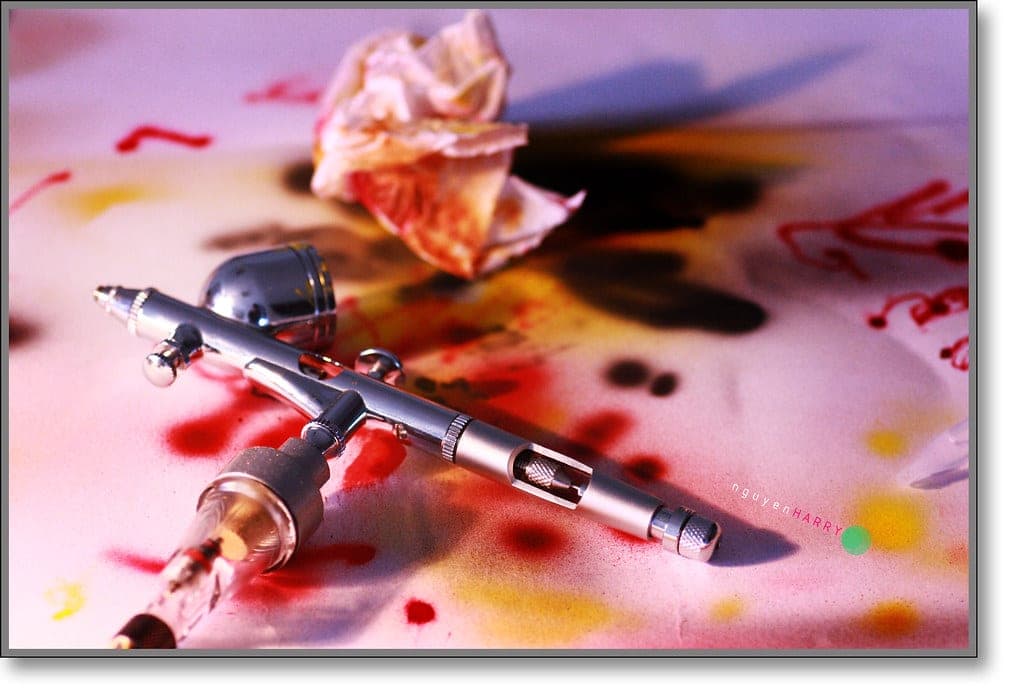 Harder & Steenbeck UltraGerman build at an entry price, with a self-centering nozzle and a trigger limiter that lets you learn control instead of guessing at it. | The airbrush to start with | 9.1 | Check price on Amazon |
| 2 |  Tanked hobby compressor with moisture trapA small air tank, a regulator and a moisture trap. The tank is the upgrade: pressure stops pulsing and the motor runs a fraction as often. | Air you can rely on | 8.8 | Check price on Amazon |
| 3 | 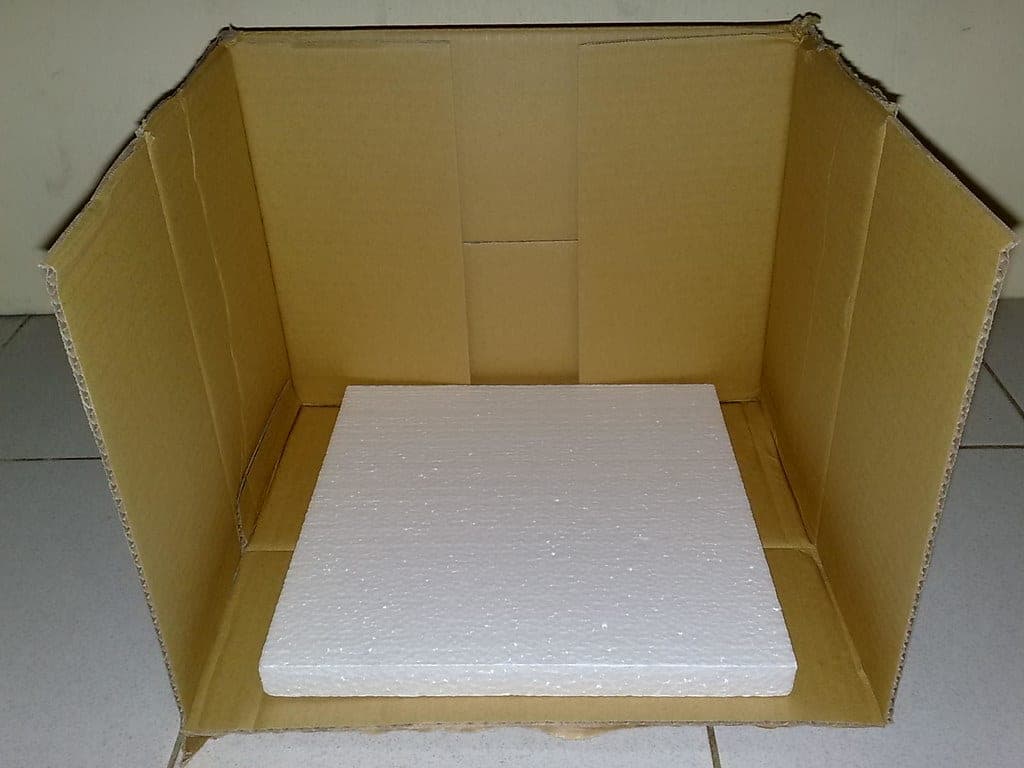 Portable hobby spray booth with extractorA collapsible box with a fan, a filter and a duct hose. Not a substitute for a respirator, but the difference between overspray on the wall and overspray out of the window. | Spraying indoors | 8.4 | Check price on Amazon |
Scores are our own editorial read against the criteria stated below — not a lab measurement and not a user rating. Tap a row for the full write-up.
What an airbrush is genuinely faster at
Four jobs, and they are all variations on “cover a lot of area smoothly.”
- Priming. No weather window, no aerosol fumes, thinner coat than a can, and you can prime in any room on any day. For anyone without outdoor space this alone is a strong argument.
- Basecoating in bulk. Twenty models get their base color in the time it takes to brush four, and the coat is flatter than a brush can manage.
- Zenithal priming and gradients. A soft light-to-dark transition across a whole model, which is extremely tedious with a brush and nearly free with an airbrush. It is also the setup that makes one-coat paints look their best.
- Vehicles, monsters and terrain. Large flat panels show brush marks. Airbrushes do not leave them.
What it does not do
It does not paint a model for you. Everything a tabletop model is judged on at arm’s length — edge highlights, eyes, metal trim, freehand, washes in recesses — stays brush work. A painter with an airbrush and no brush skill produces smoothly basecoated, unfinished models.
It also adds work. Every session has a setup and a teardown, and the teardown is not optional: paint left to dry inside an airbrush is a repair job. Realistically, budget ten to fifteen minutes of cleaning around every session.
The real cost
People price the airbrush and get surprised. The airbrush is roughly a third of it.
- The airbrush. See the picks.
- A compressor with a moisture trap and regulator. Not optional — water in the line spits on your model. See the compressors.
- Thinner, flow improver, cleaner. Cheap individually, and you need all three. See thinners and additives.
- A cleaning kit. Reamers, brushes, a wash bottle.
- Somewhere to spray. An open window and a box, or a booth. You are atomizing paint into air you breathe, and that is a genuine difference from brushing it on.
Three signs you are ready
You are painting units, not models. The airbrush pays off per batch. If you paint one character a month, it will mostly sit there.
You already prime regularly and the weather is the problem. If half the year is too humid for spray primer and brush-on is slowing you down, the airbrush fixes a problem you actually have.
Your brush fundamentals are in place. You can thin paint, you own a decent detail brush, you know what a wash does. The airbrush then accelerates work you already know how to finish.
What to buy instead, if the answer is not yet
With the money an airbrush setup costs you could buy, roughly in order of impact: a second lamp, a genuinely good detail brush, a wet palette, a full paint set, and several boxes of models to practice on.
That list will improve your painting more than an airbrush will, and none of it needs cleaning for fifteen minutes afterwards.
The picks in full
Harder & Steenbeck Ultra
German build at an entry price, with a self-centering nozzle and a trigger limiter that lets you learn control instead of guessing at it.
What it gets right
- The self-centering nozzle removes the single most common way a beginner wrecks an airbrush
- Trigger limiter lets you cap the paint flow while you build muscle memory
- Shares parts and design language with the pricier Evolution, so it is a real tool not a toy
Who it is wrong for
- Fewer bells than the Evolution — no quick-fix nozzle, simpler cup options
- 0.2 mm version clogs on primer; pick the 0.4 if priming is your main use
- Still needs a compressor, so the true cost of entry is higher than the brush alone
Scored against this page’s criteria
We do not publish prices. Amazon shows the current one, which is the only one that is ever right. #ad · how this is funded
Tanked hobby compressor with moisture trap
A small air tank, a regulator and a moisture trap. The tank is the upgrade: pressure stops pulsing and the motor runs a fraction as often.
What it gets right
- Stored air means genuinely constant pressure — no pulse at the start of a pass
- Motor only runs to refill the tank, so it is quieter overall and lasts longer
- The moisture trap stops water spitting into your paint on a humid day
Who it is wrong for
- Much heavier and bulkier than a tankless unit; it lives under the desk, not on it
- Tanks need draining or they rust from the inside out
- Generic brands vary enormously; the regulator and trap are where the corners get cut
Scored against this page’s criteria
We do not publish prices. Amazon shows the current one, which is the only one that is ever right. #ad · how this is funded
Portable hobby spray booth with extractor
A collapsible box with a fan, a filter and a duct hose. Not a substitute for a respirator, but the difference between overspray on the wall and overspray out of the window.
What it gets right
- Captures the overspray that otherwise settles on everything within a meter
- Folds flat, which matters when the hobby lives on a dining table
- The turntable alone makes spraying a model evenly much easier
Who it is wrong for
- Does NOT make a respirator optional for lacquers and alcohol-based paints
- The duct has to actually reach a window, or you are just moving air around the room
- Fan noise is real, and the cheap ones are loud enough to need headphones
Scored against this page’s criteria
We do not publish prices. Amazon shows the current one, which is the only one that is ever right. #ad · how this is funded
FAQ
Questions people actually ask
Is an airbrush worth it for a beginner?
How much does a full airbrush setup cost?
Can you paint a whole miniature with an airbrush?
Is an airbrush better than spray primer?
How long does it take to clean an airbrush?
More in Airbrushing Miniatures and Models, or start from the beginning with what to buy first.
Sources
- Anest Iwata-Medea — airbrush maintenance and specificationschecked October 2026
- US CDC / NIOSH — engineering controls and ventilationchecked October 2026