The Best Lamp for Painting Miniatures
The upgrade that improves every model you paint from then on, and the one nobody puts on a starter list.

The short answer
The Brightech LightView Pro Flex is the best single lamp for most painters: a bright, high-CRI LED head on a long adjustable arm that clamps to the desk edge and stays where you put it. If you want the biggest improvement per dollar instead, buy two cheap lamps and light the model from both sides.
The quick version
| # | Product | Best for | Score | Price |
|---|---|---|---|---|
| 1 |  Brightech LightView Pro FlexA weighted-base magnifier lamp with a glass lens and a long flexible arm. It solves light and magnification in one purchase, which is why it is the usual answer. | Best lamp for most painters | 9.0 | Check price on Amazon |
| 2 | 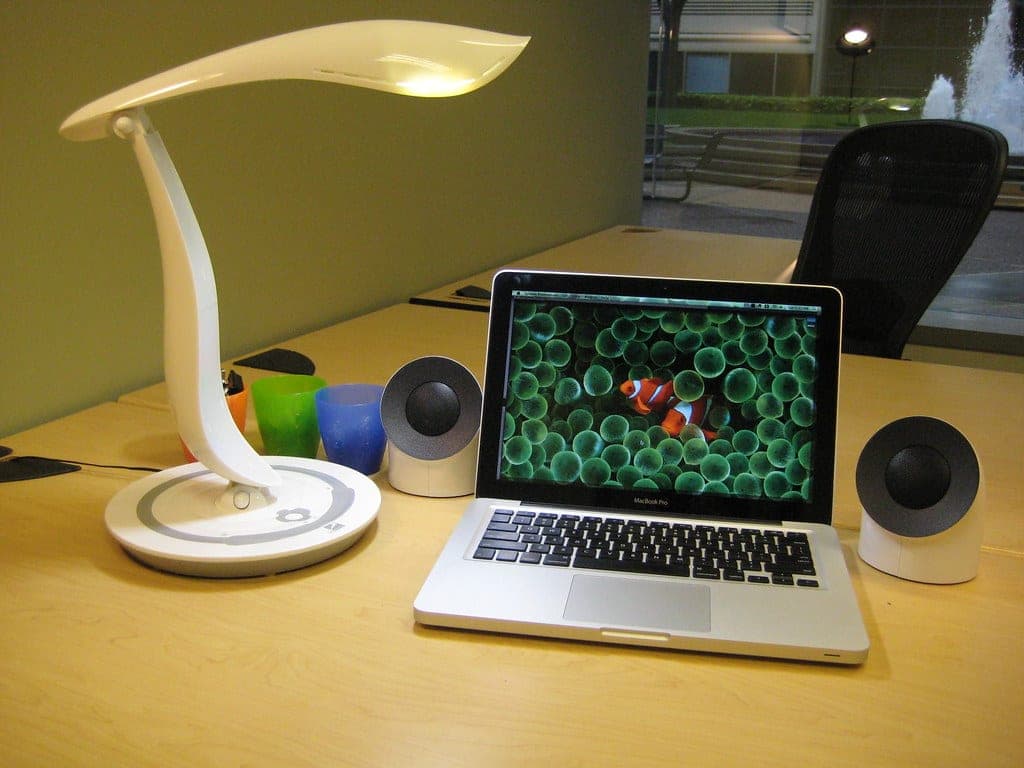 Redgrass Games R9 Hobby LampA 98+ CRI hobby lamp built for people who care that the red in the pot is the red on the model. Overkill for a table army, correct for a display piece. | Color-accurate daylight | 8.8 | Check price on Amazon |
| 3 | Neatfi XL Bright LED Task LampA wide 2,500-lumen bar that floods the entire work surface from one fixture. Simple, bright and the least fussy way to stop squinting. | Lighting a whole desk | 8.7 | Check price on Amazon |
| 4 | IKEA Tertial work lamp (buy two)Two cheap clamp lamps on opposite sides of the desk, beams crossed. It beats one expensive lamp at the thing that actually ruins detail work: your own shadow. | Killing shadows on a budget | 8.9 | Check price on Amazon |
| 5 | Head-mounted magnifier visor with LEDInterchangeable lens plates on a headband, so the magnification moves with you instead of your having to move into it. Unglamorous and very effective. | Eyes, not light | 8.4 | Check price on Amazon |
Scores are our own editorial read against the criteria stated below — not a lab measurement and not a user rating. Tap a row for the full write-up.
Why light matters more than your brush
You cannot paint detail you cannot see. Under a single ceiling bulb, the model sits in your own hand shadow, every recess reads as black, and the color you mixed looks like a different color on the shelf tomorrow. Painters routinely spend more on a brush than on lighting and then blame the brush.
Three properties matter, in this order: where the light comes from, how much of it there is, and what it does to color.
How we picked
- Shadow control. Can you get light onto the model from a direction that is not behind your own hand? This is almost entirely about arm reach and adjustability.
- Usable brightness at working distance. Headline lumen numbers are measured at the lamp. What matters is light on a 32 mm model 40 cm away.
- Color accuracy (CRI). A high-CRI LED renders your reds as red. A cheap low-CRI panel flattens them, and you only find out in daylight.
- Color temperature. Roughly 5000–6500K (neutral to daylight) is the range to work in. Warm household bulbs at 2700K make everything look yellower than it is.
- Does it stay put? A lamp that sags over an evening is a lamp you fight instead of using.
These are editorial picks based on published specifications and the reasoning above, not a lab comparison with a light meter. Our review policy says exactly what that means.
CRI, in one paragraph
Color Rendering Index scores how faithfully a light source shows colors compared with natural daylight, out of 100. Cheap white LEDs often land in the 70s, which is fine for finding your keys and bad for judging a mixed highlight. Anything advertised at CRI 90+ is in the range where the color you see is close to the color you have. The Department of Energy’s lighting guidance explains the metric in plain terms if you want the background.
One practical consequence: if you paint at night under one color of light and photograph models by a window the next day, low-CRI lighting is why the photos never match what you remember painting.
The two-lamp trick
The single highest-value lighting purchase is not a better lamp. It is a second lamp.
One light source, however good, casts one shadow — and your brush hand lives directly in it. Two modest lamps placed left and right at roughly 45 degrees fill each other’s shadows, so the recesses stay readable while you work. Two inexpensive adjustable lamps beat one premium lamp for painting, every time, and usually for less money.
Buy the good lamp if you want one tidy arm, a nicer build and better color rendering in a single fixture. Buy two cheap ones if you want the biggest visible improvement tonight.
When the problem is your eyes, not the light
If you have plenty of light and still cannot resolve the edge of an eyelid, more lumens will not help. A head-mounted magnifier is the fix, and it is a genuinely different category of purchase — it moves your working distance in and makes painting eyes and rivets a matter of a steady hand rather than guesswork. See whether you need a magnifier.
Placement beats specification
- Light from in front and above, not behind. Behind you means your head is the shadow.
- Clamp to the desk edge, not the desktop. Clamps free the surface and stop the lamp walking when you knock the arm.
- Get the head close. Light falls off fast with distance. A lamp 30 cm away is dramatically brighter on the model than the same lamp at 60 cm.
- Match your two light sources. Mixing a daylight LED with a warm bulb gives you two different colors of light on one model, which is worse than either alone.
The picks in full
Brightech LightView Pro Flex
A weighted-base magnifier lamp with a glass lens and a long flexible arm. It solves light and magnification in one purchase, which is why it is the usual answer.
What it gets right
- Glass lens rather than acrylic, so the image stays sharp at the edges
- Weighted base means it stays where you put it instead of walking across the desk
- One purchase covers both the lamp and the magnifier most painters would buy separately
Who it is wrong for
- A single light source still casts a hand shadow; two cheap lamps beat one good one for that
- The lens is in the way when you are not using it
- Color rendering is good, not reference-grade — a display painter will want higher CRI
Scored against this page’s criteria
We do not publish prices. Amazon shows the current one, which is the only one that is ever right. #ad · how this is funded
Redgrass Games R9 Hobby Lamp
A 98+ CRI hobby lamp built for people who care that the red in the pot is the red on the model. Overkill for a table army, correct for a display piece.
What it gets right
- At 98+ CRI colors look essentially as they do in daylight — micro-glazes are judgeable
- Flicker-free driver, which matters over a four-hour session more than people expect
- Built for the hobby rather than adapted from an office lamp
Who it is wrong for
- The most expensive lamp here by a long way
- No magnification
- Genuinely wasted money if you are painting rank-and-file infantry for the table
Scored against this page’s criteria
Specs from the manufacturer: Redgrass Games product page
We do not publish prices. Amazon shows the current one, which is the only one that is ever right. #ad · how this is funded
Neatfi XL Bright LED Task Lamp
A wide 2,500-lumen bar that floods the entire work surface from one fixture. Simple, bright and the least fussy way to stop squinting.
What it gets right
- Covers the whole desk, so you are not repositioning the lamp every ten minutes
- A broad light source softens hand shadows that a spot lamp makes worse
- Very bright for the money
Who it is wrong for
- No magnification at all — budget separately if your eyes need it
- The wide head needs real desk or clamp space above the work
- Color temperature is fixed on most models, so you cannot tune it to your paints
Scored against this page’s criteria
We do not publish prices. Amazon shows the current one, which is the only one that is ever right. #ad · how this is funded
IKEA Tertial work lamp (buy two)
Two cheap clamp lamps on opposite sides of the desk, beams crossed. It beats one expensive lamp at the thing that actually ruins detail work: your own shadow.
What it gets right
- Two crossed light sources eliminate the hand shadow that no single lamp can fix
- You choose the bulbs, so you can buy high-CRI daylight ones for a few dollars
- The cheapest route to genuinely good hobby lighting, by a wide margin
Who it is wrong for
- Bulbs are not included, and a cheap bulb undoes the whole plan
- Two clamps need two free desk edges
- No magnification, and the clamp is less stable than a weighted base
Scored against this page’s criteria
We do not publish prices. Amazon shows the current one, which is the only one that is ever right. #ad · how this is funded
Head-mounted magnifier visor with LED
Interchangeable lens plates on a headband, so the magnification moves with you instead of your having to move into it. Unglamorous and very effective.
What it gets right
- Magnification is always in the right place, because it is on your head
- Swappable plates let you dial it to the job rather than living at one power
- Works over prescription glasses, which a lamp lens often does not
Who it is wrong for
- Very short working distance at high power — your nose ends up near the model
- Looks ridiculous, which genuinely stops some people using it
- Cheap acrylic plates distort at the edges; the lens quality is the whole product
Scored against this page’s criteria
We do not publish prices. Amazon shows the current one, which is the only one that is ever right. #ad · how this is funded
FAQ
Questions people actually ask
What color temperature should a miniature painting lamp be?
How bright does a painting lamp need to be?
Is one good lamp or two cheap lamps better?
Does CRI actually matter for painting miniatures?
Do I need a daylight lamp to paint at night?
More in Workspace, Lighting and Storage, or start from the beginning with what to buy first.
Sources
- US Department of Energy — Color rendering index (CRI) explainedchecked October 2026
- IKEA — Tertial work lamp product pagechecked October 2026
- Redgrass Games — Everlasting wet palette and handle rangechecked October 2026