The Best Magnifier for Painting Miniatures
The tool that buys you another decade at the desk. Also the tool most people buy at the wrong power and never wear twice.

The short answer
The Donegan OptiVISOR LX is the best magnifier for painting miniatures: a binocular visor that keeps depth perception, with swappable lens plates so you can run a low power for basecoating and a higher one for eyes. Buy the Carson MagniVisor Deluxe instead if you want the light built in.
The quick version
| # | Product | Best for | Score | Price |
|---|---|---|---|---|
| 1 | 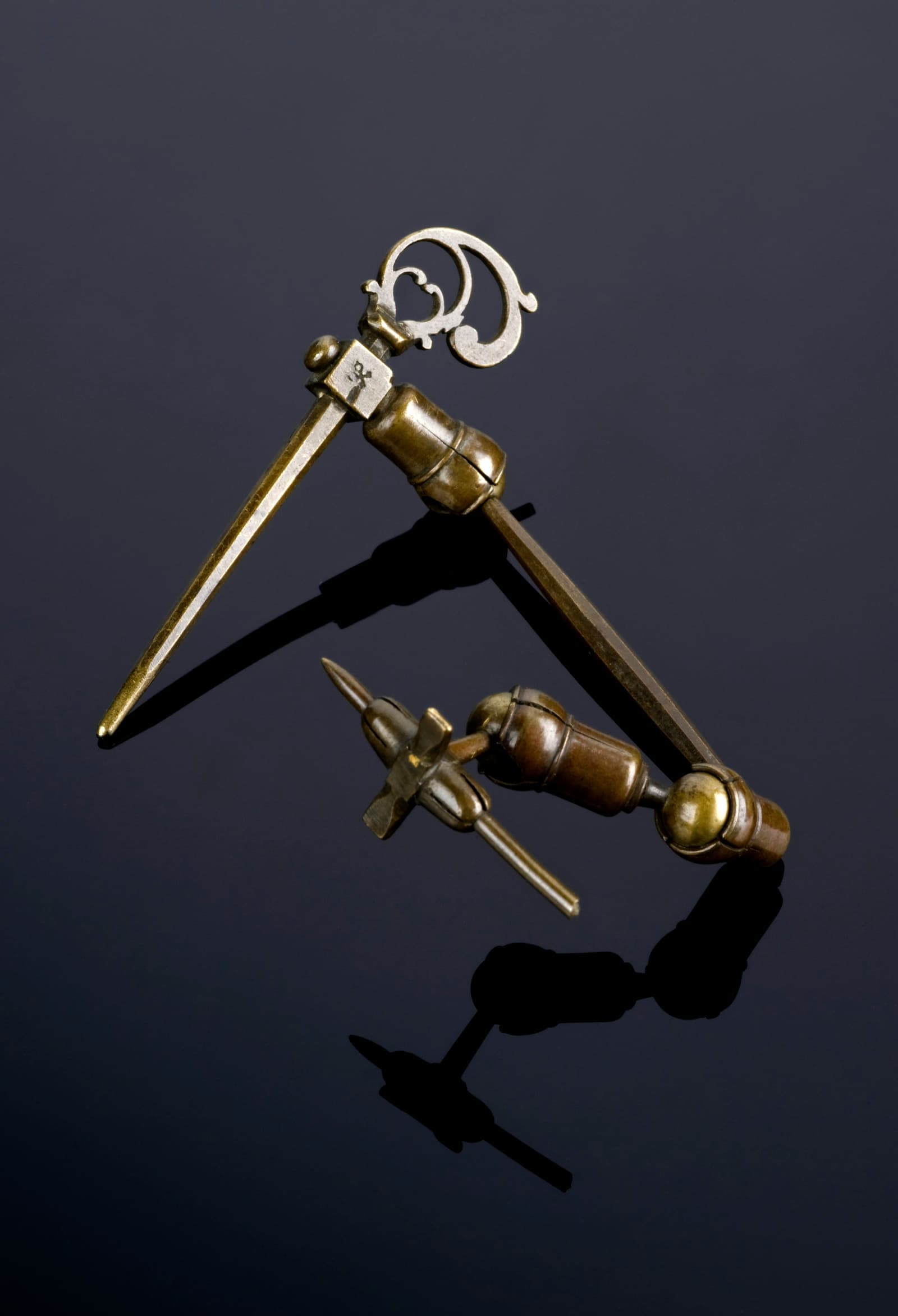 Donegan OptiVISOR LXThe binocular visor the jewelry and watch trades have used for decades. Swappable lens plates, a genuine working distance, and edge-to-edge clarity that acrylic bubble magnifiers do not approach. | Best optics for painting | 9.1 | Check price on Amazon |
| 2 | Carson MagniVisor DeluxeFour flip-up lenses and a removable LED on a 5.3 oz headband. The cheapest way to put both magnification and light exactly where you are looking. | Light and lenses in one box | 8.3 | Check price on Amazon |
| 3 | 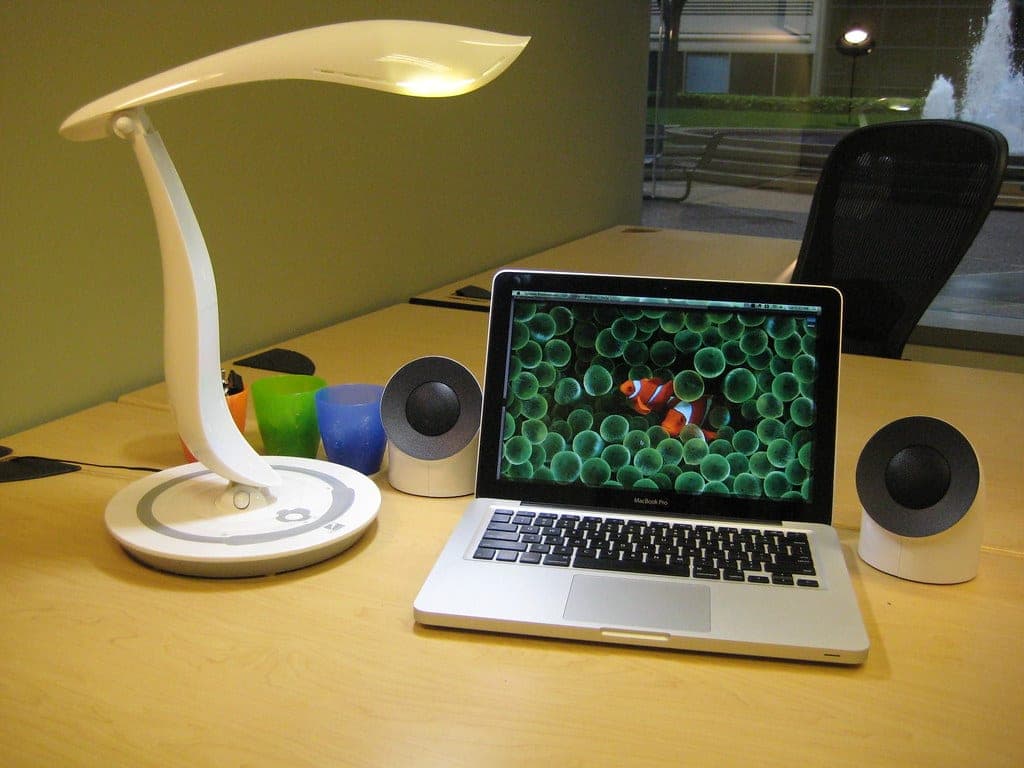 Brightech LightView Pro Magnifying Clamp LampA real glass lens and a 650-lumen LED on a gooseneck that clamps to the desk edge. The right answer if a visor makes you claustrophobic. | Nothing on your head | 8.6 | Check price on Amazon |
| 4 | YOCTOSUN Rechargeable LED Head MagnifierFive click-in lenses on a frame that works as spectacles or on a head strap, with a rechargeable light instead of a drawer full of AAAs. | Painting in glasses | 8.2 | Check price on Amazon |
Scores are our own editorial read against the criteria stated below — not a lab measurement and not a user rating. Tap a row for the full write-up.
What magnification actually fixes
There is a specific moment this tool exists for. You can see the model fine. You can see the panel line, the rivet, the eye socket. What you cannot see is whether the brush tip is on the thing you are aiming at or half a millimeter beside it. The paint goes down, you lean back, and the highlight is in the wrong place. That is not a skill problem and it is not a brush problem. Your eyes have stopped resolving at the distance you work at.
A magnifier fixes that and nothing else. It will not steady your hand, it will not thin your paint, and it will not make a worn brush come to a point. If your edge highlights are wobbly rather than misplaced, the problem is hand stability, and a magnifier will make the wobble easier to see without making it smaller.
The honest order of operations is light, then magnification. Pupils constrict in bright light, and a constricted pupil has a deeper depth of field — which is a technical way of saying that a brighter desk genuinely sharpens close-up vision. A great many painters who think they need a magnifier need a better lamp. We wrote the longer version of that argument in do you need a magnifier, and it is worth reading before you spend anything here.
How we picked
- Working distance. The single most ignored specification and the one that decides whether you ever wear the thing. Magnification and working distance trade against each other directly: the more you magnify, the closer you have to be.
- Binocular versus monocular. Two eyes through two lenses preserves depth perception. One lens over both eyes, or a single loupe, flattens the model into a picture — and you cannot judge how far the brush is from the surface in a picture.
- Optical quality across the field. Cheap acrylic goes soft and curved at the edges. You notice it as a strange pull when you move your head, and it is the reason some people get a headache in twenty minutes.
- Comfort over two hours. A painting session is not a thirty-second inspection. Weight, headband design and whether the visor flips up without coming off all decide whether this becomes a habit.
- Integrated light, or not. A visor with no light needs a lamp you already own. A visor with a light casts it exactly along your line of sight, which removes the shadow your own hand throws.
- Glasses compatibility. If you paint in prescription glasses, half the products on the market are quietly unsuitable, and none of them say so on the box.
These rankings come from the manufacturers’ published optical specifications and the reasoning set out on this page, not from a controlled side-by-side test of every magnifier sold. Where a number is a manufacturer figure we say so. The standard we hold ourselves to is in our review policy.
The magnification number is not the useful number
Everyone shops for the biggest multiplier. It is the wrong instinct, and the specification table on the OptiVISOR explains why better than any argument. The LX-3 plate gives 1.75x at a 14 inch focal length. The LX-7 gives 2.75x at 6 inches. That is the whole trade in two lines: one extra power of magnification costs you eight inches of room to work in.
Six inches is closer than it sounds. It is close enough that your brush hand collides with your own face, close enough that you breathe on wet paint, and close enough that you cannot see the whole of a 32 mm model at once. Painters who buy the strongest plate available almost always end up back at a weaker one, having concluded that magnifiers are not for them.
For 28 mm and 32 mm figures, somewhere between 1.5x and 2x is the range that works, because it leaves you roughly the arm position you already paint in. Save the high-power plate for a specific job — eyes, lenses, freehand on a shoulder pad — and swap it out afterwards. That is the real argument for a visor with interchangeable plates over a fixed lens: not that you need 3.5x, but that you need 1.75x most of the time and 3.5x occasionally.
Gunpla and larger scale models are a different calculation. A 1/144 HG kit has panel lines you can see unaided, and most of the work is at a scale where magnification is optional rather than enabling. If your interest is kits rather than figures, read what tools you actually need before you put a magnifier on the list.
Glass versus acrylic, and why it shows up as a headache
Nearly every head-worn magnifier uses acrylic lenses, because glass of that size on your face would be heavy and would break. Acrylic is fine in the middle and degrades toward the rim, where it bends straight lines slightly. Your brain corrects for that automatically, and correcting for it continuously for two hours is tiring in a way you do not consciously notice until you stop.
The practical mitigation is to work in the center of the field and move your head rather than your eyes. The expensive mitigation is ground glass, which on a desk lamp is entirely practical because the desk is carrying the weight, not your neck. That is the real reason a magnifying lamp is worth considering next to a visor: not the light, but the lens material.
Precision-ground prismatic plates, which is what the OptiVISOR LX uses, sit between the two — still acrylic, but molded and polished to a standard that holds together much further out from center than a pressed bubble lens. That difference is most of what you are paying for.
The three form factors, honestly
The plain binocular visor. Magnification follows your eyes, so you can look at the pot, the palette and the model without anything moving. It needs a lamp. It is the choice of every trade that does fine work for a living, which is a reasonable signal.
The lighted visor. Same idea with an LED above the lenses. The light lands exactly where you are looking and kills the shadow your brush hand casts, which a single desk lamp always throws. The compromise is that integrated LEDs are small, so they are a supplement to room light rather than a replacement, and the lens quality at this price is ordinary.
The magnifying desk lamp. Nothing on your head, a real glass lens, and the light and magnification arrive together. The catch is that the magnification is fixed in space: you have to bring the model into the lens and keep it there, which suits detailed work on a held model far better than it suits batch painting a unit. Clamp versions cost you no desk surface at all, which matters more than it sounds on a desk already holding a palette, a water pot and a lamp. If your desk is the constraint, start with how to set up a painting desk.
If you already wear glasses
This is where most buying advice quietly fails. A headband visor is designed to go over glasses and generally does, with the lens plate sitting an inch or so in front of your lenses. The combined optical path is not what either manufacturer designed, but in practice it works, and it is the standard answer.
Spectacle-frame magnifiers are the ones to be careful with. Worn as glasses they are excellent, and worn over larger prescription frames they perch badly and slide. If you are buying one of these as a glasses wearer, buy the version with a head strap in the box and plan to use the strap, not the arms.
One more honest note: if you have not had an eye test in a few years, have one before you buy any of this. Reading glasses a diopter stronger than your current pair solve the same problem for less money, and they do not sit on your forehead.
What to buy, by situation
You already have a good lamp and want the best optics. The OptiVISOR LX with an LX-3 or LX-4 plate. Budget for the plate separately; the visor and the lens are priced apart.
You want one purchase that solves light and magnification at the model. The Carson MagniVisor Deluxe. Four lenses and an LED in the box, and the LED detaches as a standalone light.
You cannot stand wearing things on your head. The Brightech LightView Pro clamp lamp, with the caveat that fixed 2.25x and a fixed position is a real constraint.
You paint in glasses and hate batteries. The YOCTOSUN, used with the head strap rather than as spectacles.
All four are a smaller purchase than a decent brush set, and all four are worth less than the lamp you should buy first. If you are assembling a desk from nothing, the full list is in miniature painting supplies, and the finest-point brushes that make magnification worth having are in the best detail brushes.
Setting it up so you actually use it
A magnifier that lives in a drawer is a magnifier you bought for nothing, and the difference between the ones that get worn and the ones that do not is almost entirely setup. Three things decide it.
Set the headband before you put paint on a brush. Adjust the dial so the weight sits on the top of your skull rather than gripping your temples, and set the pivot so the plate is vertical when your head is at the angle you actually paint at — which is tilted down, not level. A visor set up for a level head makes you crane your neck, and you will blame the visor.
Fix the distance, then stop moving. Each lens plate has one focal length and it is not a suggestion. Find the distance where the model snaps into focus, note roughly where your elbows are, and work there. Painters who drift in and out of the focal plane spend the session hunting for focus and conclude that magnification is uncomfortable. It is not; being half an inch out of the focal plane is.
Keep the lens clean and keep it up when you are not using it. Acrylic scratches easily, and a scratched plate is a plate you will not enjoy looking through. Flip it up between stages rather than taking the visor off, wipe it with a soft cloth and nothing else, and never with a solvent — isopropyl and acrylic lens plates are a bad combination. Store it where the lens is not face down on a desk that has sanding grit on it.
Three mistakes worth avoiding
Buying the highest power on the page. Covered above, and it is the mistake that puts magnifiers in drawers. Start low.
Using it for everything. Magnification exaggerates flaws that are invisible at arm’s length, and a model painted entirely under 3x often looks overworked when you put it on the table. Check your work at viewing distance regularly — the table is where it will be judged.
Treating it as a substitute for light. A magnifier concentrates the light that reaches it. In a dim room it magnifies a dim image. Fix the lamp first; the magnifier is the second purchase, and for a lot of painters it never needs to be the first.
The picks in full
Donegan OptiVISOR LX
The binocular visor the jewelry and watch trades have used for decades. Swappable lens plates, a genuine working distance, and edge-to-edge clarity that acrylic bubble magnifiers do not approach.
What it gets right
- Binocular design keeps depth perception, so your brush lands where you think it will
- Lens plates are sold separately and swap in seconds, so one visor covers every job
- Tilts up out of the way without taking it off, which is the feature you use most
Who it is wrong for
- No integrated light at all — you are buying a lamp as well
- Lens plates cost extra, so the real price is higher than the headline
- The high-power plates have a short working distance; LX-3 or LX-4 is the painting choice, not LX-7
Scored against this page’s criteria
Specs from the manufacturer: Donegan Optical product page
We do not publish prices. Amazon shows the current one, which is the only one that is ever right. #ad · how this is funded
Carson MagniVisor Deluxe
Four flip-up lenses and a removable LED on a 5.3 oz headband. The cheapest way to put both magnification and light exactly where you are looking.
What it gets right
- The LED detaches and works as a standalone light, which is more useful than it sounds
- Four lenses in the box means no separate lens-plate purchase
- Light enough at 5.3 oz that a two-hour session does not leave a headache
Who it is wrong for
- Acrylic lenses, not ground glass — the outer edge of the field softens noticeably
- AAA batteries rather than rechargeable, so the LED is a running cost
- The headband is plastic and adjusts coarsely; it fits most heads but fits none perfectly
Scored against this page’s criteria
Specs from the manufacturer: Carson product page
We do not publish prices. Amazon shows the current one, which is the only one that is ever right. #ad · how this is funded
Brightech LightView Pro Magnifying Clamp Lamp
A real glass lens and a 650-lumen LED on a gooseneck that clamps to the desk edge. The right answer if a visor makes you claustrophobic.
What it gets right
- Ground glass rather than acrylic, so the image holds together across the whole lens
- Tunable 3000K to 6000K means you can match it to the light you judge colors under
- Clamping to the desk edge costs you no work surface at all
Who it is wrong for
- Fixed 2.25x — there is no swapping to a higher power for eye-level detail
- You have to move the model into the lens rather than the magnification following your eyes
- Needs a desk edge under 2.5 in thick; thick or trimmed desktops are a problem
Scored against this page’s criteria
Specs from the manufacturer: Brightech product page
We do not publish prices. Amazon shows the current one, which is the only one that is ever right. #ad · how this is funded
YOCTOSUN Rechargeable LED Head Magnifier
Five click-in lenses on a frame that works as spectacles or on a head strap, with a rechargeable light instead of a drawer full of AAAs.
What it gets right
- Rechargeable, so the light is not metered out in disposable batteries
- Switches between a glasses frame and a head strap, which solves the fit problem most visors have
- Five lenses covers everything from basecoating at 1x to eye-level detail at 3.5x
Who it is wrong for
- Acrylic lenses with visible edge distortion — fine for detail work, not for color judgment
- The eyeglass frame sits awkwardly over larger prescription glasses; the strap is the better mode there
- Battery life is finite mid-session and there is no pass-through alternative to stopping to charge
Scored against this page’s criteria
Specs from the manufacturer: YOCTOSUN product page
We do not publish prices. Amazon shows the current one, which is the only one that is ever right. #ad · how this is funded
FAQ
Questions people actually ask
What magnification do I need for painting 28 mm miniatures?
Is a magnifying lamp or a head visor better for miniatures?
Can I use a magnifier over prescription glasses?
Why does my magnifier give me a headache?
Do I need a magnifier or just a better lamp?
More in Workspace, Lighting and Storage, or start from the beginning with what to buy first.
Sources
- Donegan Optical — OptiVISOR LX series specificationschecked October 2026
- Carson Optical — MagniVisor Deluxe product specificationschecked October 2026
- Brightech — LightView Pro magnifying lamp rangechecked October 2026
- YOCTOSUN — rechargeable LED head magnifier specificationschecked October 2026
- US Department of Energy — Color rendering index (CRI) explainedchecked October 2026