How to Get a Steady Hand
Nobody's hand is steady at this scale. The trick is that you are not supposed to hold it still in mid-air.

The short answer
Do not try to hold your hand still in the air — brace it. Rest both elbows or wrists on the desk, hold the model in a handle so both hands move together, exhale and paint on the pause, and keep strokes short. Good light and magnification remove most of the remaining difficulty.
The quick version
| # | Product | Best for | Score | Price |
|---|---|---|---|---|
| 1 | 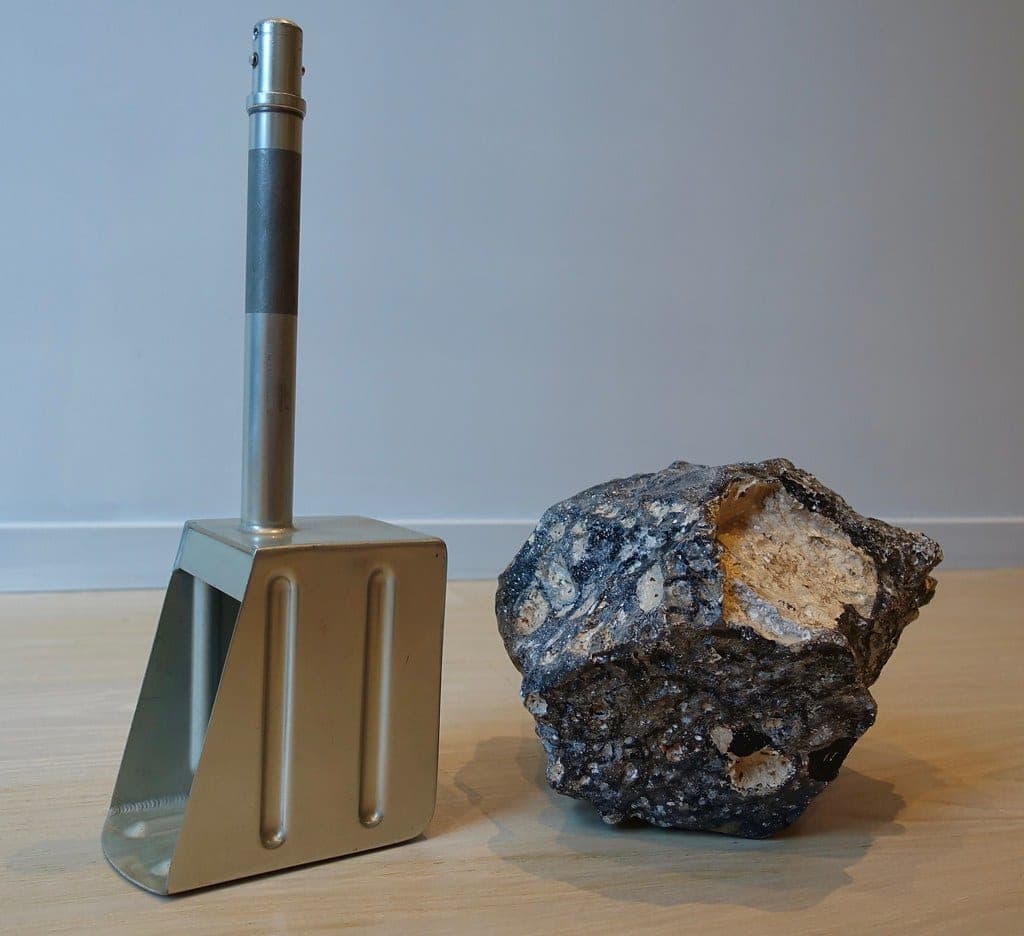 Citadel Colour Painting HandleThe original spring-clip handle, sized for the 25 mm and 32 mm bases that make up most of an army. The one most painters actually need. | Bracing the model | 8.9 | Check price on Amazon |
| 2 | 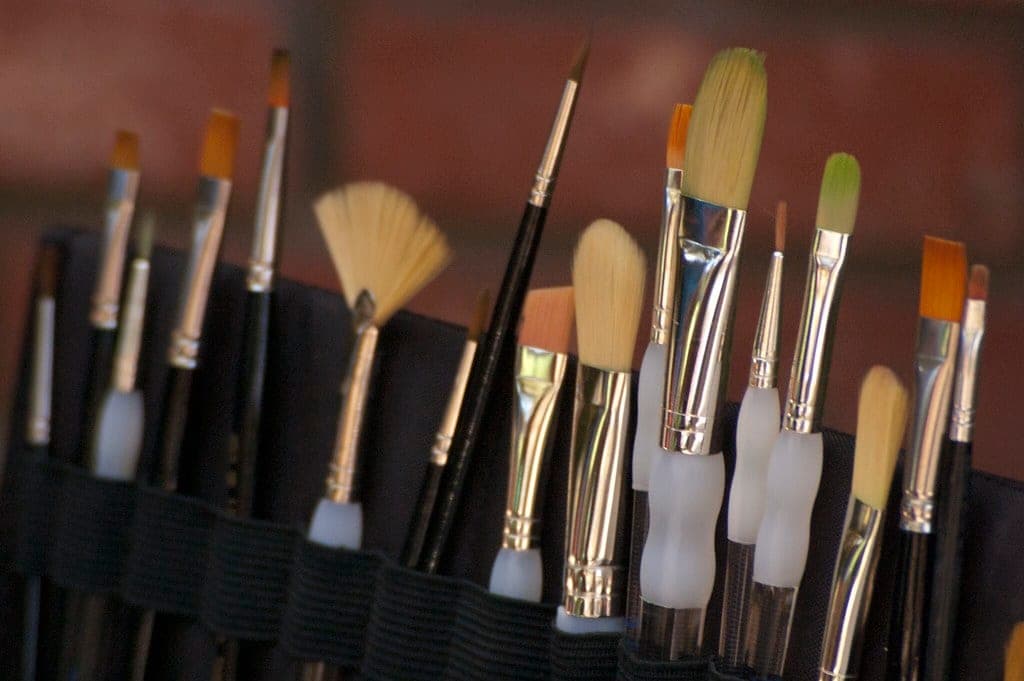 Rosemary & Co Series 33 Kolinsky SableKolinsky sable at a price that does not make you flinch when one eventually dies. The brush most experienced painters quietly settle on. | A tip that does the work | 9.3 | Check price on Amazon |
| 3 |  Brightech LightView Pro FlexA weighted-base magnifier lamp with a glass lens and a long flexible arm. It solves light and magnification in one purchase, which is why it is the usual answer. | Seeing what you are doing | 9.0 | Check price on Amazon |
| 4 | Head-mounted magnifier visor with LEDInterchangeable lens plates on a headband, so the magnification moves with you instead of your having to move into it. Unglamorous and very effective. | When light is not enough | 8.4 | Check price on Amazon |
Scores are our own editorial read against the criteria stated below — not a lab measurement and not a user rating. Tap a row for the full write-up.
The reframe that fixes most of this
Beginners picture a miniature painter holding a brush motionless in mid-air with surgical precision. That is not what is happening. Experienced painters are braced — forearms on the desk, hands touching each other, the model clamped in a handle, strokes an inch long.
Physiological tremor is universal and unavoidable. You are not trying to eliminate it. You are building a mechanical system where it does not matter, and that system is contact: as many points of contact between you, the desk and the model as you can arrange.
Bracing, specifically
Both elbows down. Not just the brush hand. If the hand holding the model is floating, the model is moving under a steady brush, which is exactly as bad.
Hands in contact. Rest the heel of your brush hand against the fingers or wrist of your model hand. When the two hands are linked, any tremor moves both together and the relative position barely changes. This is the single most effective technique on this page.
Raise the model, not your arms. People hunch down to the desk and then find their elbows have nowhere to rest. Put the model on a handle and lift it to a height where your forearms are flat on the surface — chest to chin height is the usual answer, covered in the desk setup guide.
Stroke mechanics
Short strokes. A 10 mm edge highlight done as one confident sweep is a gamble. Done as three short overlapping strokes, each one is an easy movement and the join is invisible once the paint is dry.
Pull, do not push. Draw the brush toward you. Pushing a brush splays the tip and loses the point.
Rotate the model. Always paint in your most comfortable direction and turn the handle to bring the next area into it. Contorting your wrist to reach an awkward angle removes every bracing advantage you just set up.
Let the brush tip do the work. This is where equipment genuinely substitutes for steadiness: a brush with a fine, well-formed point lays a thin line with a light touch, whereas a splayed brush requires pressure and precision you do not have. See detail brushes.
Breathing, caffeine, fatigue
Exhale and paint on the pause. Tremor rises while you hold a full breath. Breathe out, then stroke in the quiet moment afterwards.
Caffeine increases tremor in most people, measurably. If you paint after three coffees and your edges wander, that is a variable worth testing.
Fatigue is worse than caffeine. Fine motor control degrades noticeably after roughly 45 to 60 minutes of close work. Stopping for five minutes genuinely restores it, and painting tired is how good models get ruined at the last stage.
Cold hands shake more. Trivial, true, and relevant if you paint in a cold room.
The equipment that removes the problem
Three purchases do more for apparent steadiness than any amount of practice:
- A handle, because it makes bracing possible at all.
- Two lamps, because unseen detail cannot be painted accurately regardless of steadiness — the lamp guide.
- A brush that holds a point. A good tip does the fine work for you.
A magnifier is the fourth, with one caveat: magnification enlarges your tremor along with the model, so it increases the payoff of everything else on this page rather than replacing it.
And it does improve
Fine motor skill with a specific tool is learned, and the learning is faster than people expect — most of it happens across the first dozen models. If your lines wander now, that is the expected state of month one, not a permanent limit. Finish models rather than perfecting one; the repetition is the practice. The rest of the common early traps are in beginner mistakes.
The picks in full
Citadel Colour Painting Handle
The original spring-clip handle, sized for the 25 mm and 32 mm bases that make up most of an army. The one most painters actually need.
What it gets right
- Fits the bases you will actually be painting ninety percent of the time
- One-handed to load and unload once you have the knack
- Heavy enough to stand up on the desk without tipping
Who it is wrong for
- Will not take a 50 mm base, let alone a monster
- The clip can mar a painted rim if you reload a finished model
- Several times the cost of a wine cork that does the same job less comfortably
Scored against this page’s criteria
Specs from the manufacturer: Citadel product page
We do not publish prices. Amazon shows the current one, which is the only one that is ever right. #ad · how this is funded
Rosemary & Co Series 33 Kolinsky Sable
Kolinsky sable at a price that does not make you flinch when one eventually dies. The brush most experienced painters quietly settle on.
What it gets right
- Holds a genuine point and a useful belly of paint — the two things that actually matter
- Cheap enough that replacing one is an annoyance, not an event
- Hair length is cut short for miniature work rather than borrowed from watercolor
Who it is wrong for
- Direct from the maker in the UK, so US delivery is slower than a next-day order
- Sable dies if you let paint dry in the ferrule — these need actual care
- No fancy handle; the grip is a plain wooden taper
Scored against this page’s criteria
Specs from the manufacturer: Rosemary & Co product page
We do not publish prices. Amazon shows the current one, which is the only one that is ever right. #ad · how this is funded
Brightech LightView Pro Flex
A weighted-base magnifier lamp with a glass lens and a long flexible arm. It solves light and magnification in one purchase, which is why it is the usual answer.
What it gets right
- Glass lens rather than acrylic, so the image stays sharp at the edges
- Weighted base means it stays where you put it instead of walking across the desk
- One purchase covers both the lamp and the magnifier most painters would buy separately
Who it is wrong for
- A single light source still casts a hand shadow; two cheap lamps beat one good one for that
- The lens is in the way when you are not using it
- Color rendering is good, not reference-grade — a display painter will want higher CRI
Scored against this page’s criteria
We do not publish prices. Amazon shows the current one, which is the only one that is ever right. #ad · how this is funded
Head-mounted magnifier visor with LED
Interchangeable lens plates on a headband, so the magnification moves with you instead of your having to move into it. Unglamorous and very effective.
What it gets right
- Magnification is always in the right place, because it is on your head
- Swappable plates let you dial it to the job rather than living at one power
- Works over prescription glasses, which a lamp lens often does not
Who it is wrong for
- Very short working distance at high power — your nose ends up near the model
- Looks ridiculous, which genuinely stops some people using it
- Cheap acrylic plates distort at the edges; the lens quality is the whole product
Scored against this page’s criteria
We do not publish prices. Amazon shows the current one, which is the only one that is ever right. #ad · how this is funded
FAQ
Questions people actually ask
How do I stop my hand shaking when painting miniatures?
Does caffeine affect miniature painting?
Should I hold my breath to paint detail?
Does a magnifier help with a shaky hand?
How long does it take to get steadier at painting?
More in Painting and Building Guides, or start from the beginning with what to buy first.
Sources
- Games Workshop / Citadel Colour — ranges and accessorieschecked October 2026
- Redgrass Games — wet palettes, handles and lampschecked October 2026