How to Set Up a Miniature Painting Desk
Most of this is free. The part that costs money is lighting, and it is the part that changes your results.
The short answer
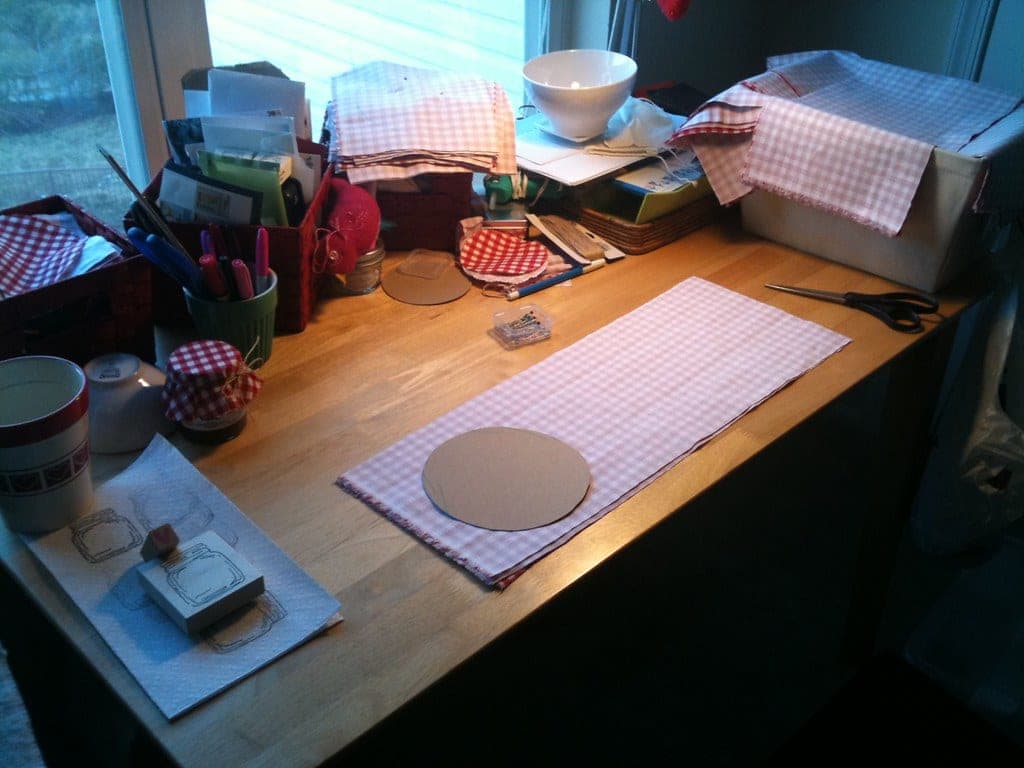
Light the model from two directions at roughly 45 degrees so your brush hand does not shadow it, keep water, palette and paper towel within arm's reach on your brush-hand side, and put a cutting mat down to protect the surface. Everything else is comfort and storage.
The quick version
| # | Product | Best for | Score | Price |
|---|---|---|---|---|
| 1 |  Brightech LightView Pro FlexA weighted-base magnifier lamp with a glass lens and a long flexible arm. It solves light and magnification in one purchase, which is why it is the usual answer. | The lamp to start with | 9.0 | Check price on Amazon |
| 2 |  Self-healing cutting mat (A3 or larger)A self-healing mat protects the desk, stops parts skidding, and gives you a printed grid for measuring. The cheapest upgrade on this page. | Protecting a shared table | 8.8 | Check price on Amazon |
| 3 | 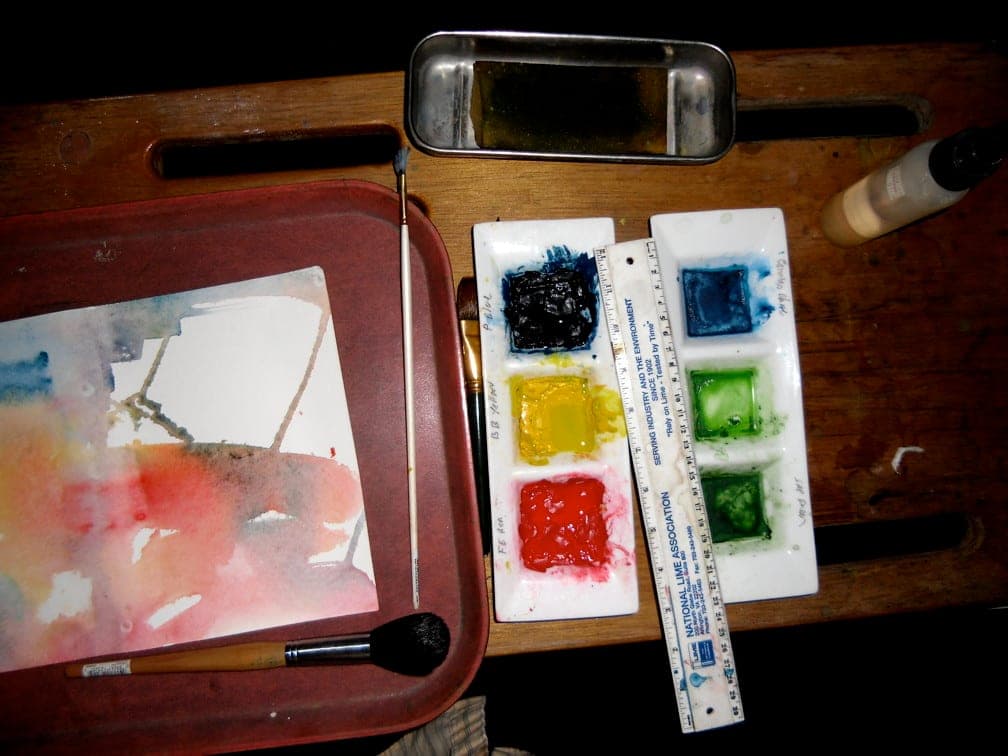 Redgrass Games Everlasting Wet Palette Painter LiteA sealed, mold-resistant wet palette small enough to live on a crowded desk. It keeps thinned paint usable for days instead of minutes. | Keeping paint alive | 9.3 | Check price on Amazon |
Scores are our own editorial read against the criteria stated below — not a lab measurement and not a user rating. Tap a row for the full write-up.
Lighting, because nothing else matters as much
If you fix one thing, fix this. Painting under a single ceiling bulb means working in your own hand shadow with every recess reading as black, and no brush or paint recovers from that.
Two light sources, placed in front of you and above, at roughly 45 degrees left and right. They fill each other’s shadows so the model stays readable while your hand moves across it. Match their color temperature — two different whites on one model is worse than either alone. The full reasoning and picks are in the best lamps for painting miniatures, and the Department of Energy’s lighting guidance covers the color-rendering metric if you want the background.
The reach zone
You will reach for four things hundreds of times an evening: water, palette, paper towel and the brush you are not currently using. All four belong within arm’s reach on your brush-hand side, close enough that you do not look away from the model to find them.
Everything you reach for once a session — paint rack, spare brushes, clippers, glue — goes outside that zone. The point of the zone is not tidiness; it is that looking away mid-stroke is how you put a line in the wrong place.
Surface and seating
A self-healing cutting mat is the single most useful surface purchase. It takes knife cuts, glue and spills, it does not slide, and it gives you a visible clean area. A3 or larger is worth the few extra dollars because an A4 mat is smaller than the area you actually work in.
Chair height matters more than people expect. You want the model at roughly chest-to-chin height when your elbows are resting on the desk, which usually means raising the model rather than lowering yourself — a stack of books under a cork coaster is a perfectly respectable model stand. Elbows on the desk is also most of what people mean by a steady hand.
Ventilation, scaled to what you are actually using
Be proportionate about this. Brushing water-based acrylics in a normal room needs no special arrangement. Spraying anything does.
- Brush-on acrylics and washes: no special ventilation.
- Aerosol primers and spray varnish: outdoors, or a booth vented out of a window. Never in an unventilated room.
- Enamels, lacquers and their thinners (including enamel panel liners): open window and moving air, always.
- Airbrushing acrylics: a booth or an open window. You are atomizing paint into air you then breathe, which is a different exposure from brushing it on. The NIOSH guidance on engineering controls is the serious version of this advice, and our spray booth guide is the hobby-scale one.
Read the can. Manufacturers state their own ventilation requirements and those instructions beat anything a hobby site tells you.
Making a shared table work
Plenty of people paint on a dining table that has to be a dining table again by seven. The setup that survives that is a single tray: a shallow box or baking tray holding mat, palette, water pot, brushes and the paints for the current project. Lift the tray, the hobby is gone; put it down, the hobby is back.
Two things to add. Clamp lamps to the table edge so they come off in one movement. And keep paint storage somewhere it does not need packing — a wall rack or a shelf means the tray only carries what you need tonight.
The picks in full
Brightech LightView Pro Flex
A weighted-base magnifier lamp with a glass lens and a long flexible arm. It solves light and magnification in one purchase, which is why it is the usual answer.
What it gets right
- Glass lens rather than acrylic, so the image stays sharp at the edges
- Weighted base means it stays where you put it instead of walking across the desk
- One purchase covers both the lamp and the magnifier most painters would buy separately
Who it is wrong for
- A single light source still casts a hand shadow; two cheap lamps beat one good one for that
- The lens is in the way when you are not using it
- Color rendering is good, not reference-grade — a display painter will want higher CRI
Scored against this page’s criteria
We do not publish prices. Amazon shows the current one, which is the only one that is ever right. #ad · how this is funded
Self-healing cutting mat (A3 or larger)
A self-healing mat protects the desk, stops parts skidding, and gives you a printed grid for measuring. The cheapest upgrade on this page.
What it gets right
- Blade cuts close up, so the mat lasts years and the knife stays sharper
- The grid makes cutting basing material and plasticard to size trivial
- Matte surface stops small parts sliding off into the carpet
Who it is wrong for
- Solvent glue and enamel thinner will mark or soften the surface
- Rolls up and refuses to lie flat if it has been stored curled
- Dark mats make it very hard to find a dropped gray part
Scored against this page’s criteria
We do not publish prices. Amazon shows the current one, which is the only one that is ever right. #ad · how this is funded
Redgrass Games Everlasting Wet Palette Painter Lite
A sealed, mold-resistant wet palette small enough to live on a crowded desk. It keeps thinned paint usable for days instead of minutes.
What it gets right
- Paint stays workable for days with the lid on, which is the entire point of a wet palette
- Small footprint — it fits beside a model rather than replacing your desk
- Membranes and foam are sold as refills, so the palette itself is a one-time buy
Who it is wrong for
- Too small for batch-painting a whole regiment's worth of colors at once
- Refill membranes are a recurring cost you should price in
- Still molds if you leave paint and water in it for two weeks — nothing fixes neglect
Scored against this page’s criteria
Specs from the manufacturer: Redgrass Games product page
We do not publish prices. Amazon shows the current one, which is the only one that is ever right. #ad · how this is funded
FAQ
Questions people actually ask
What do I need on a miniature painting desk?
Do I need ventilation to paint miniatures indoors?
Can I paint miniatures on a dining table?
How high should my model be when I paint?
More in Workspace, Lighting and Storage, or start from the beginning with what to buy first.
Sources
- US Department of Energy — lighting and color renderingchecked October 2026
- US CDC / NIOSH — ventilation and control of airborne contaminantschecked October 2026
- Games Workshop / Citadel Colour — tools and accessorieschecked October 2026