The Best Hobby Desk Setup: Mats and Toppers
Almost nobody needs to buy a hobby desk. What they need is a surface that survives glue, a way to stop parts rolling onto the carpet, and the paints off the work area.
The short answer
Buy a surface, not a desk. A self-healing cutting mat is the first purchase for anyone who cuts; a silicone mat is the one to add for glue and resin because cured adhesive peels off it. After that, the upgrade that actually creates desk space is vertical: a modular topper or a wall rack that gets brushes, tools and paints off the work area.
The quick version
| # | Product | Best for | Score | Price |
|---|---|---|---|---|
| 1 |  Self-healing cutting mat (A3 or larger)A self-healing mat protects the desk, stops parts skidding, and gives you a printed grid for measuring. The cheapest upgrade on this page. | Best first buy: the surface everything sits on | 8.8 | Check price on Amazon |
| 2 | Silicone craft mat (food-grade, A3-ish)A flexible non-stick sheet that cured super glue, epoxy and spilled paint peel straight off. The layer you put down for the messy half of the hobby, not the cutting half. | Best for glue, resin and solvents | 8.4 | Check price on Amazon |
| 3 | 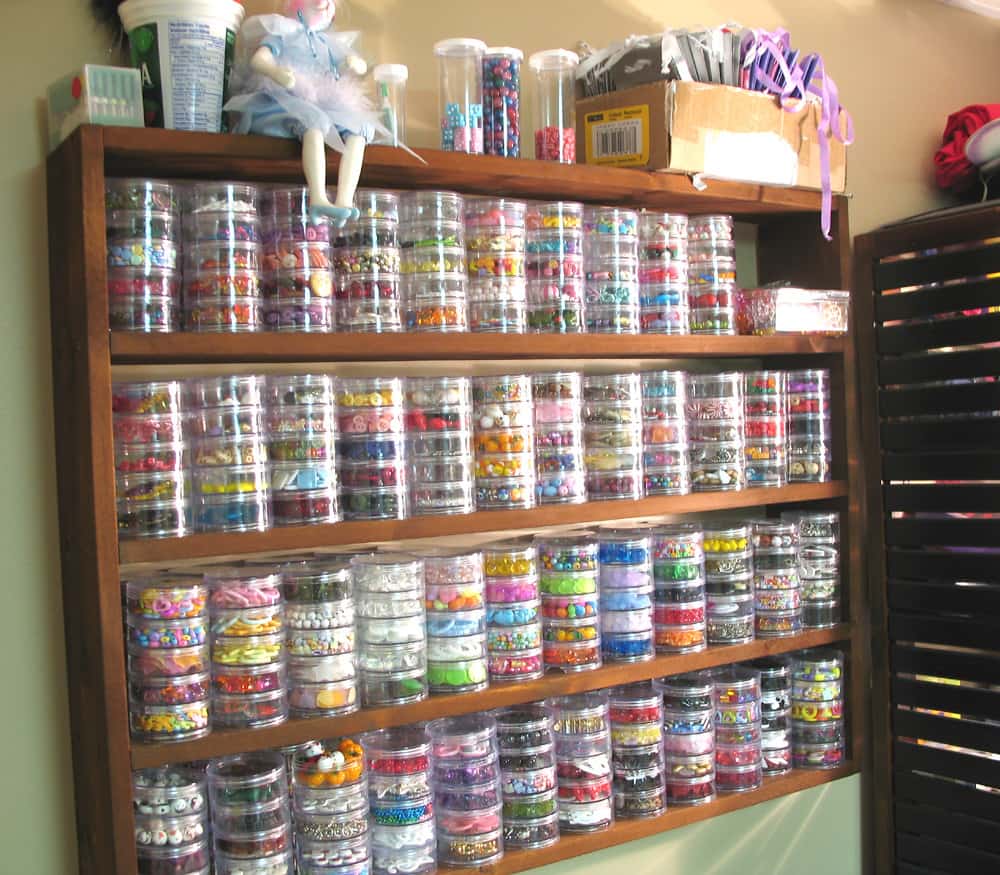 Hobby Zone modular workshop moduleLaser-cut MDF modules that magnet together into whatever shelf, tool rack or paint stand your desk has room for. The honest answer to wanting a hobby desk without buying furniture. | Best desk topper | 8.6 | Check price on Amazon |
| 4 | Wall-mounted hobby paint rack (mixed bottle)Shelved racks sized for dropper bottles and pots together, mounted off the desk. The right answer once you own more than one brand. | Best way to free up desk space | 8.5 | Check price on Amazon |
| 5 | 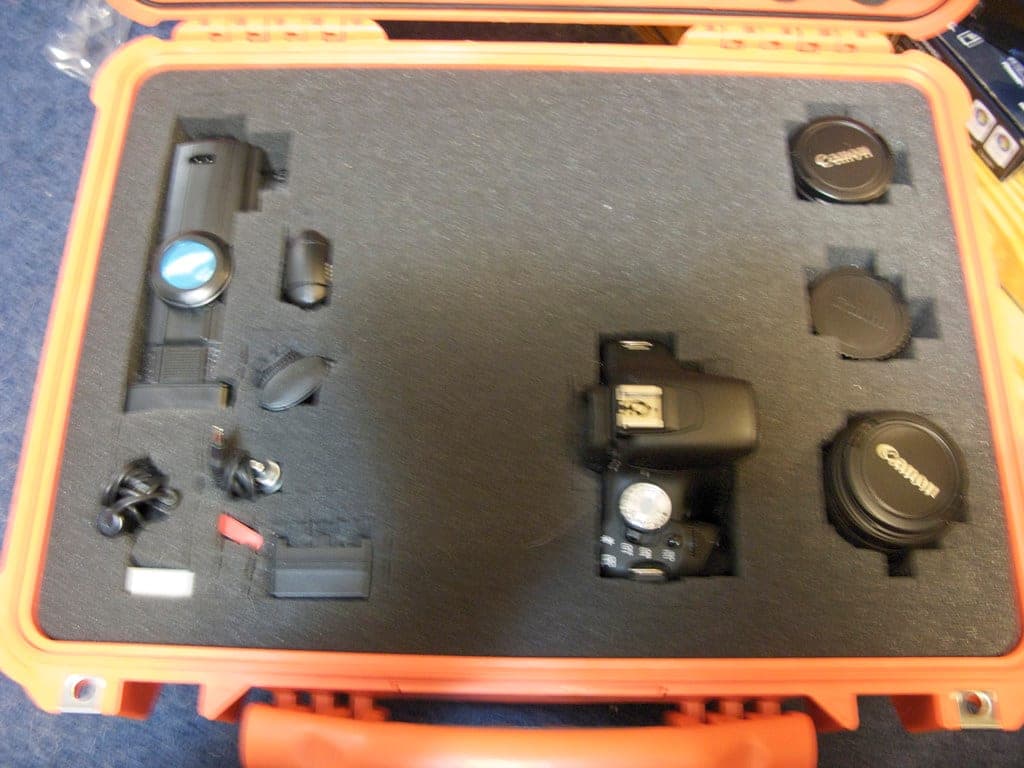 Really Useful Box 4 literA clear, stackable, clip-lid plastic box. Not a transport case and not pretending to be one, but it is the cheapest honest answer to where an army lives between games. | Best for a table you have to clear | 7.6 | Check price on Amazon |
Scores are our own editorial read against the criteria stated below — not a lab measurement and not a user rating. Tap a row for the full write-up.
Start here: you probably should not buy a desk
The query behind this page is usually “best miniature painting desk”, and the honest answer is that a hobby-specific desk is one of the worst value purchases in the hobby. Large furniture ships badly and expensively, it is the item most likely to arrive damaged, and once it is in the room it fixes your layout permanently.
More to the point, a desk is not what limits most painters. Ask someone what goes wrong at their station and you get three answers, none of which is “the table is wrong”: a knife cut into the tabletop, super glue welded to the surface, and no room to work because forty paint bottles are standing where the model should be.
All three are solved by what sits on top of the table and above it. That is what this page ranks. If you have no table at all, buy the cheapest sturdy one you can find at a height where your forearms rest level, and spend the difference on the items below.
How these were picked
Four criteria, applied in this order. They are the properties that decide whether a surface is still useful in a year.
1. Survivability. What the surface does when a blade slips, a bottle of thin cement tips over, or super glue runs off a model. A surface that is permanently marked by the second week of ownership has failed, however cheap it was.
2. Desk space recovered. The usable area is what you can put a hand and a model into, not the dimensions of the table. Anything that moves bottles, brushes and tools off the horizontal plane buys back more working room than a bigger table does.
3. Pack-down. A large share of painters work on a shared dining table and have to clear it for dinner. A setup that takes twenty minutes to stow is a setup that stops getting used, and that is the single most common reason a hobby lapses.
4. Cost against what it replaces. Almost everything here competes with a free or near-free alternative — a sheet of hardboard, a shoebox, a mug of brushes. A pick has to be clearly better than the free version to earn a place.
Nothing here was tested in a lab. These are cost-checked picks assessed against the criteria above, using manufacturer specifications and the stated materials; where a category is commodity rather than branded, it is listed as a category rather than pretending one seller’s version is special.
The self-healing cutting mat
If you buy one thing on this page, buy this. A self-healing PVC mat lets a blade cut all the way through what you are cutting without blunting on the surface underneath, closes up behind the cut, and protects the table permanently.
Size matters more than brand. A3 (roughly 297 by 420 mm) is the smallest that is comfortable, because it has to hold the model, the thing being cut, and your knuckles at the same time. The printed grid earns its keep the first time you cut plasticard or basing card square.
Its limits are specific and worth knowing before you spread glue on it. Solvent cement and enamel thinner will mark or soften the PVC surface, so the mat is for cutting and assembling dry, not for the wet work. A mat that has been stored rolled will refuse to lie flat for weeks. And a dark mat makes a dropped gray arm effectively invisible.
Pair it with a knife that deserves it — a fresh blade on a self-healing mat is a genuinely different experience from a tired blade on a kitchen worktop, and the options are in the hobby knife picks.
The silicone mat, which solves what the cutting mat cannot
A food-grade silicone sheet is the other half of a working surface, and most painters discover it years later than they should. Cured super glue, epoxy, resin and acrylic paint do not bond to silicone: they sit on it and peel off in one piece.
That makes it the right surface for exactly the jobs that ruin a cutting mat. Pinning and gluing, mixing two-part putty, pouring a drop of super glue to dip a part into, decanting paint, basing with PVA. Afterwards it washes under a tap, which is a different relationship with mess than scraping a PVC mat with a fingernail.
The common sizes sit around 15.7 by 11.8 inches, which is enough for the wet zone of a station without covering the whole desk, and the material is usually quoted as tolerating anything from well below freezing up to around 446 °F, so a hot glue gun or a hairdryer used to speed drying is not a risk.
It is not a cutting surface. A blade slices straight into silicone and the cut stays open, collecting grime. Use both mats side by side, or put the silicone sheet down on top of the cutting mat when the messy stage starts.
The desk topper, where the real space comes from
Once the surface is protected, the problem becomes square inches. A modular MDF workshop system solves it in the only direction available: up.
Hobby Zone’s modules are laser-cut MDF kits that you glue together and then join with integrated magnets, so a brush-and-tool rack can clip to a bottle stand which clips to a corner unit. Standard modules are around 30 by 15 by 15 cm with 15 cm corner pieces, and the range covers tool racks with graded holes, bottle shelves, small drawers and dust-proof showcase boxes for work in progress.
The reason to buy modules rather than one monolithic station is incremental cost and rearrangement. You buy a tool rack now and a bottle module in two months, and when the desk moves you re-stack the layout in thirty seconds instead of living with someone else’s idea of a workstation.
The honest drawbacks: it arrives flat-packed and wants an evening with wood glue before it holds anything, MDF swells permanently if a water pot goes over on it, and per module it costs more than an anonymous laser-cut rack from a marketplace seller. If you want the result without the assembly, a pre-built rack does most of the same work for less.
The wall rack, if you own the wall
The single biggest consumer of desk area in this hobby is paint. Forty bottles standing on the work surface occupy more space than the model, the palette and both hands together.
A wall-mounted rack moves that collection into the vertical plane in front of you, where labels face out and nothing has to be lifted to find a color. Mixed-bottle racks that take both 17–18 ml droppers and 12 ml pots are the ones worth buying, because every collection eventually contains both.
The catch is in the name: it needs a wall, which rules it out for a lot of renters and for anyone painting at a shared table. Many of the same racks are sold in freestanding form, which is the compromise. Build quality also varies widely between sellers, so check the slot dimensions against the bottles you own before ordering.
The full comparison of rack types, including the branded pot-specific racks, is in paint storage and racks.
The shared table problem
If you paint where other people eat, pack-down time is the specification that matters more than every other one on this page. A station that takes two minutes to appear and two minutes to vanish gets used on a weeknight; anything slower only gets used on a Saturday.
The method that works is a tray-and-box system. Everything lives inside one shallow tray or clear clip-lid box, the silicone or cutting mat goes down first, and the whole thing comes off the table in one lift with the models still standing on it. A 4-liter clear box is about the right volume for brushes, a palette, water pot, knife and the paints in current use.
Clear sides matter for the same reason they matter in storage — you can see what is in which box without opening three. What a clip-lid box is not is protection: models rattle inside unless you line it, and it should never be confused with a transport case. For anything leaving the house, see the transport case picks.
What to not buy
A dedicated hobby desk, unless you have a permanent room for it and you already know your layout. Shipping, damage risk and fixed geometry all work against it.
All-in-one station organizers with integrated dry palettes. The palette is the part you stop using within a month, and you cannot remove it from the mold.
A desk lamp bundled with a station. Lighting is the one place where the specification genuinely matters — color temperature and CRI, as set out in daylight lamp vs ring light — and bundled lamps are chosen on price.
A glass desk protector. It survives glue beautifully and destroys blades and dropped models in equal measure.
Height and chair, the part nobody budgets for
The most common physical complaint from painters is not eye strain, it is neck and shoulder ache, and it comes from the same cause every time: the model sits too low, so you lean over it for two hours.
The fix costs nothing. Raise the model, not yourself. A stack of two hardback books, a wooden chopping board or a small riser under the mat brings the work up toward chest height, which lets you sit back instead of folding forward. Painters who buy a modular topper often report the posture improvement before the storage improvement, because a 15 cm module in front of them doubles as the riser.
Desk height itself matters less than the relationship between it and the chair. Aim for forearms roughly level with the work surface and both feet flat on the floor. If the only available table is too high, a cushion plus a footrest is a faster fix than new furniture.
The one thing worth spending on here is somewhere to rest your elbows. Bracing both forearms on the desk is the largest single improvement available to line control, and a desk edge that digs into your wrists stops you doing it — which is why a mat that runs to the front edge of the table is quietly worth more than it looks. The rest of the bracing technique is in how to get a steady hand.
The order to buy in
Cutting mat first, because it is cheap and it stops the only damage that is permanent. Silicone mat second, as soon as you start gluing. Then stop and work for a month: most painters discover at that point that their actual constraint is paint sprawl, which makes a rack the third purchase and a topper the fourth.
Everything above assumes the layout itself is sound. If the lamp is in the wrong place or the wet zone is on your brush-hand side, no amount of furniture fixes it — how to set up a painting desk covers the arrangement, and the full painting station setup covers the three-zone layout these products are meant to serve.
The picks in full
Self-healing cutting mat (A3 or larger)
A self-healing mat protects the desk, stops parts skidding, and gives you a printed grid for measuring. The cheapest upgrade on this page.
What it gets right
- Blade cuts close up, so the mat lasts years and the knife stays sharper
- The grid makes cutting basing material and plasticard to size trivial
- Matte surface stops small parts sliding off into the carpet
Who it is wrong for
- Solvent glue and enamel thinner will mark or soften the surface
- Rolls up and refuses to lie flat if it has been stored curled
- Dark mats make it very hard to find a dropped gray part
Scored against this page’s criteria
We do not publish prices. Amazon shows the current one, which is the only one that is ever right. #ad · how this is funded
Silicone craft mat (food-grade, A3-ish)
A flexible non-stick sheet that cured super glue, epoxy and spilled paint peel straight off. The layer you put down for the messy half of the hobby, not the cutting half.
What it gets right
- Cured super glue, epoxy and resin peel off instead of bonding, which no PVC mat manages
- Washes under a tap and dries in minutes, so it never accumulates a crust
- Rolls up, which makes it the right surface for a dining table you have to clear
Who it is wrong for
- Useless as a cutting surface: a blade slices it and the cut does not heal
- Thin mats slide if the desk is smooth, and a curled one has to be weighted flat
- Dark colors hide small dropped parts exactly as badly as a dark cutting mat does
Scored against this page’s criteria
We do not publish prices. Amazon shows the current one, which is the only one that is ever right. #ad · how this is funded
Hobby Zone modular workshop module
Laser-cut MDF modules that magnet together into whatever shelf, tool rack or paint stand your desk has room for. The honest answer to wanting a hobby desk without buying furniture.
What it gets right
- Buy one module at a time, so the station grows with the collection instead of in one purchase
- Magnetic joins mean you can rearrange the layout in seconds when the desk changes
- Gets brushes, tools and bottles vertical, which is where the usable desk space comes from
Who it is wrong for
- Arrives as a flat-pack kit and needs an evening of gluing before it holds anything
- MDF hates moisture; a knocked water pot will swell a panel permanently
- Per module it costs more than a laser-cut rack from a generic seller
Scored against this page’s criteria
Specs from the manufacturer: Hobby Zone product page
We do not publish prices. Amazon shows the current one, which is the only one that is ever right. #ad · how this is funded
Wall-mounted hobby paint rack (mixed bottle)
Shelved racks sized for dropper bottles and pots together, mounted off the desk. The right answer once you own more than one brand.
What it gets right
- Gets the whole collection off the work surface, which is the real win
- Takes pots and droppers in the same rack
- Far more capacity per dollar than a branded rack
Who it is wrong for
- MDF kits need assembling, and some need gluing
- Wall mounting means drilling, which rules it out for a lot of renters
- Quality varies wildly between sellers; check the slot dimensions against your bottles
Scored against this page’s criteria
We do not publish prices. Amazon shows the current one, which is the only one that is ever right. #ad · how this is funded
Really Useful Box 4 liter
A clear, stackable, clip-lid plastic box. Not a transport case and not pretending to be one, but it is the cheapest honest answer to where an army lives between games.
What it gets right
- Clear sides mean you can find the right unit without opening five boxes
- Stacks on a shelf in a way no bag or hard case does
- Cheap enough to buy six, which is what an army collection actually needs
Who it is wrong for
- Zero impact protection out of the box — models rattle unless you line it
- Not a travel solution; one corner knock in a car and the shelf of models topples
- You will end up buying foam or magnetic sheet anyway, which erodes the price advantage
Scored against this page’s criteria
Specs from the manufacturer: Really Useful Products product page
We do not publish prices. Amazon shows the current one, which is the only one that is ever right. #ad · how this is funded
FAQ
Questions people actually ask
Do I need a special desk for miniature painting?
What is the best mat for miniature painting?
What size cutting mat should I get?
How do I set up a painting station on a dining table?
Are modular MDF hobby workshop systems worth it?
What is the cheapest way to protect a desk?
More in Workspace, Lighting and Storage, or start from the beginning with what to buy first.
Sources
- Hobby Zone — modular workshop system, module dimensions and MDF kit contentschecked October 2026
- Really Useful Products — Really Useful Box range specificationschecked October 2026