How to Set Up a Miniature Painting Station
A station is not a desk. It is the tray, the racks and the order of things, and it is the difference between painting for an hour and spending it looking for a brush.

The short answer
A miniature painting station is three zones: a protected work surface with a cutting mat, a wet zone with water, palette and towel on your brush-hand side, and visible paint storage behind. Build it on a tray or a shallow box if the table is shared, so the whole station lifts off in one carry.
The quick version
| # | Product | Best for | Score | Price |
|---|---|---|---|---|
| 1 |  Self-healing cutting mat (A3 or larger)A self-healing mat protects the desk, stops parts skidding, and gives you a printed grid for measuring. The cheapest upgrade on this page. | The base of the whole station | 8.8 | Check price on Amazon |
| 2 | 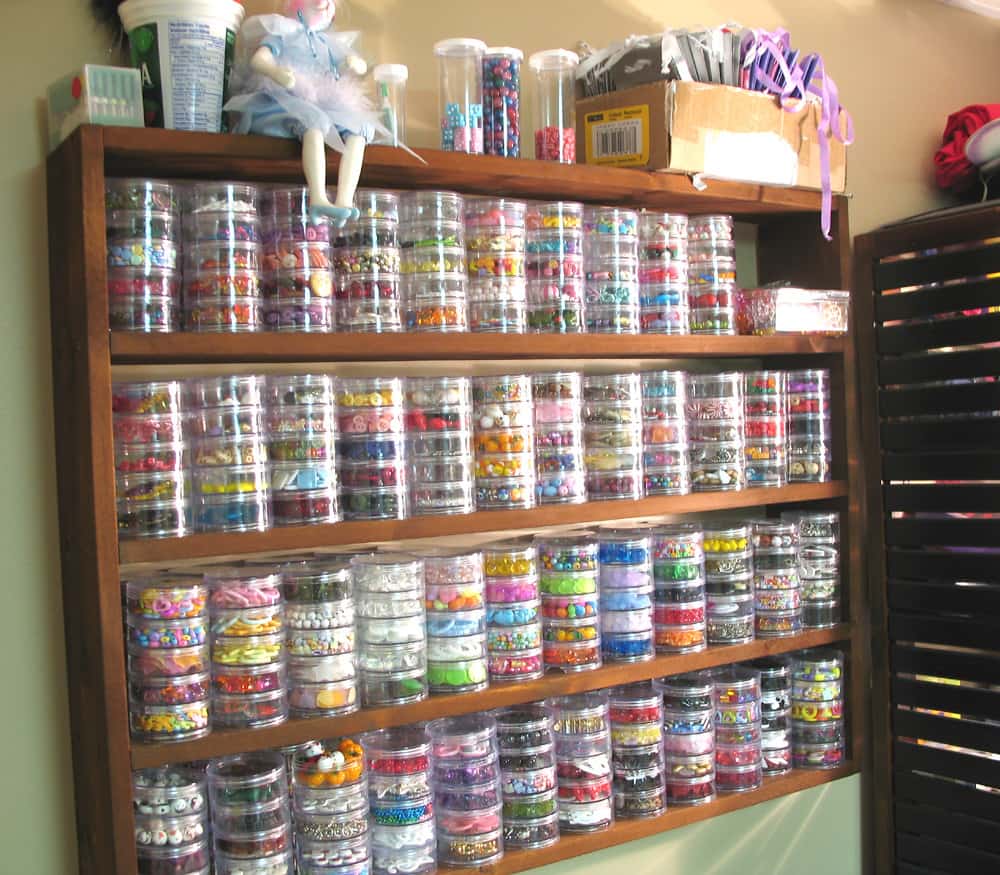 Wall-mounted hobby paint rack (mixed bottle)Shelved racks sized for dropper bottles and pots together, mounted off the desk. The right answer once you own more than one brand. | A mixed paint collection | 8.5 | Check price on Amazon |
| 3 | Citadel Colour Paint RackA tiered rack cut to the exact diameter of a Citadel pot. Perfect if that is what you own, useless if it is not. | A Citadel-only collection | 8.0 | Check price on Amazon |
| 4 |  Redgrass Games Everlasting Wet Palette Painter LiteA sealed, mold-resistant wet palette small enough to live on a crowded desk. It keeps thinned paint usable for days instead of minutes. | The wet zone | 9.3 | Check price on Amazon |
Scores are our own editorial read against the criteria stated below — not a lab measurement and not a user rating. Tap a row for the full write-up.
The station is three zones
Almost every frustration at a painting bench is a layout problem rather than an equipment problem. Three zones solve it, and they do not require a dedicated room.
The work zone. The mat, directly in front of you, with nothing on it but the model and the tool in your hand. This zone stays clear. The moment paint bottles start living on the mat, your elbow starts knocking them over.
The wet zone. Water pot, wet palette, paper towel. All on your brush-hand side, all within arm’s reach without looking away from the model. Reaching across the model to rinse a brush is how models get knocked off handles.
The storage zone. Paints and tools, behind or beside the work zone, visible but out of the way. Visible is the operative word: you need to read labels from a seated position.
Racking paints: the one rule
Label-out and upright. Every other storage decision follows from it.
A tiered rack on the desk puts thirty bottles in reach of one hand and is the right answer for a small collection. A wall-mounted rack scales to a hundred bottles without stealing desk space, which matters more than it sounds — desk space is the resource you run out of first. A drawer or a shoebox holds the most and loses you the labels, which is exactly how people end up with three bottles of the same brown.
Upright matters for a second reason: dropper bottles stored on their side let pigment settle against the cap and seize it. The ranked options are in the best paint storage and racks.
The portable station, for a shared table
Most people do not have a hobby room, and the standard advice ignores them. Here is the version that works on a dining table.
Build the entire station inside a shallow box, a serving tray or a plastic under-bed storage lid, roughly 40 by 60 cm. The cutting mat goes in the bottom. The water pot, wet palette, brush pot and a small paint caddy go on top of it. Lighting is the one thing that lives outside, because a clamp lamp belongs on the table edge, not in the tray.
Now setup is: carry tray to table, clamp lamp, paint. Pack-up is the reverse, in under five minutes, with nothing left out and nothing to re-find next time. A sealed wet palette survives in the tray between sessions with the mix still usable, which is the quiet reason this works at all.
What not to buy for a station
The market sells a lot of station furniture, and most of it is solving a problem you do not have yet.
- All-in-one “painting station” organizers with a built-in palette. The integrated palettes are dry palettes and are worse than a separate wet palette. You are paying for a feature you will stop using.
- Rotating brush carousels. They hold fewer brushes than a jar and take up more mat.
- Brand-locked racks if you own paints from more than one brand. A Citadel rack fits Citadel pots; a mixed-bottle rack fits everything. Only buy the locked one if your collection genuinely is one brand.
If the station also has to travel
Painting at a club or a friend’s table is the same problem with one addition: the models have to survive the trip. Loose in a bag they will not, and the damage is always to the thinnest part — a banner, an antenna, a weapon barrel.
A pluck-foam case solves it, and how to store and transport painted miniatures covers the varnish-first rule that makes transport survivable. If you are buying rather than improvising, the ranked transport cases compare foam, hard shells and magnetic trays. The desk setup guide covers the other half of this subject — lighting angles, ventilation and seating — which are about your body rather than your kit.
What to buy first
A mat, a wet palette and somewhere to stand the paints label-out. That is a station. Add a second lamp before you add any more furniture, because lighting changes your results and organization only changes your temper.
Then a rack sized for the collection you will have in a year rather than the one you have now, because racks are the thing people replace twice.
The hardware that makes this layout work on a table you already own is ranked in the best hobby desk setup: mats and toppers.
The picks in full
Self-healing cutting mat (A3 or larger)
A self-healing mat protects the desk, stops parts skidding, and gives you a printed grid for measuring. The cheapest upgrade on this page.
What it gets right
- Blade cuts close up, so the mat lasts years and the knife stays sharper
- The grid makes cutting basing material and plasticard to size trivial
- Matte surface stops small parts sliding off into the carpet
Who it is wrong for
- Solvent glue and enamel thinner will mark or soften the surface
- Rolls up and refuses to lie flat if it has been stored curled
- Dark mats make it very hard to find a dropped gray part
Scored against this page’s criteria
We do not publish prices. Amazon shows the current one, which is the only one that is ever right. #ad · how this is funded
Wall-mounted hobby paint rack (mixed bottle)
Shelved racks sized for dropper bottles and pots together, mounted off the desk. The right answer once you own more than one brand.
What it gets right
- Gets the whole collection off the work surface, which is the real win
- Takes pots and droppers in the same rack
- Far more capacity per dollar than a branded rack
Who it is wrong for
- MDF kits need assembling, and some need gluing
- Wall mounting means drilling, which rules it out for a lot of renters
- Quality varies wildly between sellers; check the slot dimensions against your bottles
Scored against this page’s criteria
We do not publish prices. Amazon shows the current one, which is the only one that is ever right. #ad · how this is funded
Citadel Colour Paint Rack
A tiered rack cut to the exact diameter of a Citadel pot. Perfect if that is what you own, useless if it is not.
What it gets right
- Pots sit at an angle so you can read every label without lifting anything
- Stacks, so it grows with the collection
- Exact fit means nothing rattles or tips
Who it is wrong for
- Dropper bottles do not fit — a mixed collection will not work in it
- Expensive for molded plastic
- Fixed capacity per unit; a big collection means buying several
Scored against this page’s criteria
Specs from the manufacturer: Citadel product page
We do not publish prices. Amazon shows the current one, which is the only one that is ever right. #ad · how this is funded
Redgrass Games Everlasting Wet Palette Painter Lite
A sealed, mold-resistant wet palette small enough to live on a crowded desk. It keeps thinned paint usable for days instead of minutes.
What it gets right
- Paint stays workable for days with the lid on, which is the entire point of a wet palette
- Small footprint — it fits beside a model rather than replacing your desk
- Membranes and foam are sold as refills, so the palette itself is a one-time buy
Who it is wrong for
- Too small for batch-painting a whole regiment's worth of colors at once
- Refill membranes are a recurring cost you should price in
- Still molds if you leave paint and water in it for two weeks — nothing fixes neglect
Scored against this page’s criteria
Specs from the manufacturer: Redgrass Games product page
We do not publish prices. Amazon shows the current one, which is the only one that is ever right. #ad · how this is funded
FAQ
Questions people actually ask
What do I need for a miniature painting station?
How do I set up a painting station on a shared table?
Are all-in-one painting station organizers worth it?
Should paints be stored upright or on their side?
How much space does a painting station need?
More in Workspace, Lighting and Storage, or start from the beginning with what to buy first.
Sources
- Games Workshop / Citadel Colour — tools and accessorieschecked October 2026
- Redgrass Games — Everlasting wet palette rangechecked October 2026