Daylight Lamp vs Ring Light
Both solve brightness. Only one of them solves shadows, and only one of them tells you the truth about the color you just mixed.
The short answer
A daylight task lamp is the better primary light: an arm you can aim kills the shadow your brush hand casts, and a high-CRI daylight bulb shows colors as they will look to everyone else. A ring light is flat, even and good as a fill light or for photographing finished models, but as a single source it hides the depth you are painting.
The quick version
| # | Product | Best for | Score | Price |
|---|---|---|---|---|
| 1 |  Brightech LightView Pro FlexA weighted-base magnifier lamp with a glass lens and a long flexible arm. It solves light and magnification in one purchase, which is why it is the usual answer. | Best single lamp for most painters | 9.0 | Check price on Amazon |
| 2 | 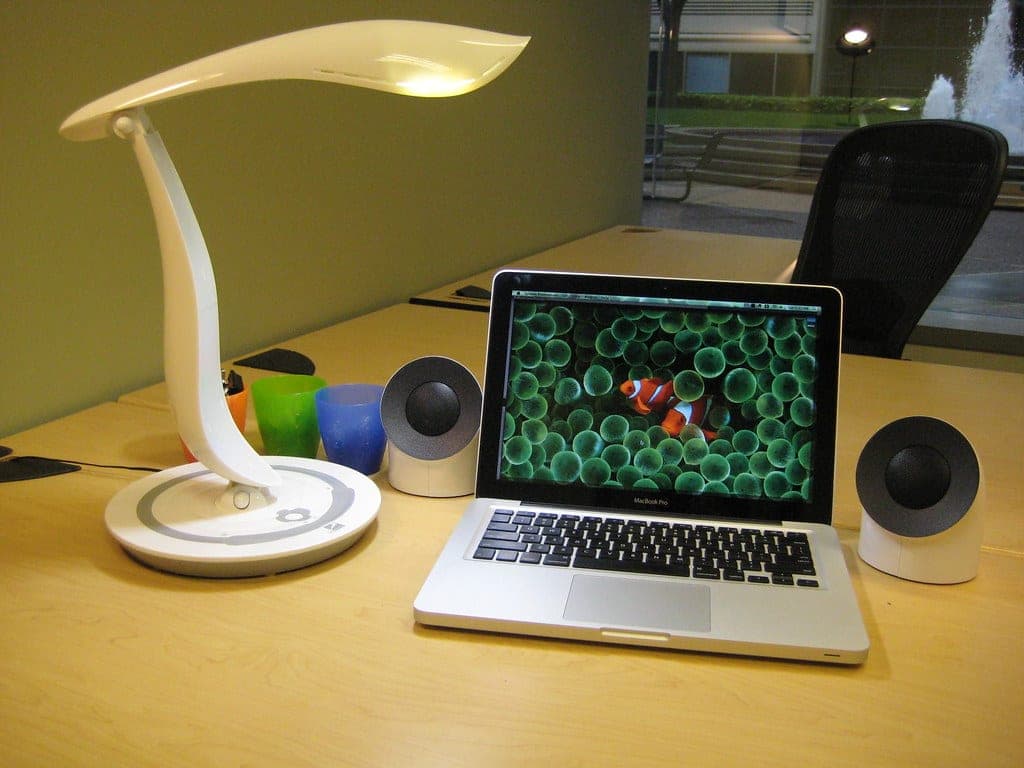 IKEA Tertial work lamp (buy two)Two cheap clamp lamps on opposite sides of the desk, beams crossed. It beats one expensive lamp at the thing that actually ruins detail work: your own shadow. | Best shadow control on a budget | 8.9 | Check price on Amazon |
| 3 | Redgrass Games R9 Hobby LampA 98+ CRI hobby lamp built for people who care that the red in the pot is the red on the model. Overkill for a table army, correct for a display piece. | Best color accuracy | 8.8 | Check price on Amazon |
| 4 | Neatfi XL Bright LED Task LampA wide 2,500-lumen bar that floods the entire work surface from one fixture. Simple, bright and the least fussy way to stop squinting. | Best for lighting a whole desk | 8.7 | Check price on Amazon |
Scores are our own editorial read against the criteria stated below — not a lab measurement and not a user rating. Tap a row for the full write-up.
The three numbers that matter
Color temperature (K). How warm or cool the light is. Household warm white sits around 2700 K and makes everything look yellow-orange, which means a blue you mix under it will look wrong in daylight. Aim for 5000 K to 6000 K — neutral to cool daylight. This is the single most common lighting mistake: painting under a warm bulb and wondering why the finished model looks different at the club.
CRI. Color Rendering Index, how faithfully a light reproduces color compared to daylight, on a 0 to 100 scale. A cheap LED at CRI 80 flattens reds and browns badly, which is a problem when half of miniature painting is judging whether a shade is sitting right. CRI 90+ is the floor worth buying; dedicated hobby lamps advertise 95 to 98+.
Brightness and distance. Lumens is the headline number, but position does more work. Fine detail tasks want serious illuminance at the work surface, and the fastest way to get it is a lamp head close to the model rather than a brighter bulb on the ceiling.
Shadow direction: the thing a ring light changes
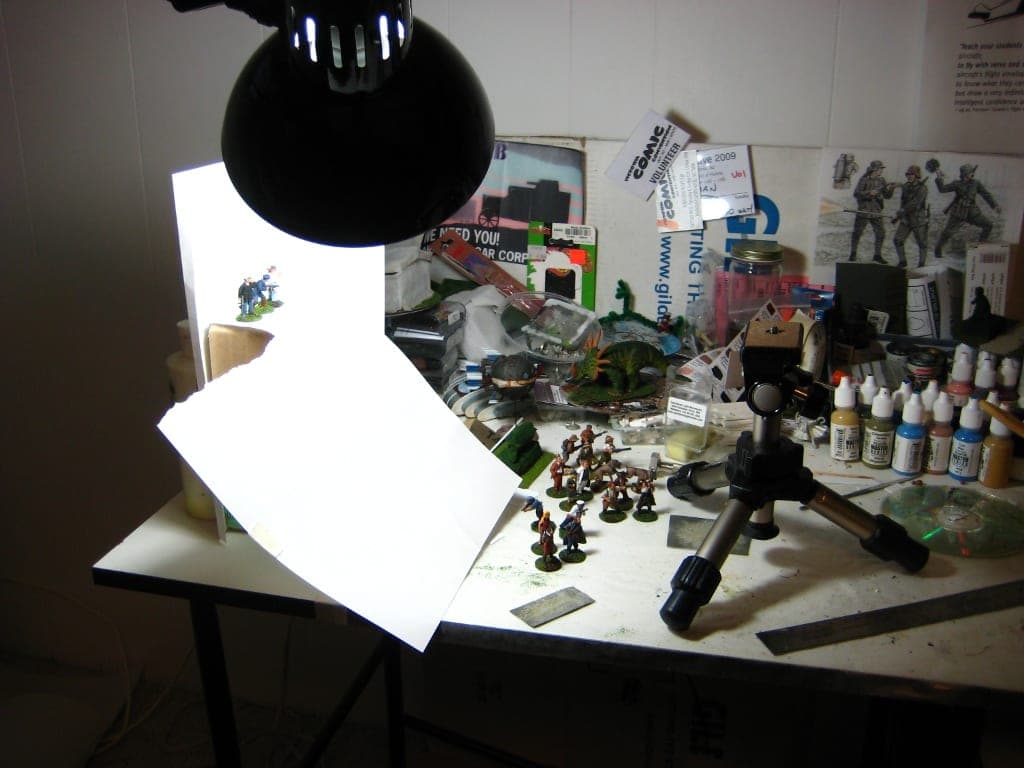
A task lamp is a point source on an arm. Put it high and to the side opposite your brush hand and two useful things happen: your hand stops casting a shadow across the exact spot you are painting, and the model gets directional light that shows its own volumes. You can see where the recess is, which is where the shade goes.
A ring light is a circle of LEDs you look through the middle of. The light arrives from every direction at once, so there is no shadow anywhere — including no shadow on the model. That is exactly what portrait photographers want and exactly what a painter does not: a flat-lit model hides its own depth, so you lose the visual feedback that tells you whether a highlight is strong enough. Work under a ring light for an hour and the model will look under-contrasted everywhere else.
The point source has the opposite failure mode: one lamp in the wrong place and your hand shadow sits permanently over the model. The fix is not a ring light, it is a second lamp, which is why the lamp roundup keeps recommending two cheap arms over one expensive one.
Side by side
| Daylight task lamp | Ring light | |
|---|---|---|
| Shadow on the model | Directional — shows volume | None — flattens volume |
| Hand shadow on the work | Only if badly placed | Effectively none |
| Aimable | Yes, arm or gooseneck | Limited, usually fixed facing |
| Typical CRI on hobby models | 90 to 98+ | Often unstated on cheap units |
| Built-in magnifier option | Common | Rare |
| Best role | Primary painting light | Fill light or photography |
The setup that actually works
Two lights, both daylight, both aimed. Primary high and to the side opposite your brush hand, secondary lower on the other side at a lower intensity. The primary gives the model directional light you can read; the secondary fills the shadow your hand throws without cancelling the first.
Two clamp lamps with 5000 K CRI 90+ bulbs in them is the cheapest route to that result and it outperforms a single premium lamp for less money. If you only ever buy one, make it one with a long flexible arm so you can move the light rather than move the model.
A magnifier lamp is a third category that sits on the task-lamp side: a lens in the middle of the light, which is the right answer if the detail is small enough that you are leaning in. Whether you need one is covered in do you need a magnifier.
When a ring light is the right buy
Photographing finished models. Flat, even, shadowless light is exactly what you want for a record shot or a sale listing, and a ring light with a phone mount does it for very little money.
As a second fill light next to a proper task lamp it is also fine — the task lamp supplies the direction, the ring supplies the fill. What does not work is a ring light alone as the only thing over the desk.
The verdict
Buy the daylight task lamp. Check two specs before anything else: 5000 K to 6000 K color temperature and CRI 90 or higher. Put it on the side opposite your brush hand, and add a second one as soon as a hand shadow starts annoying you.
Buy a ring light when you want to photograph what you painted, not to paint under. The full ranked comparison of lamp types, including the magnifier hybrids, is in the best lamp for miniature painting, and where the lamp goes relative to everything else on the desk is in how to set up a painting desk.
Replaceable bulb or integrated LED
A lamp with a standard socket lets you choose the bulb, which is the only way to guarantee the two specs that matter. A 5000 K, CRI 95 bulb costs very little and turns an inexpensive clamp lamp into a genuinely good painting light. When it dies, you replace a bulb rather than a lamp.
An integrated LED fixture is usually slimmer, often dimmable, and frequently offers adjustable colour temperature — but you are stuck with whatever CRI the manufacturer chose, and many simply do not publish it. Treat an unstated CRI as 80, which is the point of this whole section.
Flicker is the spec nobody checks. Cheap LED drivers pulse at mains frequency, and while you may not consciously see it, a few hours under a flickering lamp is a reliable way to end a session with a headache and tired eyes. Lamps aimed at the hobby and photography markets advertise flicker-free drivers; general hardware-store fixtures usually do not.
The picks in full
Brightech LightView Pro Flex
A weighted-base magnifier lamp with a glass lens and a long flexible arm. It solves light and magnification in one purchase, which is why it is the usual answer.
What it gets right
- Glass lens rather than acrylic, so the image stays sharp at the edges
- Weighted base means it stays where you put it instead of walking across the desk
- One purchase covers both the lamp and the magnifier most painters would buy separately
Who it is wrong for
- A single light source still casts a hand shadow; two cheap lamps beat one good one for that
- The lens is in the way when you are not using it
- Color rendering is good, not reference-grade — a display painter will want higher CRI
Scored against this page’s criteria
We do not publish prices. Amazon shows the current one, which is the only one that is ever right. #ad · how this is funded
IKEA Tertial work lamp (buy two)
Two cheap clamp lamps on opposite sides of the desk, beams crossed. It beats one expensive lamp at the thing that actually ruins detail work: your own shadow.
What it gets right
- Two crossed light sources eliminate the hand shadow that no single lamp can fix
- You choose the bulbs, so you can buy high-CRI daylight ones for a few dollars
- The cheapest route to genuinely good hobby lighting, by a wide margin
Who it is wrong for
- Bulbs are not included, and a cheap bulb undoes the whole plan
- Two clamps need two free desk edges
- No magnification, and the clamp is less stable than a weighted base
Scored against this page’s criteria
We do not publish prices. Amazon shows the current one, which is the only one that is ever right. #ad · how this is funded
Redgrass Games R9 Hobby Lamp
A 98+ CRI hobby lamp built for people who care that the red in the pot is the red on the model. Overkill for a table army, correct for a display piece.
What it gets right
- At 98+ CRI colors look essentially as they do in daylight — micro-glazes are judgeable
- Flicker-free driver, which matters over a four-hour session more than people expect
- Built for the hobby rather than adapted from an office lamp
Who it is wrong for
- The most expensive lamp here by a long way
- No magnification
- Genuinely wasted money if you are painting rank-and-file infantry for the table
Scored against this page’s criteria
Specs from the manufacturer: Redgrass Games product page
We do not publish prices. Amazon shows the current one, which is the only one that is ever right. #ad · how this is funded
Neatfi XL Bright LED Task Lamp
A wide 2,500-lumen bar that floods the entire work surface from one fixture. Simple, bright and the least fussy way to stop squinting.
What it gets right
- Covers the whole desk, so you are not repositioning the lamp every ten minutes
- A broad light source softens hand shadows that a spot lamp makes worse
- Very bright for the money
Who it is wrong for
- No magnification at all — budget separately if your eyes need it
- The wide head needs real desk or clamp space above the work
- Color temperature is fixed on most models, so you cannot tune it to your paints
Scored against this page’s criteria
We do not publish prices. Amazon shows the current one, which is the only one that is ever right. #ad · how this is funded
FAQ
Questions people actually ask
Is a ring light good for painting miniatures?
What color temperature is best for miniature painting?
What CRI do I need for painting miniatures?
Do I need two lamps?
Where should the lamp go?
More in Workspace, Lighting and Storage, or start from the beginning with what to buy first.
Sources
- Illuminating Engineering Society — recommended illuminance for fine detail taskschecked October 2026
- Redgrass Games — Everlasting wet palette and Painter handle specificationschecked October 2026