The Best Brush Soap and Cleaners
A few dollars that doubles the life of a brush costing many times more. The easiest decision on the site.
The short answer
The Masters Brush Cleaner and Preserver is the best brush soap for miniature brushes: a soap paste that lifts dried acrylic out of the base of the bristles and lets you reshape the point before storage. It is safe on sable and synthetic alike and a small tub lasts years.
The quick version
| # | Product | Best for | Score | Price |
|---|---|---|---|---|
| 1 |  The Masters Brush Cleaner and PreserverA soap paste that lifts dried acrylic out of the ferrule and reshapes the point. The cheapest thing you can buy that extends the life of an expensive brush. | Making sable last | 9.4 | Check price on Amazon |
| 2 | 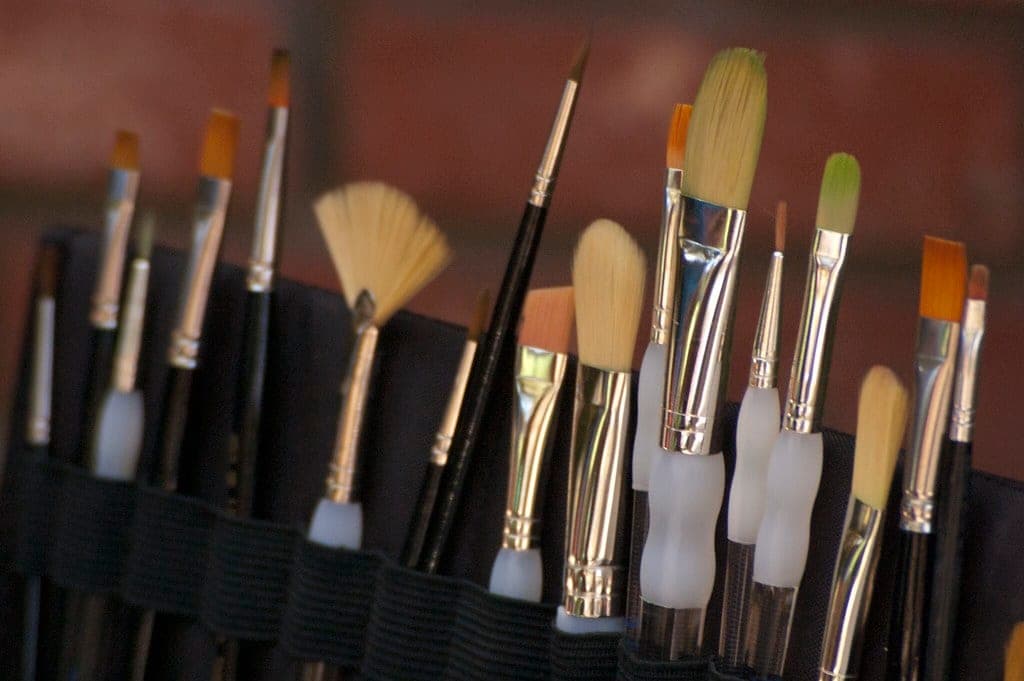 Rosemary & Co Series 33 Kolinsky SableKolinsky sable at a price that does not make you flinch when one eventually dies. The brush most experienced painters quietly settle on. | The brush worth protecting | 9.3 | Check price on Amazon |
Scores are our own editorial read against the criteria stated below — not a lab measurement and not a user rating. Tap a row for the full write-up.
What brush soap actually does
Two things, and the second is the one people do not expect.
It lifts paint out of the base of the bristles. Rinsing in water removes paint from the visible part of the brush. What it does not reach is the millimeter or two of bristle inside the metal ferrule, where paint accumulates invisibly every session. Over weeks that accumulation hardens, splays the bristles from the root, and the brush stops coming to a point. Soap paste worked into the base with a gentle lather pulls that out, which no amount of rinsing does.
It lets you shape the point before storage. A brush left to dry with bristles splayed dries splayed. Worked into a light lather and drawn to a point between your fingers, it dries pointed, with a thin conditioning film holding the shape. Next session you rinse it out and the point is still there.
That is the whole product. It is unglamorous and it is the single highest-return purchase in this category, because a brush’s lifespan is overwhelmingly determined by care rather than price — see cheap vs expensive brushes.
How we picked
- Does it reach the ferrule? A paste you can work into the base beats a liquid that runs off.
- Is it safe on sable? Harsh detergents strip the natural oils from natural hair and make it brittle.
- Does it hold a shape? The conditioning film is half the benefit.
- Cost per use. A small tub should last years, and the good ones do.
What not to use
Dish soap. Works in an emergency and is a degreasing detergent, which over time strips the natural oils from sable and leaves it brittle and prone to breaking rather than bending. Fine once; not a routine.
Isopropyl alcohol or brush cleaner solvent. These will remove cured acrylic, and they will also attack the adhesive holding the bristles in the ferrule and dry out natural hair badly. Reserve them for a brush you have already written off.
Acetone or nail polish remover. Never. It dissolves the glue and some handle lacquers.
Hot water. Softens the ferrule adhesive. Cool or lukewarm only.
The routine
- During painting: rinse the brush before the paint on it starts to tack. Not after the model is finished — during, whenever you change color.
- At the end of a session: rinse in clean cool water, then work a light lather of soap into the bristles including right down to the ferrule.
- Rinse most of the soap out, leaving a trace.
- Draw the brush to a point between finger and thumb, or on the palm.
- Lay it flat to dry. Never bristle-up in a jar either — water runs down into the ferrule.
Thirty seconds per brush. The complete care guide, including how to rescue a brush that has already splayed, is in how to care for brushes.
Can you rescue a ruined brush?
Partially, sometimes. If the paint in the ferrule is recent and soft, repeated gentle soap lathering over several sessions can work much of it out and the point will improve.
If the paint has fully cured in there, no. The bristles have been physically forced apart and held in that position while the paint hardened; the splay is now their shape. Nothing brings that back.
A brush at that stage is not waste, though — it is a perfect drybrush. Short, stiff, splayed, already paid for. Keep a jar of them.
The picks in full
The Masters Brush Cleaner and Preserver
A soap paste that lifts dried acrylic out of the ferrule and reshapes the point. The cheapest thing you can buy that extends the life of an expensive brush.
What it gets right
- Pulls paint out of the base of the bristles, which is where brushes actually die
- Leaves a light conditioning film you can shape the point with before storing
- A 1 oz tub lasts years of regular painting
Who it is wrong for
- Will not rescue a brush with cured paint already locked in the ferrule
- Easy to scrub too hard and splay the brush you are trying to save
- Does nothing for a brush whose point has already been cut by solvent
Scored against this page’s criteria
We do not publish prices. Amazon shows the current one, which is the only one that is ever right. #ad · how this is funded
Rosemary & Co Series 33 Kolinsky Sable
Kolinsky sable at a price that does not make you flinch when one eventually dies. The brush most experienced painters quietly settle on.
What it gets right
- Holds a genuine point and a useful belly of paint — the two things that actually matter
- Cheap enough that replacing one is an annoyance, not an event
- Hair length is cut short for miniature work rather than borrowed from watercolor
Who it is wrong for
- Direct from the maker in the UK, so US delivery is slower than a next-day order
- Sable dies if you let paint dry in the ferrule — these need actual care
- No fancy handle; the grip is a plain wooden taper
Scored against this page’s criteria
Specs from the manufacturer: Rosemary & Co product page
We do not publish prices. Amazon shows the current one, which is the only one that is ever right. #ad · how this is funded
FAQ
Questions people actually ask
Do I really need brush soap?
Can I use dish soap on miniature brushes?
How do I stop ruining new brushes?
Can a splayed brush be fixed?
More in Miniature Painting Brushes, or start from the beginning with what to buy first.
Sources
- Rosemary & Co — Series 33 product listingchecked October 2026