Cheap vs Expensive Brushes
What the extra money buys, where it stops paying, and the purchase that beats both.

The short answer
Moving from a cheap synthetic to an inexpensive Kolinsky sable is the single biggest brush upgrade available and it costs very little. Beyond that the returns flatten fast: premium sable buys consistency and handle comfort rather than a meaningfully finer point. Brush soap improves your results more than either.
The quick version
| # | Product | Best for | Score | Price |
|---|---|---|---|---|
| 1 | 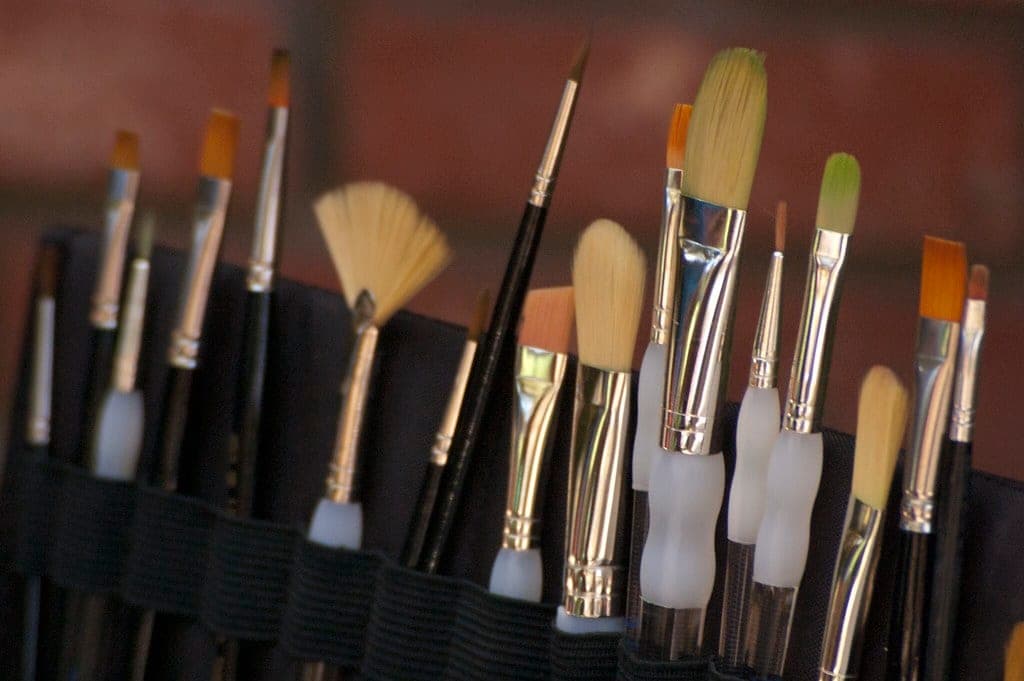 Rosemary & Co Series 33 Kolinsky SableKolinsky sable at a price that does not make you flinch when one eventually dies. The brush most experienced painters quietly settle on. | Where the curve flattens | 9.3 | Check price on Amazon |
| 2 | Raphael 8404 Kolinsky SableA bigger belly than almost anything else at the same point size, so it carries enough thinned paint to finish a blend before the brush runs dry. | What the premium genuinely buys | 9.0 | Check price on Amazon |
| 3 |  Artis Opus Series SHigh-grade sable in a thicker handle that genuinely reduces hand fatigue. Sold as curated sets built around a technique rather than as loose sizes. | Comfort over hours | 8.6 | Check price on Amazon |
| 4 |  The Masters Brush Cleaner and PreserverA soap paste that lifts dried acrylic out of the ferrule and reshapes the point. The cheapest thing you can buy that extends the life of an expensive brush. | Better value than either | 9.4 | Check price on Amazon |
Scores are our own editorial read against the criteria stated below — not a lab measurement and not a user rating. Tap a row for the full write-up.
The shape of the curve
Brush quality against price is not a straight line. It is steep at the bottom and almost flat after a surprisingly early point.
From a bundled synthetic to a cheap Kolinsky sable is a transformation. Paint capacity roughly multiplies, the point actually recovers between strokes, and techniques that were not working start working. This step costs about the price of two pots of paint and it is the single best brush purchase available.
From a cheap sable to a mid-price sable is a real but modest improvement: better consistency brush-to-brush, slightly better hair selection, a point that lasts a bit longer.
From mid-price to premium mostly buys things that are not the point of the brush: a thicker handle, nicer finishing, a curated set, brand. The hair is often from similar suppliers. Nothing wrong with paying for it — just be clear what you are paying for.
What more money actually buys
| What | Does it affect the paint on the model? |
|---|---|
| Natural Kolinsky hair instead of synthetic | Yes, enormously. Capacity and point recovery. |
| Better hair grade and selection | Yes, modestly. Fewer stray hairs, more consistent point. |
| Hair cut to miniature length rather than watercolor length | Yes, meaningfully. A long belly is harder to control at this scale. |
| Thicker, balanced handle | No — but it affects how your hand feels after three hours. |
| Curated set rather than loose sizes | No. Convenience. |
| Hobby branding rather than artist-trade | No. |
That third row is the quietly important one. Artist brushes are cut for watercolor, where a long belly carrying a lot of water is desirable. Miniature work wants a shorter belly for control. A brush explicitly cut for miniatures at a modest price often out-performs a more expensive artist brush for this specific use.
The artist-trade price gap
The same Kolinsky hair, from the same suppliers, costs substantially less when sold through an artist-supply maker than through a hobby brand. That is not a conspiracy; it is market segmentation, and wargamers are a smaller, less price-sensitive market than watercolorists.
Which means the value answer in this category is usually an artist-trade sable in a miniature-appropriate size. It is why our top pick is an artist-supply brush rather than a hobby-branded one.
The purchase that beats both
A brush’s useful life is determined far more by care than by price. A cheap sable that is rinsed properly, soaped and laid flat will outlast a premium sable left standing in a water pot, and will paint better for most of that time.
So the honest ranking of where a limited budget goes:
- Brush soap. Costs very little, roughly doubles brush life.
- One inexpensive Kolinsky sable. The big capability step.
- A wet palette. Stops thinned paint drying, which is what makes people paint with unthinned paint, which is what kills brushes.
- A decent lamp. You cannot paint what you cannot see.
- A better brush. Genuinely fifth.
Pick this if
- You are using the brush from a starter set: buy a cheap sable now. It is the biggest single improvement available to you.
- You have a cheap sable and it is working: buy soap, a wet palette and a lamp before a better brush.
- You paint for hours at a time: the thick-handle premium brushes earn their money on fatigue, which is a real cost even though it is not paint on a model.
- You paint display pieces competitively: consistency matters and premium sable delivers it. This is the case where the top of the range is justified.
The picks in full
Rosemary & Co Series 33 Kolinsky Sable
Kolinsky sable at a price that does not make you flinch when one eventually dies. The brush most experienced painters quietly settle on.
What it gets right
- Holds a genuine point and a useful belly of paint — the two things that actually matter
- Cheap enough that replacing one is an annoyance, not an event
- Hair length is cut short for miniature work rather than borrowed from watercolor
Who it is wrong for
- Direct from the maker in the UK, so US delivery is slower than a next-day order
- Sable dies if you let paint dry in the ferrule — these need actual care
- No fancy handle; the grip is a plain wooden taper
Scored against this page’s criteria
Specs from the manufacturer: Rosemary & Co product page
We do not publish prices. Amazon shows the current one, which is the only one that is ever right. #ad · how this is funded
Raphael 8404 Kolinsky Sable
A bigger belly than almost anything else at the same point size, so it carries enough thinned paint to finish a blend before the brush runs dry.
What it gets right
- Carries enough paint for a long, smooth glaze or a wide highlight in one loaded stroke
- Point is as fine as anything on the market despite the bigger reservoir
- A long-standing artist-trade brush, so supply is stable and not hobby-fashion dependent
Who it is wrong for
- The belly is too much paint for tiny detail work; the point is not the problem, the volume is
- Costs several times a Rosemary & Co and will not last several times as long
- Overkill for a beginner who is still learning to thin paint
Scored against this page’s criteria
We do not publish prices. Amazon shows the current one, which is the only one that is ever right. #ad · how this is funded
Artis Opus Series S
High-grade sable in a thicker handle that genuinely reduces hand fatigue. Sold as curated sets built around a technique rather than as loose sizes.
What it gets right
- The fat handle is the real feature — it is the difference between a two-hour and a four-hour session
- Very sharp points, consistently, across the set
- Sets are assembled around a technique, so you are not guessing which sizes to buy
Who it is wrong for
- Set-only pricing means paying for sizes you may not use
- The most expensive way to buy sable in this list by a clear margin
- No advantage over a Rosemary & Co until your brush control is the limiting factor, not your paint
Scored against this page’s criteria
We do not publish prices. Amazon shows the current one, which is the only one that is ever right. #ad · how this is funded
The Masters Brush Cleaner and Preserver
A soap paste that lifts dried acrylic out of the ferrule and reshapes the point. The cheapest thing you can buy that extends the life of an expensive brush.
What it gets right
- Pulls paint out of the base of the bristles, which is where brushes actually die
- Leaves a light conditioning film you can shape the point with before storing
- A 1 oz tub lasts years of regular painting
Who it is wrong for
- Will not rescue a brush with cured paint already locked in the ferrule
- Easy to scrub too hard and splay the brush you are trying to save
- Does nothing for a brush whose point has already been cut by solvent
Scored against this page’s criteria
We do not publish prices. Amazon shows the current one, which is the only one that is ever right. #ad · how this is funded
FAQ
Questions people actually ask
Are expensive miniature brushes worth it?
Why are artist brushes cheaper than hobby brushes?
Does a more expensive brush make me paint better?
What should I buy before a better brush?
More in Miniature Painting Brushes, or start from the beginning with what to buy first.
Sources
- Rosemary & Co — Series 33 product listingchecked October 2026
- The Army Painter — Wargamer brush rangechecked October 2026