Kolinsky Sable Explained
Not a sable, not always Kolinsky, and genuinely better at one specific thing.

The short answer
Kolinsky sable is hair from the tail of the Siberian weasel, not from a sable. Each hair is scaled and individually tapered with a thicker belly, which gives the brush both a large paint reservoir and a tip that reforms after every stroke. That combination is what no synthetic filament reproduces.
The quick version
| # | Product | Best for | Score | Price |
|---|---|---|---|---|
| 1 | 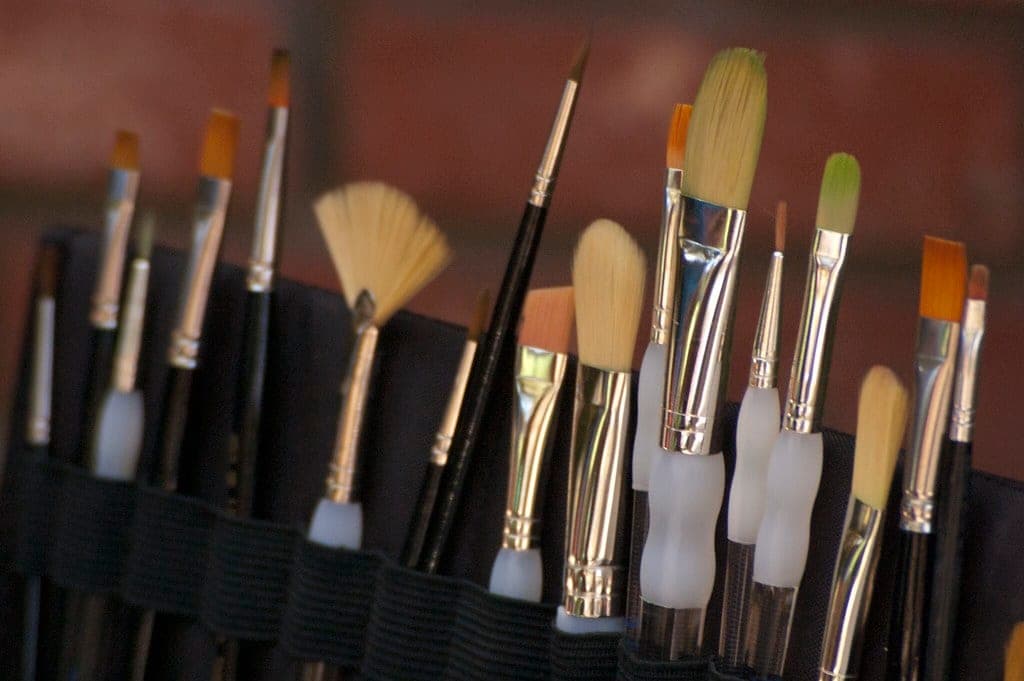 Rosemary & Co Series 33 Kolinsky SableKolinsky sable at a price that does not make you flinch when one eventually dies. The brush most experienced painters quietly settle on. | Kolinsky at a sane price | 9.3 | Check price on Amazon |
| 2 | Raphael 8404 Kolinsky SableA bigger belly than almost anything else at the same point size, so it carries enough thinned paint to finish a blend before the brush runs dry. | The premium version | 9.0 | Check price on Amazon |
| 3 |  The Masters Brush Cleaner and PreserverA soap paste that lifts dried acrylic out of the ferrule and reshapes the point. The cheapest thing you can buy that extends the life of an expensive brush. | What keeps it alive | 9.4 | Check price on Amazon |
Scores are our own editorial read against the criteria stated below — not a lab measurement and not a user rating. Tap a row for the full write-up.
What it actually is
Kolinsky sable is tail hair from the Siberian weasel. It is not from a sable, which is a different animal entirely — the name is a long-standing trade convention rather than a description.
The hair has three properties that matter, and no synthetic filament has all three:
- It is naturally tapered. Each individual hair comes to a point by itself. So the brush’s tip is the sum of many individually pointed hairs, not a bundle trimmed to a shape, which is why the point reforms after a stroke instead of gradually degrading.
- It is scaled. The surface has microscopic scales, which hold liquid between hairs by capillary action. That is the reservoir.
- It has a belly. Each hair is thicker partway along, so a bundle of them naturally forms a wider section behind the tip — more reservoir, in the right place.
Together those give the defining behavior: a lot of paint held in reserve, delivered through a fine self-reforming tip. That is the whole value proposition and it is a real mechanical one.
What it is actually good at
One thing, very well: delivering a controlled amount of thinned paint through a fine point for the length of a complete stroke.
That matters for layering and detail, because a stroke that has to be reloaded halfway leaves a visible join, and a join is what makes a highlight look like a painted stripe instead of a highlight.
It is not better at: covering large areas (a cheap flat does that), drybrushing (stiffness wins, and sable will be destroyed), metallics (flake lodges in the scales permanently), or anything involving solvent. The job allocation is in synthetic vs sable.
Labeling, and how to not get caught
“Sable” on a brush is not a protected term in the way you might hope, and there is a real spread of what gets sold under similar language. Worth knowing:
- “Kolinsky sable” should mean Siberian weasel tail hair. From a reputable maker it does.
- “Sable” alone is vaguer and may mean red sable, which is a different and generally lower grade of natural hair — still better than synthetic for capacity, less good at holding a point.
- “Sable-style”, “sable substitute”, “synthetic sable” all mean synthetic. They are not dishonest, and they are easy to skim past.
- A very cheap “Kolinsky” brush is unlikely to be what it says. The hair has a real raw-material cost and it is not low.
The practical defense is buying from a maker who states the hair grade plainly and has a reputation to protect, which is most of why our picks are the makers they are.
It needs care, and this is the real cost
Natural hair is the fragile option. Specifically:
- Solvents dry it out. Alcohol, varnish thinners and harsh detergents strip the natural oils and leave the hair brittle. It then breaks rather than bending.
- Paint in the ferrule is terminal. Cured paint holds the hairs apart permanently, and because the point depends on each hair being correctly positioned, the brush is finished.
- Hot water softens the ferrule adhesive. Cool water only.
- Standing in water bends it permanently and wicks into the ferrule.
Which is why brush soap is a genuine requirement for sable rather than a nicety, and why the care routine matters more here than anywhere else in the hobby.
Is it worth it?
One cheap Kolinsky: yes, clearly. For the price of two pots of paint you get the capability step that makes layering and fine detail feasible. There is no better value purchase in this category.
A premium Kolinsky: depends what is limiting you. If you can thin paint reliably, you are layering and glazing, and you paint for hours at a stretch, then yes — consistency and handle comfort are real. If your paint is still going on unthinned, no: a better brush will not help, and thinning will.
A full sable set: rarely. Several of the jobs in a set are jobs sable is actively worse at. One or two sables plus synthetics for the rough work is the better allocation — the breakdown is in cheap vs expensive brushes.
The picks in full
Rosemary & Co Series 33 Kolinsky Sable
Kolinsky sable at a price that does not make you flinch when one eventually dies. The brush most experienced painters quietly settle on.
What it gets right
- Holds a genuine point and a useful belly of paint — the two things that actually matter
- Cheap enough that replacing one is an annoyance, not an event
- Hair length is cut short for miniature work rather than borrowed from watercolor
Who it is wrong for
- Direct from the maker in the UK, so US delivery is slower than a next-day order
- Sable dies if you let paint dry in the ferrule — these need actual care
- No fancy handle; the grip is a plain wooden taper
Scored against this page’s criteria
Specs from the manufacturer: Rosemary & Co product page
We do not publish prices. Amazon shows the current one, which is the only one that is ever right. #ad · how this is funded
Raphael 8404 Kolinsky Sable
A bigger belly than almost anything else at the same point size, so it carries enough thinned paint to finish a blend before the brush runs dry.
What it gets right
- Carries enough paint for a long, smooth glaze or a wide highlight in one loaded stroke
- Point is as fine as anything on the market despite the bigger reservoir
- A long-standing artist-trade brush, so supply is stable and not hobby-fashion dependent
Who it is wrong for
- The belly is too much paint for tiny detail work; the point is not the problem, the volume is
- Costs several times a Rosemary & Co and will not last several times as long
- Overkill for a beginner who is still learning to thin paint
Scored against this page’s criteria
We do not publish prices. Amazon shows the current one, which is the only one that is ever right. #ad · how this is funded
The Masters Brush Cleaner and Preserver
A soap paste that lifts dried acrylic out of the ferrule and reshapes the point. The cheapest thing you can buy that extends the life of an expensive brush.
What it gets right
- Pulls paint out of the base of the bristles, which is where brushes actually die
- Leaves a light conditioning film you can shape the point with before storing
- A 1 oz tub lasts years of regular painting
Who it is wrong for
- Will not rescue a brush with cured paint already locked in the ferrule
- Easy to scrub too hard and splay the brush you are trying to save
- Does nothing for a brush whose point has already been cut by solvent
Scored against this page’s criteria
We do not publish prices. Amazon shows the current one, which is the only one that is ever right. #ad · how this is funded
FAQ
Questions people actually ask
What is Kolinsky sable and is it worth it?
Is Kolinsky sable actually from a sable?
How can I tell if a brush is really Kolinsky?
Why is sable so fragile?
Should I buy a sable brush set?
More in Miniature Painting Brushes, or start from the beginning with what to buy first.
Sources
- Rosemary & Co — Series 33 product listingchecked October 2026