What Size Brush for Miniature Painting?
A size 1 and a size 0. Here is the table, and why the tiny ones are a trap.

The short answer
Use a size 1 round for basecoating and layering and a size 0 round for fine detail. A size 2 or larger helps on cloaks and vehicles, and a stiff blunt brush handles drybrushing. Sizes below 0 are a trap: they hold too little paint to finish a stroke and are no sharper than a well-kept size 0.
The quick version
| # | Product | Best for | Score | Price |
|---|---|---|---|---|
| 1 | 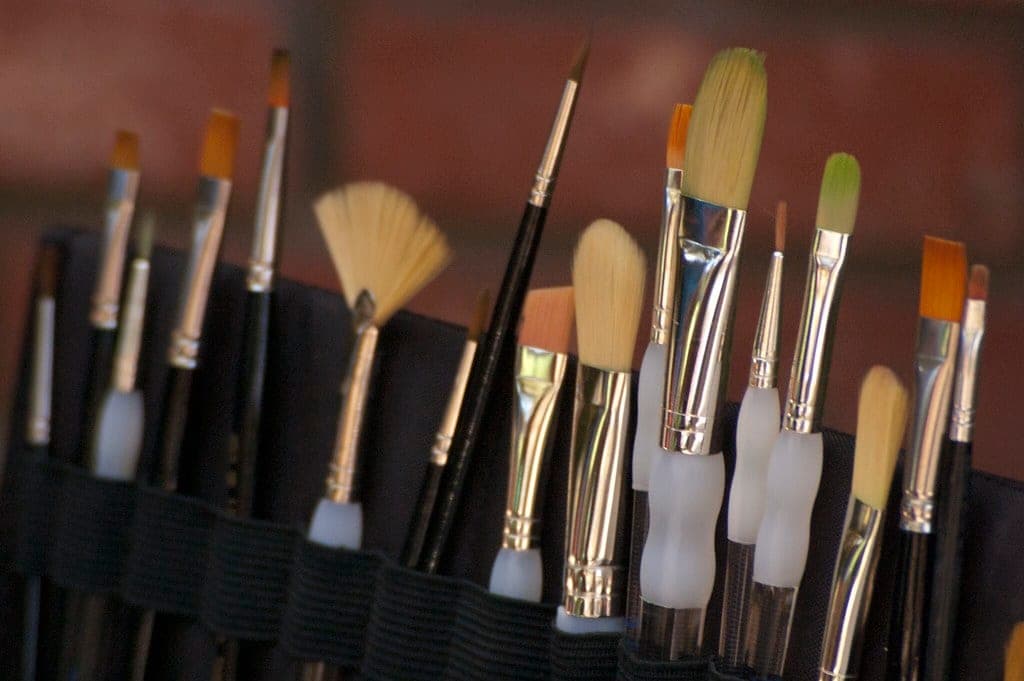 Rosemary & Co Series 33 Kolinsky SableKolinsky sable at a price that does not make you flinch when one eventually dies. The brush most experienced painters quietly settle on. | The size 1 and size 0 to buy | 9.3 | Check price on Amazon |
| 2 |  The Army Painter Wargamer Brush SetSynthetic brushes covering detail, regiment, drybrush and basecoat in one box. Not the best brush of any type — the right set to learn on and not grieve over. | All four shapes in one box | 8.3 | Check price on Amazon |
| 3 | The Army Painter Wargamer: DrybrushA short, stiff, blunt-ended brush built for the one technique that destroys normal brushes. The only shape here you should buy synthetic on purpose. | The blunt shape | 8.8 | Check price on Amazon |
Scores are our own editorial read against the criteria stated below — not a lab measurement and not a user rating. Tap a row for the full write-up.
The size chart
| Size | What it does | Do you need it? |
|---|---|---|
| Size 2–4 round | Cloaks, vehicle panels, large areas, applying washes over a whole model | Useful, not essential. Cheap synthetic is fine. |
| Size 1 round | Basecoating infantry, layering, most highlighting, most detail | Yes. The single most-used brush you will own. |
| Size 0 round | Eyes, gems, lenses, edge highlights, freehand | Yes. The second brush to buy. |
| Size 3/0 to 10/0 | In theory, very fine detail | No. Holds too little paint to finish a stroke. |
| Blunt / stiff short brush | Drybrushing, stippling, texture | Yes, eventually — and a retired brush works. |
| Large flat or mop | Varnishing, priming by brush, basing glue | One cheap one. Do not use a good brush for these. |
| Small flat / shader | Flat panels, edges on vehicles | Optional. A round does the same with practice. |
Why smaller is not sharper
The intuition is that a smaller brush paints finer detail. It is wrong, and it is the most common wasted purchase in this category.
A brush paints as fine a line as its point allows. A good size 1 and a good size 0 come to a similarly fine tip — the difference between them is the volume of paint held behind that tip. Going down to a 3/0 or 10/0 does not sharpen the point; it removes the reservoir.
A brush with no reservoir runs dry partway through a stroke. You reload, come back, and there is a visible join where the two halves met. That join is what ruins detail work — not insufficient fineness.
The useful upgrade for detail is better hair, not a smaller number. See the detail brush picks.
Sizes are not standardized
A size 1 from one maker can be visibly larger or smaller than a size 1 from another. There is no industry standard; each maker has its own scale.
Practical consequences:
- If you like a brush, note the maker as well as the size, or the replacement will surprise you.
- When a tutorial names a size, treat it as a rough indication of category rather than a specification.
- Makers who publish hair length and tip dimensions are doing you a favor; compare those rather than the number.
Shapes matter more than sizes
Beyond size 1 and size 0, the genuinely useful additions are different shapes rather than different numbers:
- Round — the default. Pointed tip, round belly. Does nearly everything.
- Blunt / drybrush — short stiff bristles cut flat or domed. Pushes pigment onto raised edges.
- Flat / shader — a chisel edge. Good on flat panels and for laying a straight edge.
- Mop — large and soft. Varnishing, and applying a wash across a whole model at once.
- Liner / rigger — long thin bristles. Holds a lot for its width, so it draws a long continuous thin line. A niche brush that is genuinely good at freehand.
Four brushes — size 1 round, size 0 round, drybrush, large cheap brush — cover everything a first army needs. The shopping list is in the beginner brush picks.
Technique beats size every time
Two things that will improve your fine detail more than any size change:
Thin the paint. Unthinned paint never reaches the tip of any brush. It sits in the belly while the tip stays dry, so you push more brush into the paint, load the ferrule and kill the brush. Thinning is the prerequisite for everything else.
Load the brush correctly. There is a right amount of paint and a right part of the brush to put it on, and most beginners do neither. How to load a brush covers it.
The picks in full
Rosemary & Co Series 33 Kolinsky Sable
Kolinsky sable at a price that does not make you flinch when one eventually dies. The brush most experienced painters quietly settle on.
What it gets right
- Holds a genuine point and a useful belly of paint — the two things that actually matter
- Cheap enough that replacing one is an annoyance, not an event
- Hair length is cut short for miniature work rather than borrowed from watercolor
Who it is wrong for
- Direct from the maker in the UK, so US delivery is slower than a next-day order
- Sable dies if you let paint dry in the ferrule — these need actual care
- No fancy handle; the grip is a plain wooden taper
Scored against this page’s criteria
Specs from the manufacturer: Rosemary & Co product page
We do not publish prices. Amazon shows the current one, which is the only one that is ever right. #ad · how this is funded
The Army Painter Wargamer Brush Set
Synthetic brushes covering detail, regiment, drybrush and basecoat in one box. Not the best brush of any type — the right set to learn on and not grieve over.
What it gets right
- Covers every brush shape a beginner needs without research
- Synthetic survives the abuse new painters inflict — dried paint, scrubbed drybrushing, standing in water
- The drybrush in particular is a shape you should never buy sable for
Who it is wrong for
- Synthetic points go soft and splay within months of real use
- The detail brush is outclassed by a single cheap sable
- You will replace the detail and layer brushes long before the drybrush
Scored against this page’s criteria
Specs from the manufacturer: The Army Painter product page
We do not publish prices. Amazon shows the current one, which is the only one that is ever right. #ad · how this is funded
The Army Painter Wargamer: Drybrush
A short, stiff, blunt-ended brush built for the one technique that destroys normal brushes. The only shape here you should buy synthetic on purpose.
What it gets right
- Stiff enough to push pigment onto raised edges rather than flood them
- Blunt end gives even coverage across a whole surface in seconds
- Cheap, because drybrushing is abuse and the brush is a consumable
Who it is wrong for
- Useless for anything but drybrushing and stippling
- Still wears out — the bristles shorten and the brush gets scratchier
- A worn-out old sable does the same job for free
Scored against this page’s criteria
Specs from the manufacturer: The Army Painter product page
We do not publish prices. Amazon shows the current one, which is the only one that is ever right. #ad · how this is funded
FAQ
Questions people actually ask
What size brush do I need for miniature painting?
Is a 10/0 brush useful for miniatures?
Are brush sizes standardized between brands?
What brush do I use for washes?
Do I need a flat brush?
More in Miniature Painting Brushes, or start from the beginning with what to buy first.
Sources
- Rosemary & Co — Series 33 product listingchecked October 2026
- The Army Painter — Wargamer brush rangechecked October 2026