The Best Tweezers for Model Kits
Three different shapes, three different jobs. The one that holds a glued joint cannot pick anything up, and that is by design.
The short answer
The Tamiya Angled Tweezers are the best all-round tweezers for model kits: 152 mm of stainless steel with a fine angled tip and deliberately rounded edges, so they reach into a model without scratching paint. Add a reverse-action pair for clamping glued joints, which normal tweezers physically cannot do.
The quick version
| # | Product | Best for | Score | Price |
|---|---|---|---|---|
| 1 | 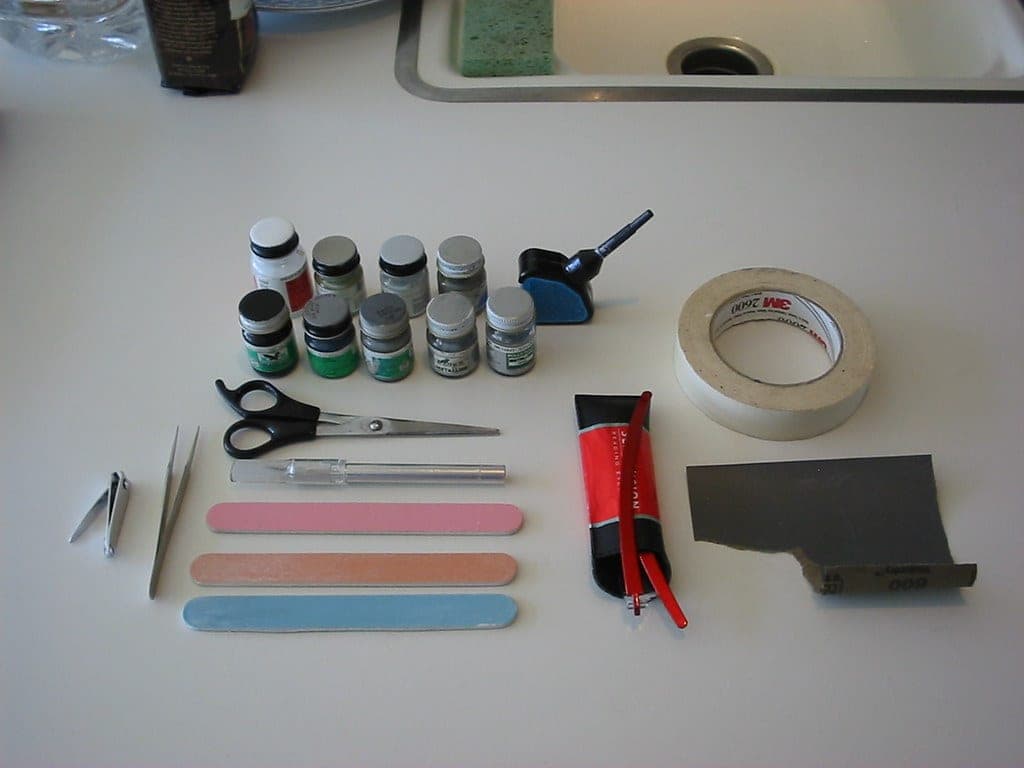 Tamiya Angled Tweezers (74003)152 mm of stainless steel with a finely angled tip and deliberately rounded edges, so it reaches into a model without scratching what it touches on the way. | Best tweezers overall | 9.0 | Check price on Amazon |
| 2 | Curved-tip stainless tweezersA curved tip reaches into a model without your hand blocking the view. The single most useful tweezer shape for kit work. | Best for decals | 8.6 | Check price on Amazon |
| 3 | Reverse-action (self-closing) tweezersSqueeze to open, release to clamp. A third hand for the thirty seconds a cement joint needs, which is a job normal tweezers physically cannot do. | Holding a joint while it sets | 8.3 | Check price on Amazon |
| 4 | 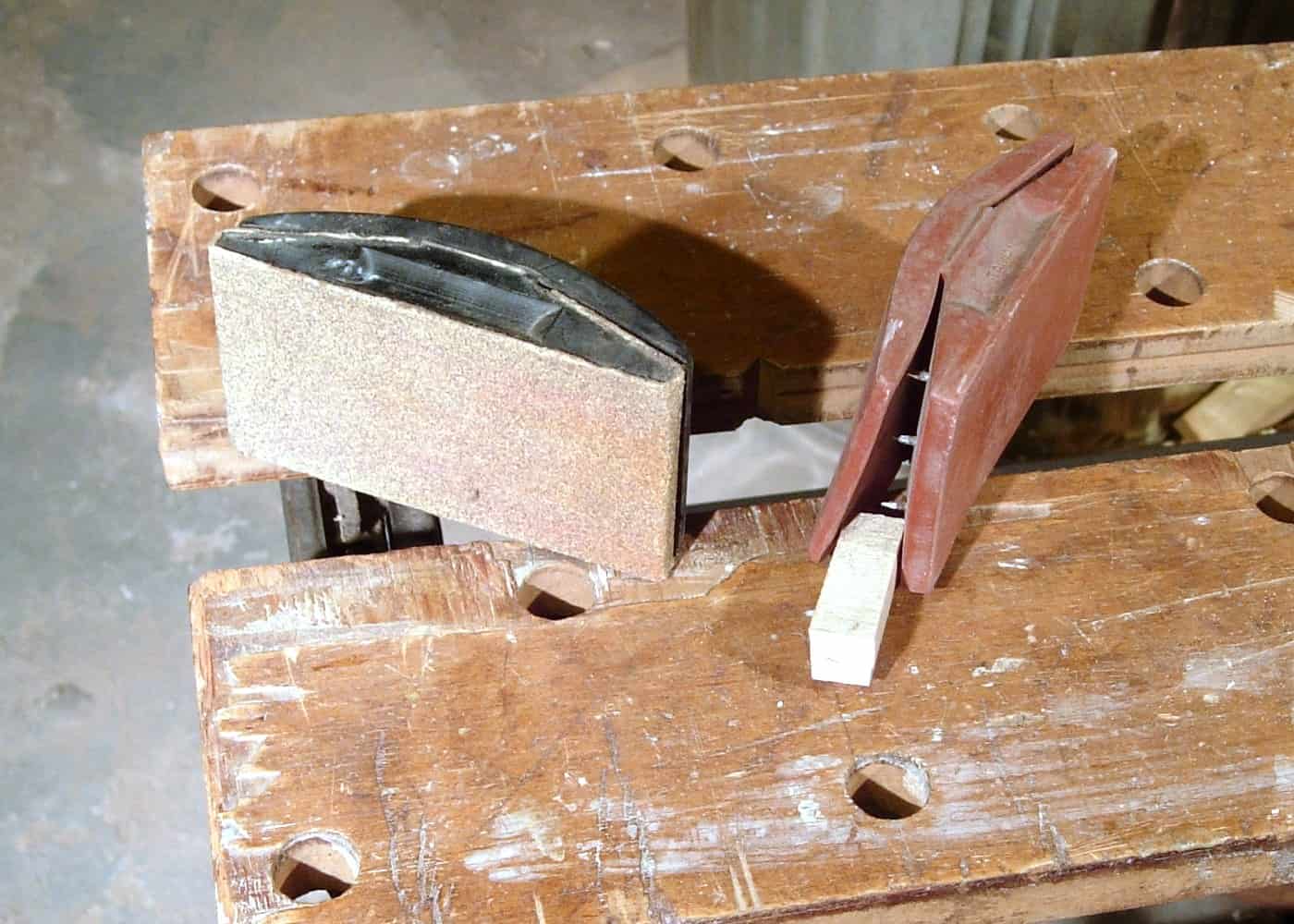 Hobby needle file setFlat, half-round, round, square and triangular steel files. Where a sanding stick cannot reach, a needle file can, and no abrasive sheet replaces the triangular one. | The other small-parts tool | 8.2 | Check price on Amazon |
Scores are our own editorial read against the criteria stated below — not a lab measurement and not a user rating. Tap a row for the full write-up.
The three shapes, and what each one is actually for
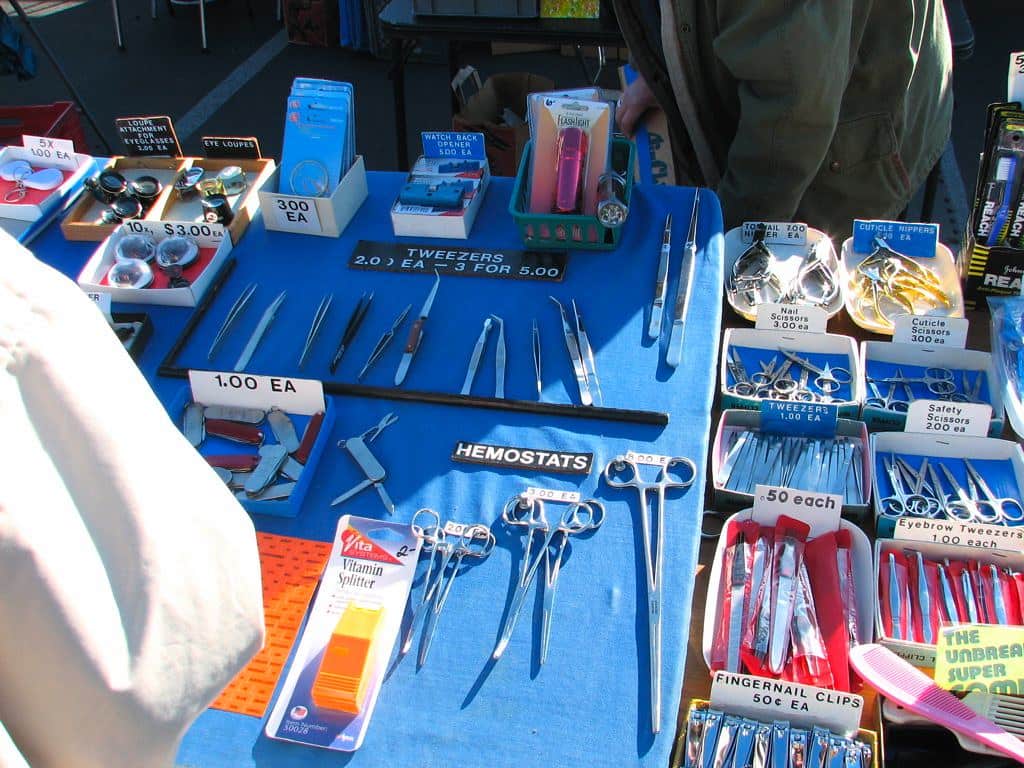
Tweezers look interchangeable in a product photo and are not. Picking the wrong shape is why beginners describe tweezers as useless and then lose a part to the carpet.
Angled or bent tip. The tip turns away from the handle, so your hand sits off to the side rather than directly over the part. On a flat surface, this is the difference between seeing what you are doing and working blind. The best general-purpose shape.
Curved. A gentle sweep rather than a bend. Reaches into a recess — a cockpit, a torso cavity — with the handle out of the sightline. Also the best shape for decals, because the smooth sweep lets you place rather than drop.
Reverse-action (self-closing). Squeeze to open, release to clamp. It is not for picking things up; it is a clamp. Hold a cement joint closed for thirty seconds while the weld sets, hands free. No normal tweezer can do that.
Decals: smooth jaws, no serrations
A wet waterslide decal has roughly the tensile strength of a soap bubble. Serrated or sharp-edged jaws will tear it or print a pattern into it, and both are permanent.
So for decals: smooth, non-serrated, rounded-edge jaws, and a curved or angled tip so you can see the mark you are aiming for. Tamiya’s deliberate rounding of the tweezer edges is a decal feature, not a comfort feature — a sharp edge scratches a painted panel that it only brushes past.
Why the cheap pair launches your parts
Springy, thin, soft steel stores energy. You squeeze, the arms flex, the part pops out sideways under load, and it is gone. That is not clumsiness, it is the metal.
What to look for instead: thicker arms near the hinge, tips that meet along their whole length when you hold them to a light, and no gap. Hold them closed and look at the tip against a window — if light gets through, they will never grip a 1 mm part.
A fine tip also takes a permanent set if you pry with it. The moment you use tweezers as a lever, they stop being tweezers. For prying, use a knife, and for scraping, use a file.
How many pairs you actually need
Two. One angled or curved pair for placing parts and decals, one reverse-action pair for clamping. A third fine straight pair is a luxury that gets used once a year.
The reverse-action pair doubles as a tiny painting handle for a part too small for a clip, which makes it more useful than its price suggests — it sits alongside the proper painting handles rather than replacing them.
Keeping them working
Wipe cement and super glue off the jaws immediately. Cured cyanoacrylate on a tweezer tip is effectively a new, wrong-shaped tip, and acetone will lift it but will also haze any coating on the steel. Store them tip-up in a pot rather than loose in a drawer, where the tips get bent against everything else.
If the tips do splay, a careful squeeze in the middle of the arms sometimes brings them back. Usually it does not, which is the argument for owning one good pair and one cheap pair rather than three middling ones. The full bench list is in what tools you need for Gunpla.
The picks in full
Tamiya Angled Tweezers (74003)
152 mm of stainless steel with a finely angled tip and deliberately rounded edges, so it reaches into a model without scratching what it touches on the way.
What it gets right
- The rounded edges are the whole point — a sharp-edged tweezer scratches paint it only brushes
- 152 mm gives real reach into a torso or a cockpit without your hand in the way
- The angle keeps your knuckles out of the sightline on a flat surface
Who it is wrong for
- Not reverse-action, so holding a part while glue sets means holding the tweezers too
- Costs several times a generic pack, and a generic pack works fine for decals
- The fine tip will take a permanent set if you pry with it
Scored against this page’s criteria
Specs from the manufacturer: Tamiya product page
We do not publish prices. Amazon shows the current one, which is the only one that is ever right. #ad · how this is funded
Curved-tip stainless tweezers
A curved tip reaches into a model without your hand blocking the view. The single most useful tweezer shape for kit work.
What it gets right
- The curve keeps your fingers out of the sightline, which straight tips do not
- Smooth jaws grip a wet decal without tearing it
- Fine enough for photo-etched parts that fingers simply cannot handle
Who it is wrong for
- Fine tips bend permanently if you use them as a lever or a clamp
- Springy cheap steel launches small parts across the room
- A reverse-action (self-closing) pair is better for holding, and this is not that
Scored against this page’s criteria
We do not publish prices. Amazon shows the current one, which is the only one that is ever right. #ad · how this is funded
Reverse-action (self-closing) tweezers
Squeeze to open, release to clamp. A third hand for the thirty seconds a cement joint needs, which is a job normal tweezers physically cannot do.
What it gets right
- Holds a joint closed with constant pressure while plastic cement welds, hands free
- Doubles as a tiny painting handle for a part too small for a clip
- Cheap enough that owning two is normal, and two is when they become useful
Who it is wrong for
- Clumsy for picking anything up — the action fights you on placement
- Clamping force is fixed, so it can mar a soft or freshly painted surface
- No good for decals; you want a smooth-jawed straight or curved pair for that
Scored against this page’s criteria
We do not publish prices. Amazon shows the current one, which is the only one that is ever right. #ad · how this is funded
Hobby needle file set
Flat, half-round, round, square and triangular steel files. Where a sanding stick cannot reach, a needle file can, and no abrasive sheet replaces the triangular one.
What it gets right
- The triangular and knife profiles clean an internal corner no stick or paper can enter
- Steel teeth cut fast through a thick seam line that would eat several sanding sticks
- Essentially permanent — a file set is a one-time purchase, not a consumable
Who it is wrong for
- Leaves coarse scratches that still need a sanding progression afterward, so this is step one of two
- Clogs with soft plastic swarf and needs brushing out or it smears instead of cutting
- Too aggressive for pre-colored parts — one careless pass goes through the color
Scored against this page’s criteria
We do not publish prices. Amazon shows the current one, which is the only one that is ever right. #ad · how this is funded
FAQ
Questions people actually ask
What tweezers are best for model decals?
What are reverse-action tweezers for?
Why do my tweezers keep flicking small parts away?
How many tweezers do I need for model building?
More in Model Kit Tools for Gunpla and Scale Models, or start from the beginning with what to buy first.
Sources
- Tamiya — tools and cement rangechecked October 2026