Single Blade vs Double Blade Nippers
A double blade pinches plastic between two edges. A single blade slices it against a flat anvil. That is why one leaves a white stress mark and the other leaves almost nothing.
The short answer
Buy a double blade first and a single blade second. A double blade is cheaper, far more durable and cuts anything on the runner; a single blade shears the plastic instead of crushing it, which leaves a near-invisible nub and no stress whitening, but it chips if you use it on thick gates. Most builders end up using both on every kit.
The quick version
| # | Product | Best for | Score | Price |
|---|---|---|---|---|
| 1 | 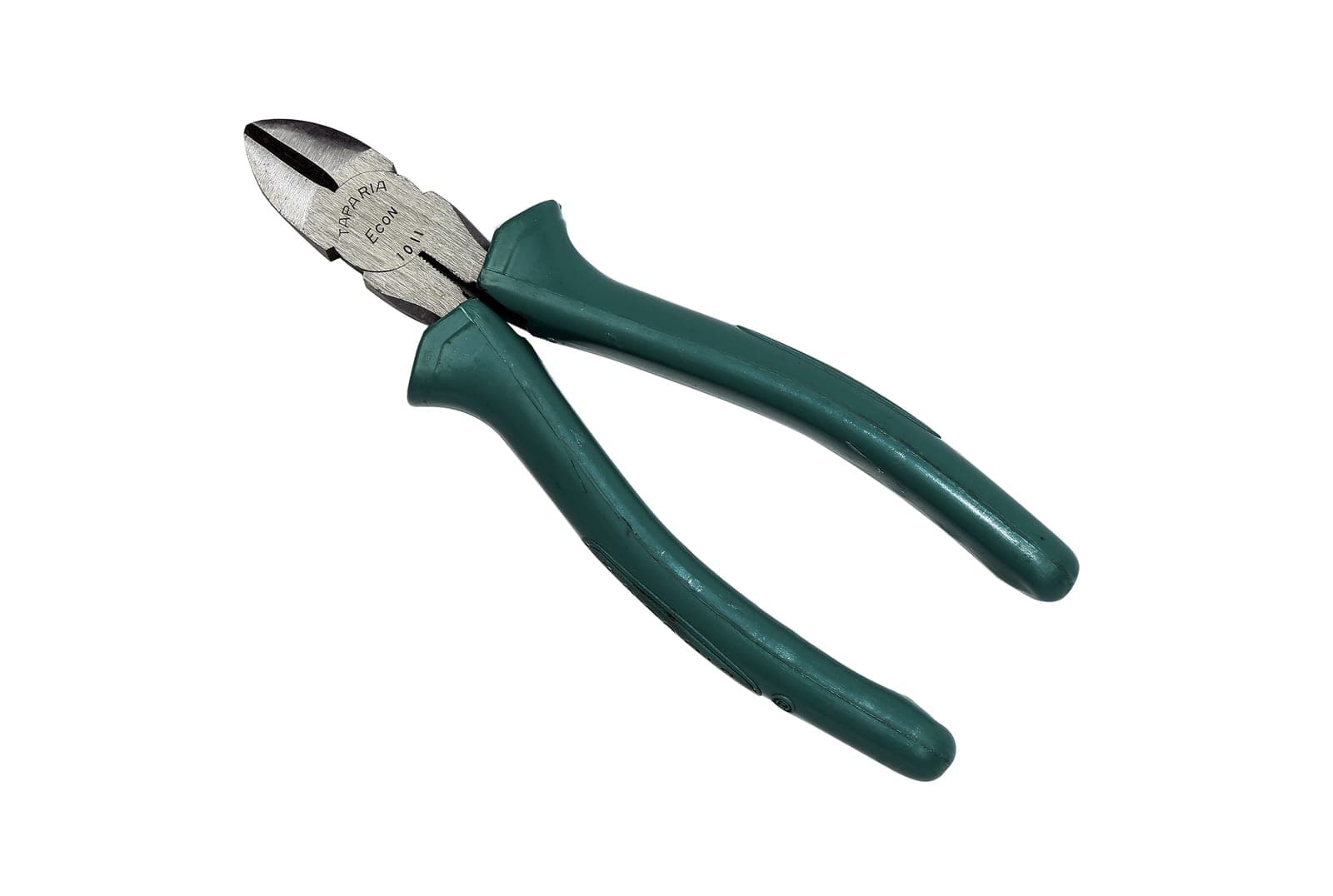 Tamiya Sharp Pointed Side CutterSlim, pointed jaws that get into a crowded runner, in a tool sturdy enough to survive years of ordinary use. The sensible first buy. | Best double blade and best first nipper | 9.0 | Check price on Amazon |
| 2 | God Hand Ultimate Nipper SPN-120A single-blade nipper so sharp it shears plastic rather than crushing it. It leaves almost no stress mark, which is the entire argument for it. | Best single blade for a finishing cut | 9.3 | Check price on Amazon |
| 3 | Bandai Spirits Entry NippersBandai's own entry-level cutter. Blunter and chunkier than the alternatives, and still a genuine improvement over twisting parts off by hand. | Cheapest usable double blade | 7.2 | Check price on Amazon |
Scores are our own editorial read against the criteria stated below — not a lab measurement and not a user rating. Tap a row for the full write-up.
The geometry, in one paragraph each
Double blade. Two ground edges meet in the middle, exactly like a pair of scissors or wire cutters. Plastic between them is compressed from both sides until it fails. Because the force arrives from both directions, the material right at the cut gets squeezed, and squeezed polystyrene goes white — the stress mark every builder recognises.
Single blade. One ground edge closes against a flat, unsharpened face. The plastic is sheared past a fixed surface rather than pinched between two moving ones. There is far less compression, so far less whitening, and the cut face is flat rather than slightly dished.
That is the entire difference, and everything below follows from it.
What it does to the nub
Cut a gate with a double blade flush against the part and you get a small white crescent plus a slightly raised remnant. The white is crushed plastic, not residue, so it does not wipe off — it has to be sanded or scraped away, or painted over.
Cut the same gate with a sharp single blade and the remnant is a thin flat disc with little or no whitening. On an unpainted kit, that is the difference between a visible scar and something you have to tilt to the light to find.
This is why the standard technique is two cuts, not one: take the part off the runner a millimetre proud with the double blade, then trim the remaining stub flush with the single blade. The thick, stressful cut happens away from the part; the delicate one happens where it shows. The clean-up that remains is covered in how to remove nub marks.
Side by side
| Double blade | Single blade | |
|---|---|---|
| Cutting action | Pinch between two edges | Shear against a flat anvil |
| Stress whitening | Common | Minimal |
| Nub left behind | Raised, slightly crushed | Flat, almost flush |
| Thick gates and runners | Fine | Risks chipping the edge |
| Blade durability | High | Low — treat as a finishing tool |
| Typical price | Low to moderate | High |
| Role in the build | First cut, everything | Second cut, visible surfaces |
Durability: the part the reviews skip
A single blade concentrates all the work on one thin ground edge with no opposing edge to share the load. Used the way it is meant to be used — on a 1 mm stub of soft polystyrene — it lasts a long time. Used to snap thick gates, photo-etch, soft metal or a stiff ABS runner, it chips, and a chipped single blade is scrap. God Hand is explicit that the SPN-120 is a finishing nipper, not a general cutter.
A double blade will cut things it should not and survive. That makes it the tool you reach for without thinking, and the one that belongs in a beginner’s kit, which is why the beginner tool list starts there.
Which to buy first
Double blade, without hesitation. A good pointed double-blade cutter does the entire build on its own, costs a fraction of a premium single blade, and will not be ruined by a careless cut on your first kit.
Add the single blade when nub marks start bothering you, which usually happens around the third or fourth kit, or the first time you build something you intend to leave unpainted. If you are painting the kit anyway, a primer coat hides mild stress whitening and the single blade becomes a nice-to-have rather than a need.
The brand-level decision — which single blade, which double blade — is in God Hand vs Tamiya nippers, and the full ranking is in the best nippers for Gunpla.
Getting the most out of whichever you own
Never cut flush on the first pass. Leave a stub. This matters more than the nipper you own.
Cut with the flat side toward the part. On a single blade, the anvil face goes against the runner and the ground edge toward the part — check which way yours is ground and stay consistent.
Let the tool close slowly. A fast snap shocks the plastic and whitens it even with a good blade.
Keep them for plastic. Wire, staples and photo-etch destroy both types. Keep an old pair of side cutters for those.
Finish with a knife or a sanding stick. Even a perfect single-blade cut leaves a trace, and a quick pass with a fine sanding stick or a scraped edge from a sharp hobby knife removes it.
Keeping either pair sharp
Nippers are consumables that people treat as permanent. A few habits roughly double how long a pair stays usable.
Wipe them after a session. Plastic dust and the residue from release agents sit in the pivot and on the cutting edges. A dry cloth and an occasional drop of light oil on the joint is all it needs.
Never force a cut. If the jaw will not close easily, the gate is too thick for the tool. Score it with a knife, or cut it in two bites from the side.
Keep a beater pair. Thick runners, wire, photo-etch, anything metal — put it through an old pair of side cutters from the hardware store. One misplaced cut on wire is enough to put a notch in a premium blade, and a notched blade leaves a raised ridge on every part it touches afterwards.
Store them closed, in the sleeve. Most come with a plastic cap. It is not packaging — it stops the edges knocking against everything else in the toolbox.
Know when to retire one. If a pair starts crushing rather than cutting, or leaves a visible ridge on every gate, the edge is gone. Sharpening model nippers is possible but difficult, and a demoted pair makes a perfectly good beater.
The picks in full
Tamiya Sharp Pointed Side Cutter
Slim, pointed jaws that get into a crowded runner, in a tool sturdy enough to survive years of ordinary use. The sensible first buy.
What it gets right
- The pointed jaw reaches gates that a fat double-blade cannot get near
- Tough enough to cut thicker sprue without worrying about the blade
- Roughly a third of a God Hand, and it will not be the thing limiting your build quality
Who it is wrong for
- A double blade pinches, so it leaves more of a stress mark than a single blade
- You will still want a knife or a sanding stick to finish the nub
- Not as satisfying to use, which matters more than it should
Scored against this page’s criteria
Specs from the manufacturer: Tamiya product page
We do not publish prices. Amazon shows the current one, which is the only one that is ever right. #ad · how this is funded
God Hand Ultimate Nipper SPN-120
A single-blade nipper so sharp it shears plastic rather than crushing it. It leaves almost no stress mark, which is the entire argument for it.
What it gets right
- Shears instead of pinching, so there is no white stress mark to sand out afterwards
- Sharp enough to take a nub flush in a second cut with no scarring
- Spring tension and finish are genuinely excellent — it feels like a precision tool
Who it is wrong for
- The blade chips if you cut thick runners, metal or wire with it — this is a plastic-only tool
- No blade guard habit and you will cut yourself; it is much sharper than people expect
- Three times the price of a nipper that is already good enough for most builders
Scored against this page’s criteria
Specs from the manufacturer: God Hand product page
We do not publish prices. Amazon shows the current one, which is the only one that is ever right. #ad · how this is funded
Bandai Spirits Entry Nippers
Bandai's own entry-level cutter. Blunter and chunkier than the alternatives, and still a genuine improvement over twisting parts off by hand.
What it gets right
- Cheap enough to buy alongside a first kit without thinking about it
- Far better than fingers, which is the actual alternative for a lot of first builds
- Robust — there is not much here to damage
Who it is wrong for
- Leaves obvious stress marks you will then have to sand
- Jaws are too thick for tight gates on detailed kits
- You will outgrow it within two or three kits, so the saving is temporary
Scored against this page’s criteria
We do not publish prices. Amazon shows the current one, which is the only one that is ever right. #ad · how this is funded
FAQ
Questions people actually ask
Are single blade nippers worth it for Gunpla?
Which nipper should a beginner buy first?
Why does my plastic go white when I cut it?
Will a single blade nipper break?
Do I still need a knife if I have good nippers?
More in Model Kit Tools for Gunpla and Scale Models, or start from the beginning with what to buy first.
Sources
- God Hand — Ultimate Nipper SPN-120 product informationchecked October 2026
- Tamiya — Craft Tools: side cutters, Extra Thin Cement and Mark Fitchecked October 2026